Global Brief: Sep 28 – Oct 5
The G7 opened its oil reserves, the Fed and the ECB raised rates, and Iran sanctions reached the carmakers. One supply shock, three different answers.


The week in brief. Oil prices rose enough that the Group of Seven agreed to release 100 million barrels from emergency reserves. Two days earlier, the European Central Bank and the US Federal Reserve both raised interest rates, citing energy. The United States widened its Iran sanctions to cover carmakers and railways, and signed more than $65 billion in missile and aircraft contracts. Governments met one supply shock by stockpiling, restricting and building, while households paid for it at the pump and on their loans.
The Week in Detail
The G7 Releases 100 Million Barrels as Hormuz Shipping Stays Disrupted
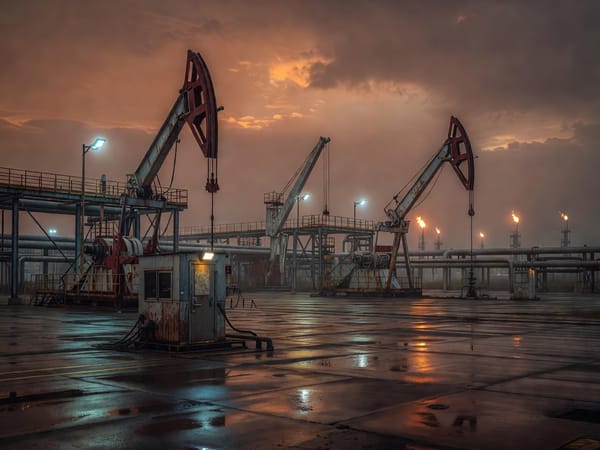
The Group of Seven (G7) agreed on October 2 to release 100 million barrels of oil from emergency reserves through the International Energy Agency (IEA), starting immediately and running over four months. Leaders met virtually. Their statement described the step as a response to what they called unprecedented volatility in oil markets, with surging prices threatening economic stability.
A substantial diesel release is frontloaded into the first 20 days. Diesel is the detail that matters here. It moves freight, runs farm equipment and powers construction, so a diesel squeeze reaches grocery shelves faster than a gasoline squeeze reaches drivers. The G7 said it would also approach countries with large refining capacity to lift output of refined products, and would reconvene at the IEA within days to weigh further diesel releases.
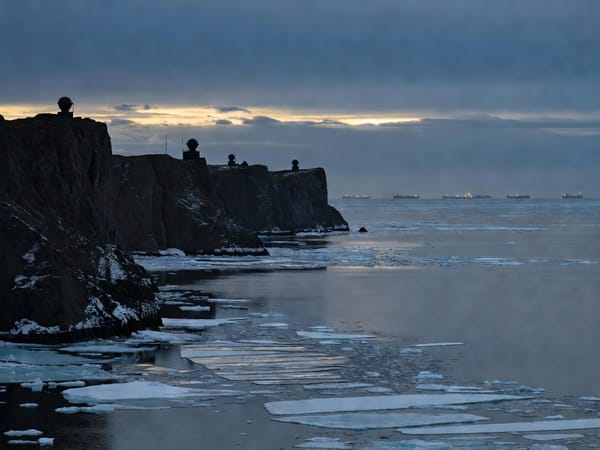
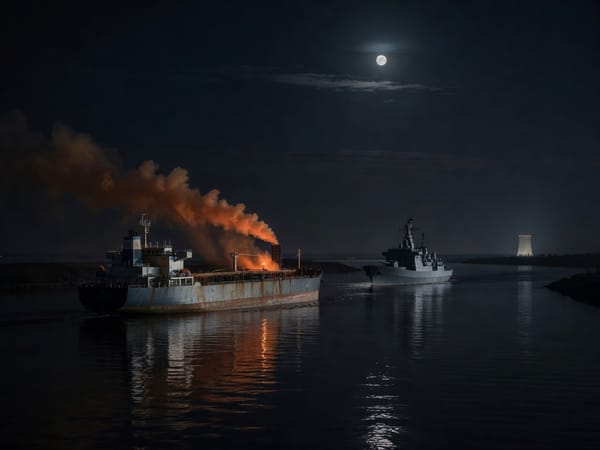
The pressure traces back to the Strait of Hormuz. In the same statement, G7 leaders condemned Iran's continued attacks on its regional neighbours and its disruption of international trade, called for the full restoration of navigational rights through the Strait, and commended the United States for its efforts to keep commerce moving. Iran attacked commercial vessels in the Strait in early August, and the waterway has been a point of friction since.
Secretary of State Marco Rubio spent part of the week making the case for the military operations that preceded all of this. In a Fox News interview, he said the campaigns known as Midnight Hammer and Epic Fury stopped Iran short of a nuclear weapon, and argued that a nuclear-armed Iran could otherwise have controlled the Strait and charged tolls on the energy passing through it. That is the administration's account of what the operations achieved.
The Fed and the ECB Raise Rates Together as Energy Drives Inflation
Both of the world's most closely watched central banks raised rates by a quarter point in late September, and both named energy as the reason inflation has not fallen back.
The European Central Bank (ECB) lifted its three key rates by 25 basis points on September 28. Euro area headline inflation had risen to 3.2% in August from 2.9% in July, almost entirely on energy, which jumped to 14.3% from 10.3% as refining margins on liquid fuels widened. Inflation excluding energy and food edged down, to 2.4%.
President Christine Lagarde said the ECB does not react directly to energy prices, but does react when higher energy prices risk becoming embedded in everything else. She called the stance a middle path. ECB Chief Economist Philip Lane noted on October 5 that the policy rate has moved from 2.00% to 2.50% across the June and September rounds, and that the Governing Council is not on a pre-committed path.
The Federal Open Market Committee (FOMC) made the same move. Governor Lisa Cook, speaking in Oakland, said she voted with the rest of the committee for a 25 basis point increase to address inflation that has been too high for too long, citing total inflation of about 3.8% and core inflation of 3.4% over the twelve months through August, with unemployment at 4.1%. Governor Michael Barr told the Detroit Economic Club the vote was unanimous, and that risks to the inflation target had increased while risks to the labor market had receded.
For households this lands twice. Fuel costs more, and the response to fuel costing more makes mortgages, car loans and credit card balances more expensive. Euro area unemployment stood at 6.4% in July, and wage growth, measured as compensation per employee, ran at 3.3% in the second quarter.
Iran Sanctions Widen From Oil to Carmakers, Railways and a Shadow Banking Network
The US sanctions campaign against Iran shifted this week from targeting oil revenue to targeting the ordinary industrial economy. On October 1 the Treasury's Office of Foreign Assets Control (OFAC) issued sectoral determinations covering Iran's automotive and rail sectors, which permits sanctions on any entity operating in them. Named designations included Iran Khodro and SAIPA, the country's two main carmakers, the Islamic Republic of Iran Railway Company and the Heavy Equipment Production Company, along with suppliers in Indonesia, the United Arab Emirates, Türkiye, Hong Kong, China and Germany.
The escalation has a clear trail. Treasury launched Operation Economic Outcast on August 24 and issued five sectoral determinations at the time, covering digital assets, technology, gold, aviation and shipping. Adding automotive and rail brings the total to seven sectors, which together cover most of what a modern economy builds and moves.
OFAC also designated the A7 Network as a transnational criminal organization. Treasury described it as a Russia-linked shadow banking operation led by convicted fraudster Ilan Shor that claimed to process more than 2,000 transactions a day worth over $91.5 billion. According to Treasury, it was used by Iran's Islamic Revolutionary Guard Corps and by Hamas, it sold Iranian oil through the shadow fleet of older tankers that disable their tracking systems, and it was linked to North Korean cryptocurrency hacks.
Two days earlier, the State Department designated an Iranian airline affiliated with the air force along with a Russian aircraft manufacturer and a Russian shipping company, timed to the one-year anniversary of the reimposition of United Nations sanctions on Iran. Treasury separately hit ten targets supplying Iran's defense ministry, including its representative in Beijing and firms in Hong Kong, China and Pakistan.
The same machinery ran in parallel against criminal networks in the Americas. OFAC and the State Department designated 21 individuals and 25 entities tied to the Sinaloa Cartel on September 29, including faction leader Ismael Zambada Sicairos and Baja California officials accused of taking bribes. A day later OFAC designated ten people tied to Tren de Aragua over an ATM fraud scheme Treasury said stole millions from US banks.
Washington Signs $65 Billion in Weapons Contracts and Closes Out Iraq
The United States committed more than $65 billion to new aircraft and missile production in four days, and formally ended the campaign it had run in Iraq since 2014.
The Navy awarded Boeing more than $20 billion on September 29 for full-scale development of the sixth-generation F/A-XX strike fighter, intended to replace Super Hornets and Growlers from the 2030s. On October 1 the Department of War awarded Raytheon $20.7 billion to surge production of the AMRAAM air-to-air missile, then a further $24.4 billion over five years for the SM-6, the Navy's main anti-air and anti-surface missile. Under Secretary Michael Duffey said the SM-6 agreement, following a recent Tomahawk award, locks in the magazine depth forces need. The stated purpose in each case is volume rather than novelty: building more of what already exists, faster.
Operation Inherent Resolve ended in the same window. Coalition forces completed their departure from Erbil Air Base on September 30, closing a twelve-year campaign against ISIS and transferring the remaining bases to the Iraqi military. The Department of War said it will continue targeted training and intelligence support, with responsibility for ISIS remnants and Iran-aligned militias now resting with Baghdad.
Secretary of War Pete Hegseth used a September 30 appearance at Quantico to announce six initiatives, among them an Autonomous Warfare Command to stand up as a four-star command by October 2027, and a program called FORTRESS America aimed at securing independent power, domestic supply chains and strategic reserves.
Raw materials drew the same attention. The State Department announced an agreement to develop Nigeria's mineral resources, which the White House valued at $700 billion, and Rubio signed a critical minerals memorandum with Italy's foreign minister at the United Nations. Rubio also described an agreement with Denmark covering Greenland that allows permanent US military facilities, blocks Chinese and Russian investment without approval, and opens the door to rare earth investment. At home, Mesabi Metallics opened what the White House called the first new US iron ore mine in 50 years, feeding a $15 billion Iowa steel mill announced the same day.
What It Means
The common thread is governments treating supply as a security problem rather than a market outcome. The G7 drew down oil reserves. The Department of War signed multi-year contracts whose stated point is manufacturing throughput. The State Department signed minerals agreements on three continents. Each is a choice to hold inventory and own production rather than trust that things can be bought when needed.
The tension inside that posture was visible. The same government releasing oil to bring prices down is running a sanctions campaign that removes Iranian supply from the market. And within days of extending those sanctions to Iranian carmakers, Washington agreed with Beijing to cut tariffs to most-favored-nation rates on about 90% of a $30 billion list of goods, including US coal exports in 2027 and 2028. Trade is being opened with the country the minerals strategy is designed to avoid depending on.
Central banks are absorbing the cost of all of it. Both the ECB and the Fed raised rates in a week when their own figures showed core inflation flat or falling and the increase concentrated in energy. The ECB's stated logic, that it responds to the risk of energy prices becoming embedded rather than to energy prices themselves, describes a policy aimed at the echo rather than the shock. Higher rates do not reopen a shipping lane.
Sanctions have become the default instrument across files that have nothing to do with each other. In seven days the same designation machinery was pointed at Iranian railways, a Russia-linked payment network, Mexican cartel financiers and a Venezuelan ATM fraud ring. It is quick to deploy and slow to evaluate, which is a combination that tends to produce more of it.
What to Watch Next Week
The diesel release arrives, or it does not: The G7 frontloaded a substantial diesel release into the first 20 days and said it would reconvene at the IEA within days to consider more. Watch for an IEA statement confirming volumes actually delivered, announcements from countries with spare refining capacity, and whether G7 members schedule a second tranche.
Secondary sanctions reach allied suppliers: The automotive and rail determinations allow action against any firm operating in those Iranian sectors, and the first round already named suppliers in Germany, Türkiye and Indonesia. Watch for new designations of companies based in allied countries, formal responses from those governments, and European firms publicly exiting Iranian contracts.
The rate path separates from the energy path: Lane said the ECB is not on a pre-committed path and will decide meeting by meeting. Watch for the next euro area inflation print and whether energy's contribution falls, Governing Council comments on whether another increase is needed, and any Federal Reserve signal that September was a one-off.
Generated from structured event data extracted from official government and institutional sources. Not financial or legal advice.