Global Brief: Sep 07 – Sep 13
The US says it is sinking Iranian tankers and holding Maduro in custody. The nuclear watchdog says it has not seen Iran's uranium in more than a year.


The week in brief. The United States said it is destroying Iranian oil tankers in response to Iranian attacks on American warships, and reported five hit in a single night. The global nuclear watchdog told its board it has had no access to Iran's declared uranium for more than a year. The White House said it has captured Venezuela's Nicolás Maduro, without saying how or when. In each case, a claim that once would have been checked by inspectors, courts, or allies arrived instead as a finished fact.
The Week in Detail
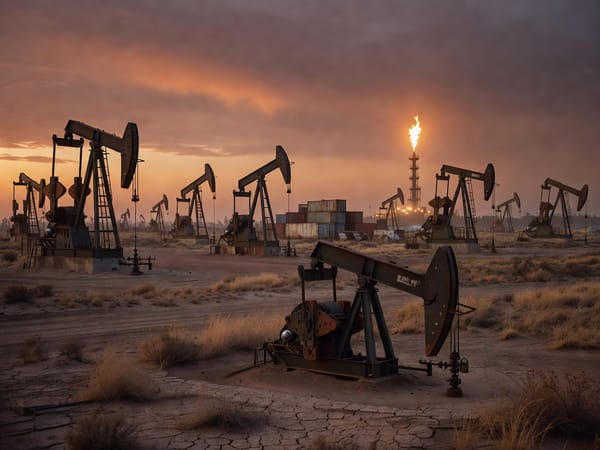
Rubio Says the US Will Sink Iranian Tankers After Every Attack on American Ships
The confrontation between Washington and Tehran moved from sanctions to open attrition at sea this week, with the Secretary of State describing a standing policy of destroying Iranian oil tankers.
Speaking to reporters in Barranquilla, Colombia on 8 September, Secretary of State Marco Rubio said Iran continues trying to strike US naval vessels and that the United States responds by taking out Iranian tankers after each attempt. He said he expected further strikes the same day. In a separate exchange he said Iran had lost five tankers overnight, four damaged and one sunk, and that Washington intends to keep strangling Iran economically.
That policy has a financial half already in place. On 24 August, Treasury Secretary Scott Bessent launched what the administration called Operation Economic Outcast, a campaign to sever Iran's remaining economic lifelines. It followed months of designations aimed at Iran's shadow banking system, including two crypto exchanges sanctioned on 7 August after Iranian attacks on commercial vessels in the Strait of Hormuz. The Office of Foreign Assets Control had by then taken eight separate actions against those networks in 2026 alone.
The same day as Rubio's remarks, the Houthis launched a substantial overnight attack on Saudi Arabia. Rubio called the group proxies or agents of Iran, said Washington was monitoring reported ground operations against Houthi advances, and referred further questions to the Department of War.
For anyone outside the region, the transmission mechanism is shipping insurance. Tankers sunk in or near the Gulf raise war-risk premiums on every vessel using the same water, and those premiums end up in the price of refined fuel thousands of miles away.
The Agency Meant to Count Iran's Uranium Has Not Seen It in Over a Year
The International Atomic Energy Agency (IAEA) told its Board of Governors on 7 September that it can no longer perform its basic job in Iran.
Director General Rafael Grossi reported that during the period covered, the Agency received no information from Iran about the status of declared nuclear material or facilities and had no access for verification on the ground. He said more than a year has passed since inspectors lost continuity of knowledge, meaning the unbroken chain of observation that lets them say where material is, over Iran's declared stocks of low-enriched and highly enriched uranium at facilities damaged in the June 2025 military attacks. Part of that stock was enriched to 60% uranium-235, a short technical step below weapons grade.
Grossi described the situation as a matter of serious proliferation concern and urged Iran to engage so that safeguards work can resume.
Two days later, a White House retrospective release stated that the President had obliterated Iran's nuclear enrichment capacity through Operation Epic Fury. The body with the treaty mandate to confirm or deny that says it has not been allowed to look. Both statements sit in the record for this week, and nothing independent reconciles them.
The White House Says Maduro Is in American Custody and Offers No Details
Washington asserted this week that Venezuela's Nicolás Maduro is on US soil facing prosecution, in language notable for how little it specifies.
A 9 September White House release listed the capture of Maduro among the administration's results, describing him as an indicted narcoterrorist brought to face justice. A second release on 10 September repeated the claim and cited a social media post as corroboration. Neither document gives a date, a location, a method, or a custodial facility.
The claim lands on top of a commercial arrangement signed ten days earlier. On 31 August, Rubio and Secretary of War Pete Hegseth signed an agreement granting North American Blue Energy Partners hundred-year concessions on 17 Venezuelan oil fields. The US government took a 35% equity stake in the company's parent, guaranteed rights to buy 20% of production at cost, right of first refusal on the rest, and a veto over board appointments. The White House described it as giving the United States majority control of more than 65 billion barrels of proven reserves, and repeated that framing in its 9 September release.
Asked about the structure on 8 September, Rubio said the largest private operator in Venezuela had offered the equity stake and the at-cost access, and that the deal ran through the Department of War's authority to hold equity positions in companies. He said royalties would be held for a future democratically elected Venezuelan government.
A Seventh Local Ceasefire Put Europe's Largest Nuclear Plant Back on the Grid
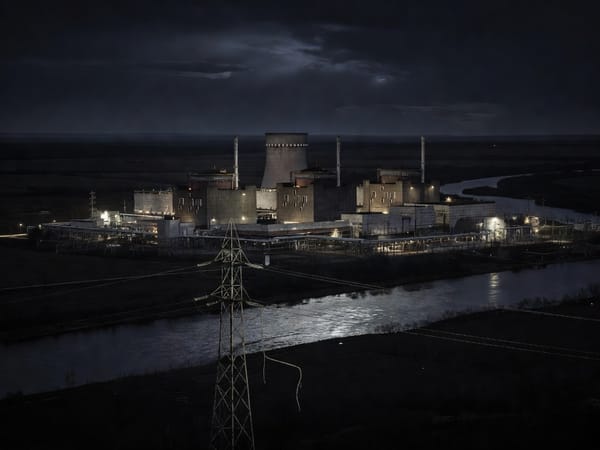
Ukraine's Zaporizhzhya Nuclear Power Plant regained external electricity on the evening of 7 September after nearly three weeks running on emergency diesel generators.
The plant lost its sole remaining external connection, the 330 kV Ferosplavna-1 line, on 20 August when military activity north of the Dnipro River severed it. That was the 26th complete loss of off-site power since the war began. By 29 August, Grossi warned the site had roughly ten days of diesel fuel left and faced a station blackout without resupply or repair.
What saved it was a negotiated pause. Grossi brokered a seventh localized ceasefire around the damaged line, holding from 5 to 7 September, which let teams demine the area and let Ukrainian technicians repair the cable while IAEA staff watched. Grossi said both sides engaged constructively.
The pause was narrow and the danger did not go with it. Attacks in nearby Enerhodar on 6 September killed one person and injured nine. On 9 September, strikes hit a civilian vehicle outside the plant's training centre and the centre itself. The IAEA team on site heard sustained gunfire at close range on 10 September and was told of drones near the perimeter.
Diesel generators are what keep water moving over reactor fuel when the grid fails. They are designed for hours, not weeks.
What It Means
The Department of War is behaving less like a defense ministry and more like a sovereign holding company. In the space of two weeks it signed an equity position in an oil company's corporate parent, negotiated at-cost crude off-take, ran joint maritime operations with Ecuador against drug traffickers in Ecuadorian waters, and announced on 9 September that a commercially owned micro modular reactor will be installed at Naval Weapons Station Crane in Indiana by 2028. Defense authority is being used to acquire assets, not only to protect them.
Three of the week's largest claims rest entirely on the word of the government making them. The destruction of Iran's enrichment capacity, the capture of Maduro, and the valuation of the Venezuelan reserves all come from White House and State Department releases with no external confirmation in the record. The one institution built to check any of them reported the same week that it has been locked out. A reader is not obliged to disbelieve these claims, but should file them as assertions rather than findings.
Europe spent the week buying position instead of projecting force. On 7 September, European Commission President Ursula von der Leyen announced a €200 million package for Greenland covering satellite capacity, graphite mining, and hybrid renewable power. Two days later the Commission proposed the European Innovation Act to harmonise research procurement across member states, with rules requiring at least half of funded research work to happen in eligible countries. Russia, meanwhile, confirmed it is building nuclear plants in Vietnam.
The common thread is ownership. Governments that once relied on markets to deliver oil, minerals, and processing capacity, and on treaties to constrain rivals, are now taking direct stakes in the physical assets and the supply routes. Sanctions give way to sinking tankers. Inspection regimes give way to strikes. Trade policy gives way to equity.
What to Watch Next Week
Evidence Arrives, or It Does Not: If Maduro is genuinely in US custody, the judicial system produces artifacts that press releases cannot. Watch for a docket entry or arraignment in the Southern District of New York, a named detention facility, and any statement from a defense attorney of record.
The Tanker Campaign Reaches Commercial Shipping: Sustained strikes on Iranian vessels make the whole waterway more expensive to use, which pushes neutral operators to change behaviour before governments do. Watch for war-risk premium notices covering the Gulf, rerouting around the Strait of Hormuz, and fresh designations of shadow fleet vessels, the older tankers that disable tracking systems to move sanctioned oil.
Zaporizhzhya Goes Back on Diesel: The repaired line has failed 26 times before and the fighting around it has not stopped. Watch for a new IAEA update on Ferosplavna-1, further reports of attacks in Enerhodar, and confirmation of diesel deliveries to the site.
Generated from structured event data extracted from official government and institutional sources. Not financial or legal advice.