Global Brief: Jun 8 – Jun 14
The World Bank says global growth just hit its lowest point since COVID. The ECB hiked rates. Xi visited Pyongyang. One conflict ties them together.


The week in brief. The World Bank cut its global growth forecast to 2.5%, the lowest since COVID-19, blaming the ongoing Middle East conflict and the Strait of Hormuz closure now entering its fourth month. The European Central Bank responded by raising interest rates for the first time since the war began. Chinese President Xi Jinping made his first overseas trip of 2026 to Pyongyang, deepening strategic ties with North Korea in the most significant summit between the two countries in seven years. Across all three stories, a single thread: the economic and diplomatic aftershocks of the Middle East conflict are reshaping alliances and policy far from the region itself.
The Week in Detail
The Middle East War Reaches the World Economy's Balance Sheet
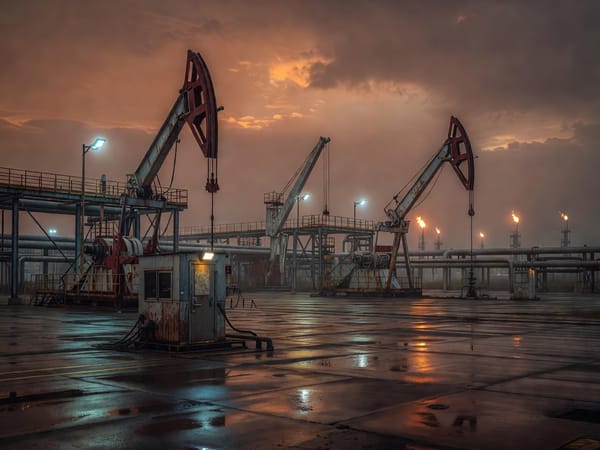
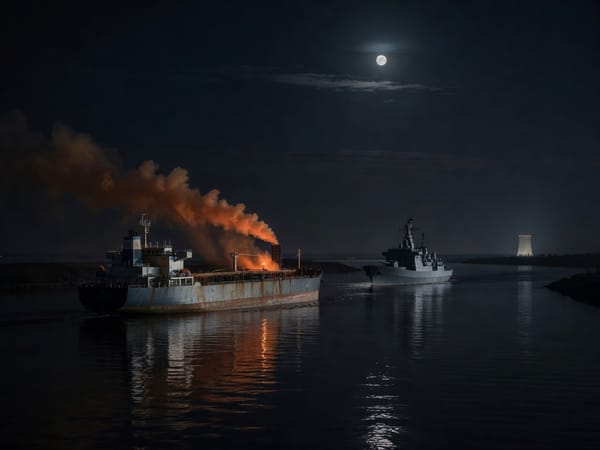
Three months after Iran blockaded the Strait of Hormuz, the economic damage is now quantifiable. The World Bank's Global Economic Prospects report, released on June 11, projected global growth at 2.5% for 2026, down from 2.9% in 2025 and the weakest since the pandemic. The bank forecast Brent crude averaging $94 per barrel this year, 36% above 2025 levels, with global inflation climbing to 4.0%. Two-thirds of the world's economies have had their growth forecasts downgraded since January.
The numbers are worse for those closest to the conflict. Gulf economies face near-zero growth in 2026. Developing economies are projected to grow at 3.6%, a post-pandemic low, as higher energy costs feed through to fertilizer and food prices. The bank warned that a prolonged disruption scenario could push global growth as low as 1.3%.
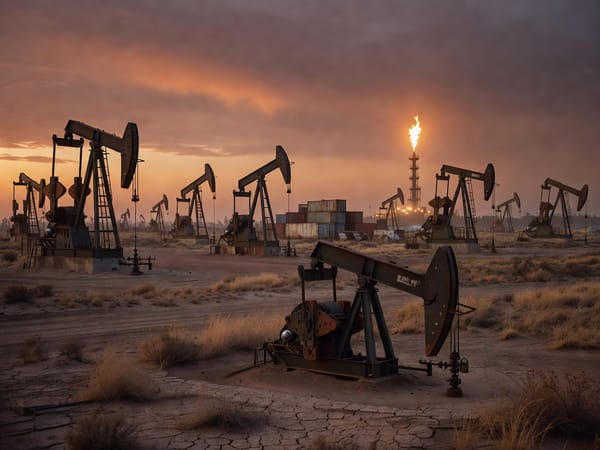
The U.S. Energy Information Administration's (EIA) June outlook added detail. Strait of Hormuz disruptions have cut Middle East oil output by more than 11 million barrels per day, a shortfall partially offset by record U.S. petroleum net exports in April. The EIA reduced its global oil demand forecast by one million barrels per day, noting that high prices are themselves beginning to suppress consumption, particularly in Asia. This feedback loop, where high prices destroy demand before supply recovers, may limit further oil price spikes but does nothing to reverse the damage already done to household budgets and industrial costs.
The European Central Bank (ECB) acted on the same day, raising its three key interest rates by 25 basis points. In March, the ECB had held rates steady while acknowledging the war's inflationary risk. By June, the data left no room for patience. Staff projections now forecast eurozone inflation at 3.0% in 2026, up from the 2.6% projected in March, and GDP growth at just 0.8%. ECB President Christine Lagarde described the rate hike as "robust across scenarios" mapping the energy price shock. For European households, the hike means higher mortgage and borrowing costs arriving at the same time as elevated energy bills.
Xi Jinping in Pyongyang: Seven Years of Silence, Then a Signal
Xi Jinping's two-day state visit to North Korea on June 8-9 was his first trip to Pyongyang since 2019 and his first overseas visit of 2026. The timing sent its own message. With Operation Epic Fury, the U.S.-led military campaign against Iran, still active, and UN Security Council Resolution 2817 condemning Iran's attacks on Gulf states still fresh, Xi chose to make his year's diplomatic debut in the capital of America's most sanctioned adversary.
The substance matched the symbolism. Xi and Kim Jong Un agreed to deepen cooperation in trade, agriculture, science, technology, and healthcare, and to strengthen "strategic coordination" on regional security. The two leaders pledged to commemorate the 65th anniversary of the China-DPRK Treaty of Friendship, Cooperation and Mutual Assistance. Kim reaffirmed North Korea's support for the one-China principle. Senior Chinese official Liu Haixing later characterized the visit as "a complete success, injecting positive energy into regional peace and stability."
The visit came as China navigated a complicated set of relationships. Earlier in the week, the U.S. Department of Defense released an updated list of 188 Chinese military companies operating in the United States. On June 10, the U.S. State Department and Treasury designated 13 individuals and entities from China, Hong Kong, Iran, and Belarus for procuring weapons, including man-portable air defense systems (MANPADS), for Iran's military. According to the State Department, a Belarus-based intermediary facilitated MANPADS shipments from China to Iran, and an Iranian government entity used Chinese-sourced satellite imagery to support strikes against U.S. forces in March. Beijing's public messaging in Pyongyang emphasized peace and stability. Washington's sanctions filings told a different story about the networks connecting Chinese suppliers to Iranian procurement.
Brussels on Overdrive: Migration, Sanctions, AI, and Ukraine in a Single Week
The European Union compressed what would normally be several months of policy milestones into seven days. The most structurally significant was the full application, on June 12, of the Pact on Migration and Asylum, a package of ten legislative files adopted in 2024 that overhauls the EU's approach to border control, asylum procedures, and responsibility-sharing among member states. The European Commission reported that illegal border crossings have fallen 55% over the past two years under the broader migration strategy of which the Pact is the centerpiece. The Pact introduces mandatory registration and security checks at external borders, faster asylum processing timelines, and a permanent solidarity mechanism requiring member states to share responsibility for arrivals.
On the same day, the EU agreed to open the first accession negotiations cluster with Ukraine and Moldova, covering fundamentals such as rule of law and democratic institutions. Commission President Ursula von der Leyen and European Council President Antonio Costa called enlargement "a strategic choice and investment in shared future."
The Commission also prepared its 21st sanctions package against Russia, targeting finance, energy, and trade, and proposing visa bans for ex-combatants of Russian armed forces and proxy groups. This came alongside the Commission's order requiring Meta to restore free WhatsApp access for competing AI assistants, the first use of interim antitrust measures since 2019. Meta had banned services including ChatGPT and Perplexity from WhatsApp and later proposed fees that the Commission deemed prohibitively high. The measures will remain in place until the Commission's final decision or June 2029.
In economic policy, the Commission and the European Investment Bank (EIB) Group signed a €22 billion amendment to the InvestEU programme targeting clean technology, biotech, and digital investment for over 130,000 small and medium-sized enterprises (SMEs). The Commission also proposed the draft 2027 EU budget at €200 billion, the final budget under the current seven-year financial framework, with increased allocations for defence, security, and Ukraine support.
What It Means
The week demonstrated how a regional military conflict can become a slow-moving global economic crisis. The Strait of Hormuz blockade, which began in March, has now persisted long enough for its effects to be measured in revised GDP forecasts and central bank rate decisions rather than just oil price charts. The World Bank's downside scenario, in which growth falls to 1.3%, is no longer hypothetical modeling but a description of what happens if the current disruption continues for another six months.
The ECB's shift from holding rates in March to hiking in June illustrates a central bank caught between competing pressures. Eurozone growth is already weak at 0.8%, and a rate increase will slow it further. But with inflation climbing to 3.0% and energy costs showing no sign of retreat, the bank judged that the greater risk lay in letting inflation expectations drift upward. This is the textbook dilemma of a supply-side shock: there is no policy response that avoids pain.
Xi Jinping's Pyongyang visit and the cascade of U.S. sanctions targeting Chinese-Iranian procurement networks together reveal the Middle East conflict's second-order geopolitical effects. The war is not only raising energy prices but also hardening the lines between rival blocs. China's public diplomacy emphasizes multilateral cooperation and peace. The sanctions record documents Chinese entities supplying weapons components to the country the United States is actively bombing. Both things are true at once, and the tension between them is becoming more difficult for Beijing to manage.
The EU's legislative productivity, meanwhile, reflects an institution that has decided speed matters more than sequence. The simultaneous rollout of migration rules, Ukraine accession talks, Russia sanctions, and Big Tech enforcement would be ambitious in a normal quarter. Compressing it into a single week suggests Brussels is trying to lock in policy progress before the geopolitical environment deteriorates further.
What to Watch Next Week
ECB Rate Path and Market Response: The June rate hike broke a pattern of cautious holds. If eurozone inflation data or energy prices continue to climb, markets will begin pricing in further increases. Watch for bond yield movements in southern European debt markets and any public commentary from Governing Council members signaling whether this was a one-off adjustment or the start of a tightening cycle.
Strait of Hormuz Disruption Indicators: The World Bank's worst-case scenario depends on whether the blockade persists. Watch for any diplomatic signals from Gulf states, changes in U.S. naval positioning, or shifts in Iranian rhetoric. Weekly oil tanker tracking data from the strait and any announcements from OPEC+ on compensating production will indicate whether the disruption is stabilizing or worsening.
China-DPRK Follow-Through and U.S. Response: The Pyongyang summit produced broad cooperation pledges. Watch for concrete implementation, particularly in trade and agricultural cooperation, and whether the U.S. responds with additional sanctions or diplomatic pressure targeting the China-North Korea relationship. Congressional hearings or executive actions referencing the 188 Chinese military companies list would signal escalation.
Generated from structured event data extracted from official government and institutional sources. Not financial or legal advice.