Global Brief: Jul 20 - Jul 26
Trump threatened Iran's power plants. Brussels paused its own climate penalties over the same shortage. The connection, and what to watch next week.


The week in brief. American forces kept striking Iran for a second week over control of the Strait of Hormuz, and President Trump threatened to destroy Iranian power plants and bridges. Europe quietly rewrote its own rules around the resulting energy shortage, freezing an oil price cap and pausing climate penalties on gas importers. Washington revived a 1930 trade law to put 50% duties on Canadian cars, wine and cheese. Across all three, governments are treating a blocked shipping lane as a permanent condition rather than a crisis to wait out.
The Week in Detail
US Strikes on Iran Pass Ten Days as Trump Threatens Power Plants
The American bombing campaign against Iran ran past its tenth day this week, and the stated target list moved toward civilian infrastructure. On July 23 President Trump posted on Truth Social that he would "bomb and destroy a bridge or power plant every time that Iran targets a ship in the strait." Asked about strikes on civilian targets, Secretary of State Marco Rubio said the President's policy is "a head for an eye."
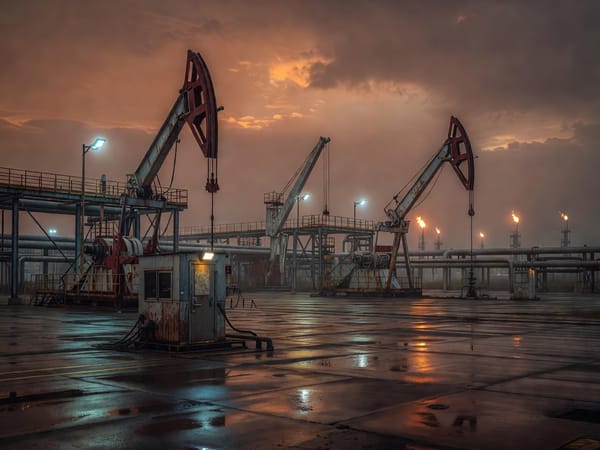
The fight is over a waterway. Iran closed the Strait of Hormuz at the end of April after imposing a toll on transiting vessels, and the closure has held since. According to State Department statements in early May, the blockade was costing Iran about $500 million a day and had halted roughly 90% of its own trade. The US ran an escort operation, Project Freedom, to move stranded commercial ships out of the Persian Gulf.
Rubio's language hardened over two days. Speaking in Manila on July 22, he said Iran had been reaching out for talks but had broken previous agreements. By July 23 he described Iran as "begging to make a deal" and warned of a "catastrophic collapse of their economy."
The conflict spread sideways. On July 23 Houthi forces attacked two Saudi ships in the Red Sea, one of them a Chinese-flagged fuel carrier. Rubio said the Houthis had been "suckered into this by the Iranians" and warned the attacks could become a problem for China.
Financial pressure continued in parallel. On July 24 the US Treasury designated four individuals and nine entities tied to the sanctions evasion network of Iranian financier Babak Zanjani, including his Dot One conglomerate. The EU sanctioned six Iranians the same day over human rights violations, five of them judges in Iran's Revolutionary Courts.
The week also carried a domestic cost. The Department of War announced the deaths of two US Army soldiers, killed in an enemy attack on Muwaffaq Salti Air Base in Jordan.
Europe Froze an Oil Price Cap and Paused Climate Penalties Over the Same Shortage
Two European decisions this week show how far the closed strait has reached into policy that has nothing to do with Iran.
On July 20 the European Commission recommended that member states suspend penalties for non-compliance with the EU Methane Regulation for three years, covering 2027 through 2029. The stated reason was global energy market tightness caused by the Hormuz blockade and the wider Middle East conflict, which the Commission said had disrupted around 20% of global trade in liquefied natural gas (LNG). Compliance obligations stay in force. Only the penalties pause.
Three days later the EU adopted its 21st sanctions package against Russia and suspended the adaptation of the oil price cap until July 2027. The package listed 41 more shadow fleet vessels, older tankers that carry sanctioned oil outside normal insurance and tracking systems, along with 33 Russian banks and 14 crypto platforms. It added 218 new listings and 51 anti-circumvention entities, including 14 in China and Hong Kong, four in Turkey and two in India.
NATO spent on the same problem. On July 22 the North Atlantic Council approved a €27 billion Fuel Supply Chain Capability Programme to modernise fuel storage and build new pipelines across the eastern and south-eastern part of the alliance.
The European Central Bank (ECB) held its three key interest rates on July 23, leaving the deposit rate at 2.25%. Inflation had fallen to 2.8% in June but remains well above the 2% target, and the Governing Council pointed to the energy shock and Middle East conflict as sources of uncertainty. For households across the eurozone, that means mortgage and loan costs stay roughly where they are for another cycle.
Supply held together for now. On July 21 International Energy Agency (IEA) Executive Director Fatih Birol said crude markets were cushioned by alternative Gulf export routes, higher output from the US, Brazil, Venezuela and Kazakhstan, a near-50% drop in Chinese crude imports, and emergency stock releases.
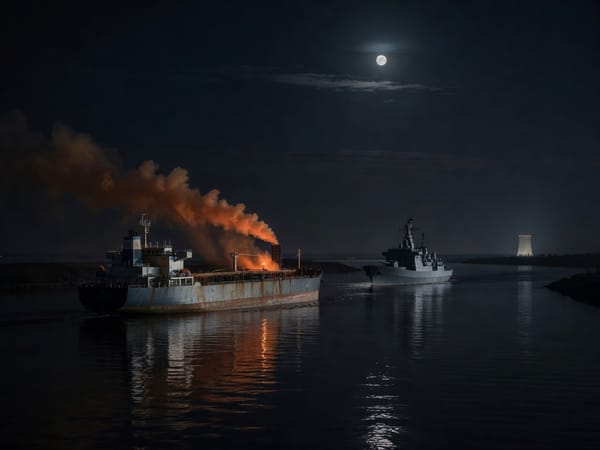
That cushion is thinner than it sounds. Between July 17 and 20, Ukrainian drones struck the Caspian Pipeline Consortium (CPC) marine terminal near Novorossiysk, damaging tankers chartered by Tengizchevroil and KazMunayGas to carry exactly the Kazakh oil the IEA named as a stabilising factor. Russia's Foreign Ministry called it the fifth attack on CPC infrastructure and a war crime. No casualties or oil spill were reported.
Trump Used a 1930 Tariff Law to Put 50% Duties on Canadian Cars, Wine and Cheese
President Trump signed three proclamations on July 20 imposing an additional 50% duty on Canadian goods under Section 338 of the Tariff Act of 1930, a provision that lets a president respond to foreign discrimination without opening a trade negotiation.
The duties take effect August 19 and cover goods from wine and hockey sticks to cement, regardless of whether they qualify under the United States-Mexico-Canada Agreement (USMCA). Energy, potash, fish and critical minerals are excluded.
Each proclamation names a separate grievance. On vehicles, the administration found that Canada applies a 25% tariff to US cars outside USMCA rules plus a quota system aimed only at American-origin vehicles, and that US auto exports to Canada fell about 22% year over year. On alcohol, it cited provincial bans in place since March 2025 that cut US exports by roughly 81%, from $718 million to $137 million, with only Alberta and Saskatchewan lifting their bans since. On dairy, it found that Canada's quota rules give EU cheese exporters access that American exporters are denied.
Two more industrial actions landed the same day. A proclamation under Section 232 of the Trade Expansion Act created an incentive programme letting companies that commit to building or refurbishing US aluminium smelters import primary aluminium at half the standard tariff rate, provided construction starts by January 2029. An executive order restricted waivers for foreign-sourced critical defence materials after January 1, 2027, and required prime contractors to map their supply chains back to raw material origins.
The week was not uniformly protectionist. On July 21 the US and Jordan signed a reciprocal trade agreement under which Jordan commits to duty-free access for almost all American goods.
Manila Hosted Three Confrontations in One Week
The Association of Southeast Asian Nations (ASEAN) ministerial meetings in Manila became the stage for three separate disputes.
Rubio met Russian Foreign Minister Sergey Lavrov on July 23 and described the conversation as frank with no breakthrough. He said Russia is losing 5,000 to 6,000 soldiers a week. Lavrov, for his part, referred back to the Anchorage summit of August 2025 and said Russia remains ready for a political settlement.
Lavrov used the week to move on a second front. He said Russia no longer joins calls to denuclearise the Korean Peninsula, citing US and South Korean military exercises. Two days earlier he had hosted North Korean Foreign Minister Choe Son-hui in Moscow, where he referenced Korean troops fighting alongside Russian forces in the Kursk region.
China pressed the Philippines. Foreign Minister Wang Yi lodged a formal protest over the ramming of Chinese law-enforcement vessels at Second Thomas Shoal and said relations stood at a crossroads. On July 23 China ran live-fire drills in the Taiwan Strait and used water cannon on Philippine vessels near Scarborough Shoal. Rubio called both actions destabilising and reaffirmed the US treaty commitment to Manila.
Washington answered with money and hulls. Rubio announced $2.5 billion in US investments across Southeast Asia, including a $1.5 billion Development Finance Corporation platform for Indo-Pacific energy infrastructure that the agency called its largest single project investment ever, and over $100 million for the Luzon Economic Corridor. A new Expeditionary Cutter Squadron will operate from Singapore and the Philippines.
What It Means
The most revealing detail this week was a date. Brussels paused methane penalties through 2029, froze the oil price cap adaptation until July 2027, and NATO committed €27 billion to fuel infrastructure that takes years to build. Governments expecting the Strait of Hormuz to reopen shortly would not be writing 2029 into their regulations. The closure has stopped being an emergency and become a planning assumption.
Watch which legal tools are getting used. Section 338 of the Tariff Act of 1930, Section 232 of the Trade Expansion Act of 1962, and the defence sourcing rules in 10 U.S.C. 4872 all date from earlier eras of economic statecraft, and each lets an executive act alone with no negotiation and no legislative vote. Pressure that arrives faster than diplomacy tends to be met with whatever authority is already on the books.
The alternative supply routes everyone counted on are now targets themselves. The IEA listed Kazakh exports among the factors cushioning oil markets, and the terminal those exports pass through had been hit by drones days before. Houthi forces struck two Saudi vessels in the Red Sea including a Chinese-flagged carrier. Diversification only helps when the alternatives are safe, and this week they were being attacked.
On regulation, the two Western blocs moved in opposite directions. The European Commission fined Google €890 million under the Digital Markets Act and AliExpress €550 million under the Digital Services Act. In the same week the US Securities and Exchange Commission proposed rescinding its climate disclosure rules and letting public companies report twice a year instead of four times. Companies operating on both sides of the Atlantic now face regulatory regimes that are not merely different but diverging.
What to Watch Next Week
Iran tests the infrastructure threat: President Trump's pledge to hit a bridge or power plant is conditional on Iran striking a ship in the strait, which makes the next attack on shipping the trigger. Watch for reports of a vessel hit in Hormuz, any named strike on Iranian civilian infrastructure, and public statements from Gulf states that have so far backed the US position.
Canada moves before August 19: The 50% duties leave a thirty-day window in which Ottawa can retaliate or negotiate. Watch for a Canadian counter-tariff list, additional provinces lifting the alcohol bans that Alberta and Saskatchewan already dropped, and any formal USMCA consultation request.
Third countries react to EU circumvention listings: The 21st package named 51 entities in China, Hong Kong, Turkey, India and Central Asia. Watch for responses from Beijing and Ankara, the first enforcement action against one of the 14 listed crypto platforms, and whether the delayed listing of Georgia's Kulevi refinery survives its six-month grace period.
Generated from structured event data extracted from official government and institutional sources. Not financial or legal advice.