Global Brief: Aug 31 – Sep 6
Washington took a 35% stake in the company now running 17 Venezuelan oil fields. Three other governments made similar moves. The pattern, explained.


The week in brief. The United States took a 35% ownership stake in the company handed 100-year rights to 17 Venezuelan oil fields, and the administration declared the Monroe Doctrine restored. Germany identified Russia as responsible for an attempted attack on cargo planes at a Leipzig airport, which the European Commission called a new escalation on EU soil. The EU approved its largest customs overhaul in decades, making foreign shopping platforms legally responsible for the parcels they send. In each case, governments took direct control of things they used to regulate from a distance.
The Week in Detail
Washington Takes a 35% Stake in the Company Running Venezuela's Oil Fields
The United States government now owns a piece of the company that controls 17 Venezuelan oil fields, an arrangement the White House called the biggest oil deal in world history.
President Trump announced the agreement late on 31 August. Secretary of State Marco Rubio and Secretary of War Pete Hegseth signed it. It grants North American Blue Energy Partners (NABEP), a private firm, 100-year concessions over 17 fields holding more than 65 billion barrels of proven reserves.
The terms go well past a normal concession. According to the White House fact sheet, the US government receives a 35% equity stake in NABEP's corporate parent, a guaranteed right to buy 20% of production at cost, right of first refusal on the other 80%, and veto power over board appointments. The administration said the deal comes at zero cost to American taxpayers, with NABEP investing up to $100 billion in Venezuelan oil infrastructure and paying an expected $200 billion in royalties and taxes over 25 years.
Rubio described the structure carefully. He said this is not an agreement with Venezuela's interim government, but between the US government, acting through a Department of War special account, and a private company. NABEP's owner is Alejandro Betancourt. Rubio said US authorities found no open investigation into him, and that KPMG will audit the funds the fields generate.
The same announcement carried a second claim. Trump declared the Monroe Doctrine re-established, saying American dominance in the Western Hemisphere will never again be questioned. The administration's stated reasoning is that these fields were previously run by Russian and Chinese firms, or by associates of Nicolás Maduro and Hugo Chávez, and were looted to benefit Cuba, Russia, and China.
The timing sits inside an unfinished political process. In early August, a delegation from Venezuela's 2015 National Assembly, led by Dinorah Figuera, arrived in Caracas for talks with the interim authorities on political freedoms and recovery from the June earthquakes. The White House ties the oil agreement to a three-phase plan for stabilisation, economic recovery, and democratic transition.
Germany Names Russian Operatives Behind an Attempted Attack at Leipzig
The German government identified Russia as responsible for an attempted attack on cargo planes at Leipzig/Halle Airport, carried out on EU soil using military-grade material.
Commission President Ursula von der Leyen said a successful attack would have caused enormous damage and possibly loss of life. She described the incident as a new escalation directly attributed to Russia and expressed full EU solidarity with Germany.
It was not an isolated case. In August, Moldova blamed Russia for a drone incident near Crocmaz and recalled its ambassador from Moscow, after Romanian authorities had done the same the previous month over a similar episode. On 3 September, European Council President Costa listed drones at EU borders, cyber-attacks, disruption of critical infrastructure, and attempts to undermine democracies as ongoing Russian behaviour on European territory. He said Europe will intensify pressure until Russia ends the killing and shows genuine commitment to peace.
The war itself did not pause. On 1 September, Ukraine's Deputy Foreign Minister Mariana Betsa told the UN General Assembly that a Russian ballistic missile and drone attack that day killed eight people in Kyiv and four in the surrounding region, including an Indian citizen. She urged states not to recognise planned polls in occupied territories, which she called sham, and accused Russia of deporting more than 20,000 Ukrainian children.
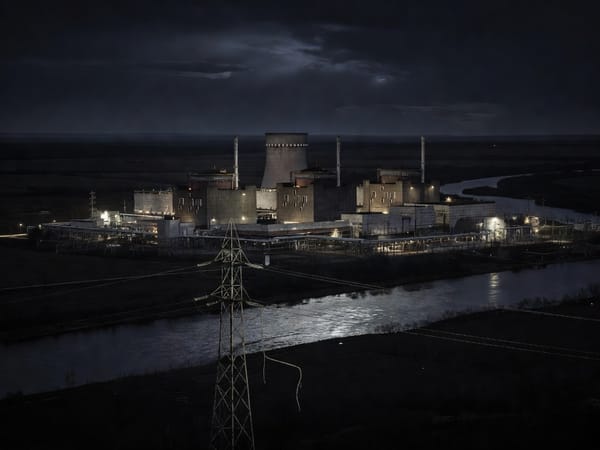
One development cut the other way. On 5 September, International Atomic Energy Agency (IAEA) Director General Rafael Mariano Grossi brokered another localised ceasefire, this one around a damaged 330 kV power line north of the Dnipro River. Ukrainian technicians began repairs after the area was demined.
The Zaporizhzhya Nuclear Power Plant has been running on emergency diesel generators, and the work, expected to take several days, is meant to restore its outside electricity supply. Both sides agreed to stop shooting in one small area so that one power line could be fixed.
The EU Makes Foreign Shopping Platforms the Importer of Record
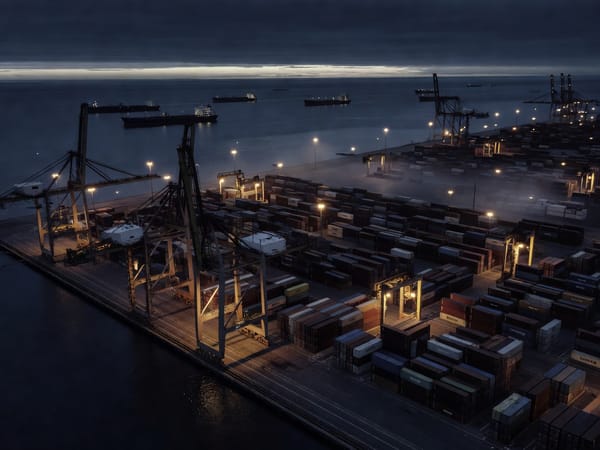
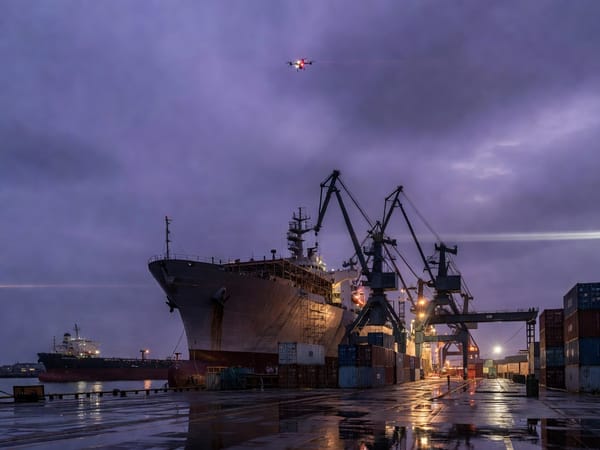
The Council of the EU gave final approval on 3 September to the most comprehensive overhaul of European customs law in decades, and its biggest change lands squarely on foreign e-commerce platforms.
Under the updated Union Customs Code, a non-EU platform selling into Europe becomes the importer of record. The platform, rather than the shopper receiving the parcel, carries responsibility for customs formalities and duty payments. Platforms that do not comply face penalties of up to 6% of their annual import value, plus loss of privileges or of platform access altogether.
An EU-wide handling fee on small parcels takes effect from 1 November 2026. The reform also creates a new EU Customs Authority in Lille, France, due to start operations in 2027, and a "trust and check traders" scheme granting simplified procedures to reliable businesses. The European Parliament must still approve the text.
For an ordinary shopper, this ends the cheap direct-from-Asia parcel as a low-friction category. The cost of collecting duty shifts onto the seller, and sellers pass costs to buyers.
Buying the Supply Chain: Gallium in Australia, Sanctions on Cuban Nickel
Governments spent the week buying, or blocking, access to the raw materials that go into weapons and electronics.
On 31 August, the US Department of War announced an estimated $174 million equity financing investment to build a gallium production facility at Alcoa's Wagerup alumina refinery in Australia. The project runs through the Industrial Base Analysis and Sustainment programme in partnership with Export Finance Australia, the Government of Japan, and Sojitz Corporation, with Alcoa of Australia operating the plant. It is projected to produce 100 metric tons of gallium a year.
Gallium goes into the high-performance semiconductors used in radars, missile defence, satellite communications, and electro-optical sensors. Assistant Secretary Michael Cadenazzi said the project will secure vital gallium supply for the defence industrial base.
The template is not new. Three weeks earlier the Department of War put $85.5 million into Strategic Bauxite USA to acquire and expand a mine in Guyana, with the stated aim of reducing dependence on imports from China and Chinese-owned entities.
Sanctions did related work from the other direction. On 3 September the State Department and the Treasury designated five Cuban entities and one individual under Executive Order 14404. The list covers Banco Exterior de Cuba, the nickel enterprises Nicarotec and CEXNI, the oil firms ABAPET and Comercial CUPET, and Fidel Ernesto Castro Calis, described by the State Department as a grandson of Raúl Castro.
Foreign financial institutions now face sanctions risk for dealing with any of them. This was the third round of Cuba designations in a month, following military-industrial targets on 6 August and mining, construction, and labour entities on 20 August.
China spent the week building rather than blocking. At the Shanghai Cooperation Organisation (SCO) summit in Bishkek on 1 September, Xi Jinping announced an international AI application cooperation centre for member states, a China-SCO port economic cooperation centre in Tianjin, and 100 technology cooperation projects over three years. The next day in Cairo, Xi and President Abdel Fattah El-Sisi witnessed the signing of Chinese-Egyptian agreements on Belt and Road cooperation, artificial intelligence, trade, and industrial supply chains. China was also the only member present that declined to join the joint statement issued by G20 finance ministers and central bank governors meeting in Asheville, North Carolina on 1 September.
What It Means
Four separate developments this week show governments taking direct positions inside markets they used to supervise from the outside. An equity stake in an oil company's parent, an equity investment in a gallium plant, a customs rule that converts a foreign platform into a legal importer, and a sanctions list naming the specific nickel and oil enterprises that earn a government its foreign currency. None of these is a tariff or a treaty. Each one places a state inside the ownership or liability structure of a private business.
The gallium investment shows the logic in miniature. The plant will make 100 metric tons a year, a small quantity in commercial terms, and Washington is co-funding it with Japan and Australia rather than simply buying the metal on the open market. Radar and missile-defence production stops when that input stops. Paying to own part of the production line is insurance against a supply decision made in someone else's capital.
These moves reach household budgets in ways the announcements tend not to spell out. The European customs reform will surface as higher prices on cheap imported goods and a handling fee on small parcels from November. The Venezuelan agreement was sold in part on lower gas prices, though the White House offered no timeline, and bringing previously underused fields back to full output takes years rather than months.
Russia is the exception that clarifies the pattern. Where Washington and Brussels used ownership and law this week, Russian activity in Europe took the form Germany described at Leipzig: covert, deniable, and physically dangerous. The same seven days also produced the Zaporizhzhya ceasefire, where both sides agreed to hold fire around a single power line. Coercion and narrow technical cooperation are running simultaneously on the same front.
What to Watch Next Week
The European Parliament Reopens the Customs Package: The Council has approved the text but Parliament has not, and the importer-of-record clause is the provision with the most money behind opposing it. Watch for committee amendments in Brussels, public statements from major e-commerce platforms about their EU operations, and any slippage in the 1 November start date for the parcel handling fee.
Scrutiny of the NABEP Structure: A government equity stake in a private oil company's parent is unusual, and this one was signed through a Department of War special account rather than through the State Department. Watch for congressional requests for the full agreement text, published terms for the KPMG audit Rubio promised, and the response from Venezuela's 2015 National Assembly delegation now in Caracas.
More Attributed Russian Incidents on EU Territory: Germany's Leipzig attribution follows drone incidents in Moldova and Romania, and Costa has already signalled intensified pressure. Watch for a formal EU response beyond statements of solidarity, further national governments naming Russian operatives directly, and whether the Zaporizhzhya repair ceasefire holds until the power line is back in service.
Generated from structured event data extracted from official government and institutional sources. Not financial or legal advice.