Global Brief: Aug 24 – Aug 30
Treasury opened sanctions on five sectors of Iran's economy at once. Hours earlier, Syria came off the terrorism list. One office made both decisions.


The week in brief. The United States launched its widest sanctions campaign yet against Iran, hitting five sectors of the Iranian economy at once and telling other countries to cut ties or face consequences. Hours earlier the same day, Washington removed Syria from its terrorism blacklist to open the country to foreign investors. President Trump separately declared a national emergency over foreign-made equipment in the American electricity grid. One thread runs through all three: government designation, the power to decide who is inside the global economy and who is locked out.
The Week in Detail
Treasury Opened Five New Sanctions Fronts on Iran While Central Command Claimed Full Control of Hormuz
On August 24, Treasury Secretary Scott Bessent announced Operation Economic Outcast, a campaign that widens American sanctions on Iran from specific companies to whole sectors of its economy. The stated aim, according to Treasury, is a "zero-leakage" approach that blocks every remaining source of revenue reaching the Iranian government and the Islamic Revolutionary Guard Corps (IRGC).
The mechanism matters more than the name. Treasury's Office of Foreign Assets Control (OFAC) issued five determinations covering digital assets, technology, gold, aviation, and shipping. Under those determinations, OFAC can now sanction any foreign person anywhere who operates in those parts of Iran's economy, whether or not that person has any connection to the United States.
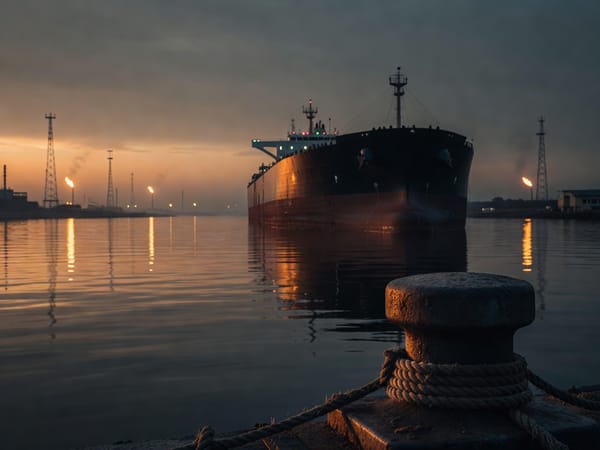
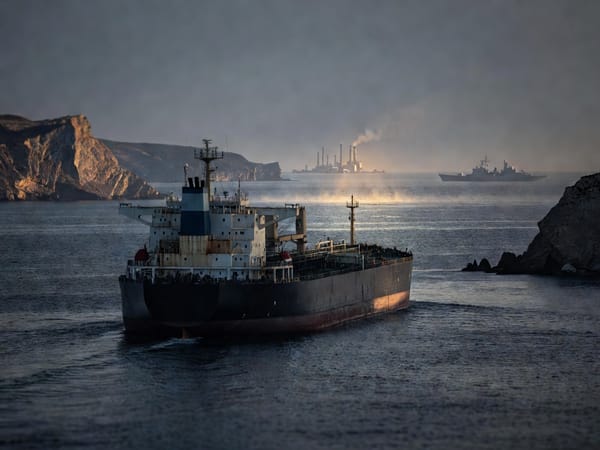
Alongside the determinations, OFAC designated more than 60 entities, individuals, and vessels. The State Department designated seven Iranian defense officials and two entities, including the IRGC Cyber-Electronic Command. The named networks stretch across the United Arab Emirates, Hong Kong, China, Singapore, Switzerland, India, Türkiye, and Greece, and include shadow fleet vessels, older tankers that switch off their tracking systems to move sanctioned oil. Treasury also demanded the closure of all Bank Melli branches abroad and warned that any bank facilitating Iranian money laundering would lose access to the US dollar system.
This did not come from nowhere. On August 7, after Iran attacked commercial vessels in the Strait of Hormuz, the State Department sanctioned Iranian digital asset exchanges. On August 20, OFAC designated ten people running cash couriers for Hizballah on commercial flights between Lebanon, Türkiye, the UAE, and Iran.
Five days after the announcement, the White House released a US Central Command assessment of the naval blockade. According to that release, Iranian mines have been cleared from international shipping lanes, roughly 1,500 commercial vessels carrying 750 million barrels of crude have transited under US protection, 75 vessels attempting to break the blockade were turned away, and Iran has exported no oil since the blockade resumed in July. Gulf oil exports have recovered to about two thirds of pre-operation levels, the release said.
Those figures come from the government running the operation and have not been independently confirmed. If they hold, the practical effect for ordinary households is that the world lost a significant oil supplier without the price shock that usually follows.
Syria Came Off the Terrorism List the Same Afternoon Iran's Sanctions Expanded
Within the same few hours on August 24, the State Department rescinded Syria's designation as a State Sponsor of Terrorism, the strongest sanctions category the US applies to a country. Secretary of State Marco Rubio authorized the rescission after a 45-day congressional notification period.
The delisting went further than the country itself. Hay'at Tahrir al-Sham (HTS), the group that led the removal of the previous Syrian government, was removed from the Specially Designated Global Terrorist list, and OFAC took it off the blocked persons list entirely. A general license that had authorized limited dealings with HTS in its governing role was revoked, because it was no longer needed. The State Department said the actions recognize counterterrorism steps taken under President Ahmed al-Sharaa and are intended to remove the last major barriers to private investment in Syria.
Syria has been building that case for months. On July 17, it declared nuclear material at a previously undeclared location on its own initiative. On August 18, the head of the International Atomic Energy Agency visited Damascus and the Deir Ez-Zor site, and both sides agreed on verification steps to close out safeguards questions left by the former government.
The designation lever moved in the other direction the following day. In an August 25 presidential message, the President said he had designated fentanyl as a weapon of mass destruction and the worst drug cartels as foreign terrorist organizations, and that he had ordered military strikes on dozens of boats suspected of smuggling drugs. The same message credited enforcement with a 22 percent fall in fentanyl deaths and a 14 percent fall in overdose deaths over one year. Those numbers are the administration's own.
Trump Declared a Power Grid Emergency While Brussels Put Money Into Electrification
On August 26, President Trump signed Executive Order 14420, declaring a national emergency over the American bulk-power system, meaning the high-voltage backbone that moves electricity between regions. The order bans US persons from acquiring, importing, or installing foreign-made grid equipment when a Covered Foreign Entity is involved and the transaction carries undue risk of sabotage or supply disruption. It directs the Department of Energy to identify the risky equipment and recommend procurement rules favoring US-manufactured hardware. The order cites the rapid growth of data centers, AI, and defense production as the reason grid equipment now counts as a national security matter.
Two days earlier, the Department of War committed $750 million to US SIIE, LLC for mixed rare-earth carbonates from the Serra Verde project in central Brazil. The commitment sits inside a $1.55 billion package that includes a $300 million purchase commitment from the Defense Logistics Agency and $500 million from a commercial bank. The stated purpose is a rare-earth supply chain that does not run through China.
Europe spent the week on the same problem with the opposite instrument. On August 27, European Commission President Ursula von der Leyen announced the adoption of the EU Electrification Action Plan. Low-carbon sources already generate more than 70 percent of EU electricity, but electricity is only about a quarter of final energy use, so the plan pushes industry, transport, and buildings onto the grid. It comes with money: a nearly EUR 10 billion reduction in bills by 2030, an Investment Accelerator from 2027 that could mobilize EUR 30 billion, and an Industrial Decarbonisation Bank deploying more than EUR 100 billion by 2030.
The same week, the Commission adopted Greece's EUR 4.77 billion Social Climate Plan, the largest yet approved, covering 460,000 vulnerable households and 300,000 transport users through 2032. Council President Antonio Costa said the EU's 2028 to 2034 budget will be restructured around defence, security, and competitiveness.
558 Missing in the Himalayas, and a Cancer Drug That Doubled Survival
A glacier collapse on the Nepal side of the border triggered a mudslide that struck Gyirong Port in China's Xizang Autonomous Region on the morning of August 26. Three people were confirmed dead and 558 remained missing a day later, with two villagers rescued. Roads, communications, and power to the port were cut on the Chinese side.
Chinese authorities launched full rescue operations and moved financial support through central bank relending and the insurance sector. On August 30, Foreign Minister Wang Yi called it the most serious cross-border disaster between the two countries in recent years and said relief work was unusually difficult. President Xi Jinping issued instructions and Premier Li Qiang gave on-site guidance.
It is the third major geological or weather disaster in China this summer, after a mountain collapse in Chongqing on July 17 that killed 51 people and Typhoon Dolphin's double landfall in Zhejiang on August 9.
Also on August 26, the US Food and Drug Administration approved Rasonque (daraxonrasib) for adults with metastatic pancreatic cancer who have already had at least one course of treatment. It is the first approved drug in its class, a once-daily tablet targeting RAS, the protein that drives tumor growth in most pancreatic cancers. In a trial of 500 patients, median survival was 13.2 months compared with 6.7 months on standard chemotherapy.
Pancreatic cancer has one of the worst survival rates in oncology, so roughly doubling median survival is a large step. The FDA cleared the drug six and a half months ahead of its own deadline.
What It Means
Designation was the dominant instrument of American statecraft this week, applied in both directions by the same offices within hours. Treasury and State expanded Iran's isolation and ended Syria's on the same afternoon. The speed is the point: a legal status that took decades to impose was removed by administrative action once a notification period expired.
Sectoral determinations change who bears the risk. Naming a specific company tells the world which firm to avoid. Naming a sector tells every bank, insurer, and shipping agent worldwide that any Iranian exposure in gold, aviation, shipping, technology, or digital assets could cost them access to the dollar. Compliance departments in Singapore and Dubai now have to make that judgment themselves, and most will overcorrect toward caution.
The grid order applies the same emergency legal architecture to physical objects rather than people. The International Emergency Economic Powers Act was written to freeze assets of foreign adversaries. It is now the basis for deciding which transformers can be installed in Ohio. Once a category of hardware becomes a national security question, procurement stops being decided on price, and the cost difference lands in utility bills.
Europe reached for a different lever for a related worry. Both Washington and Brussels spent the week trying to reduce dependence on foreign supply for the systems that keep the lights on. Washington used prohibition and a rare-earth offtake deal in Brazil. Brussels used subsidy and a budget rewrite.
The two approaches are aimed at the same vulnerability, which means they will be measurable against each other within a few years.
What to Watch Next Week
Third-country compliance becomes the real test: The sectoral determinations only bite if banks and shippers outside the US act on them. Watch for Gulf and Asian banks announcing Iran-related account closures, for shipping insurers withdrawing cover for tankers named in the August 24 action, and for any government publicly refusing to comply with the timelines Treasury has set.
Capital moves, or does not move, into Syria: The delisting was explicitly framed by the State Department as unlocking private investment. Watch for the first foreign bank to open Syrian correspondent relationships, for energy or reconstruction contracts signed with Damascus, and for the IAEA Board of Governors session where the Director General reports on Syrian nuclear verification.
Grid equipment rules take shape: Executive Order 14420 sets a direction but leaves the Department of Energy to define which equipment and which entities are covered. Watch for the first list of Covered Foreign Entities, for Federal Acquisition Regulation change proposals, and for utility trade groups warning about replacement costs and lead times.
Generated from structured event data extracted from official government and institutional sources. Not financial or legal advice.