Global Brief: Jul 27 – Aug 2
A ceasefire signed in June collapsed, Ukraine struck a nuclear plant and an oil terminal, and Washington declared scrap metal essential to national defense.


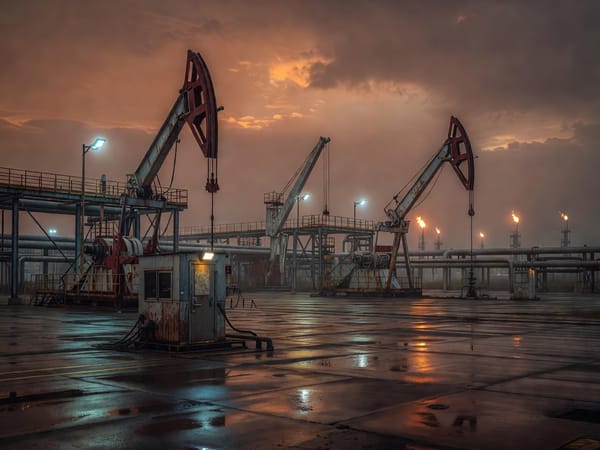
The week in brief. The United States reimposed a full naval blockade of the Strait of Hormuz, saying Iran had broken the peace deal it signed six weeks earlier. Ukrainian forces attacked a nuclear power plant and an oil export terminal on the same day. The Federal Reserve left interest rates unchanged, though three officials wanted a rise and blamed energy costs from the Gulf war. In all three cases, the machinery of ordinary commerce is now both the weapon and the target.
The Week in Detail
The Iran Ceasefire Signed in June Has Collapsed
The naval blockade of the Strait of Hormuz is back in force, and the administration says the deal that lifted it is finished.
President Trump described the blockade in a Fox & Friends interview on July 28, saying the US Navy controls all traffic through the strait and that only approved ships pass. According to the White House release, the blockade was opened briefly during negotiations and reimposed after Iran broke the agreement.
That agreement was six weeks old. The United States and Iran signed a memorandum of understanding in late June, mediated by Pakistan and Qatar, ending hostilities and restoring navigation. Oil fell from about $120 a barrel in March to roughly $73 by the end of June. The European Central Bank's president noted at the time that the deal's durability was uncertain.
It did not hold. Iran resumed attacks on shipping by mid-July and American strikes resumed with it. On July 23 the President posted that he would bomb a bridge or a power plant every time Iran targeted a ship.
Last week the threats went further. Trump said he could destroy most of Iran's bridges within an hour and all its power plants within a day, and confirmed readiness to strike the underground nuclear site at Pickaxe Mountain. Secretary of State Marco Rubio said on July 28 that earlier military action had wiped out Iran's navy, air force, missile defenses, launchers and weapons factories. Both statements are the administration's own assessment of its campaign.
Treasury Sanctioned an Insurance Racket in the Strait of Hormuz
The most revealing sanctions action of the week targeted a protection racket dressed as an insurance market.
On July 29 the Office of Foreign Assets Control (OFAC) designated two Iranian firms, Persian Gulf Marine Insurance Company and HormuzSafe Marine Services Authority. According to Treasury, the companies run a scheme backed by the Islamic Revolutionary Guard Corps (IRGC) that forces commercial vessels to buy mandatory insurance before transiting the strait, and takes payment in digital assets to evade sanctions. Treasury's description is blunt: the companies manufacture the risk they then charge to cover.
The same action hit eight shadow fleet vessels and their owners. Shadow fleets are older tankers that switch off tracking systems to move sanctioned oil. The State Department said the campaign has now sanctioned more than 100 vessels this year.
A day later OFAC designated six entities and individuals in China, India, Russia and Iran for supporting Mahan Air, the carrier Treasury says moves IRGC weapons and personnel. One was an IRGC front company that had solicited the locations of American and Israeli military equipment in the region.
The week had opened with the opposite move. On July 27 OFAC removed 84 individuals and entities from its list and cleared 18 duplicate entries, the second such cleanup under a modernization effort aimed at dropping designations that no longer match current priorities.
Ukraine Struck a Nuclear Plant and an Oil Terminal on the Same Day
Two Ukrainian attacks on July 30 hit infrastructure that both sides have mostly treated as untouchable.
The Russian Foreign Ministry said Ukrainian forces attempted a strike inside the perimeter of the Zaporizhzhia Nuclear Power Plant, aiming at the dry storage facility for spent nuclear fuel and the building housing the transporter that moves the casks. Moscow warned the attack risked a radiological accident felt across Europe. That account comes from the Russian government and has not been independently confirmed.
The International Atomic Energy Agency (IAEA) reported separately that military activity near the plant and the town of Enerhodar had increased. Its team recorded a two-day internet outage at the site, the longest since the agency established a presence there, along with continuing water supply problems.
This follows a pattern running since spring. A drone damaged the plant's external radiation monitoring laboratory in early May, disabling equipment used during nuclear emergencies. Another drone carrying explosives crashed near a turbine hall in mid-May without detonating. The plant has run on a single backup power line since its main line disconnected in March.
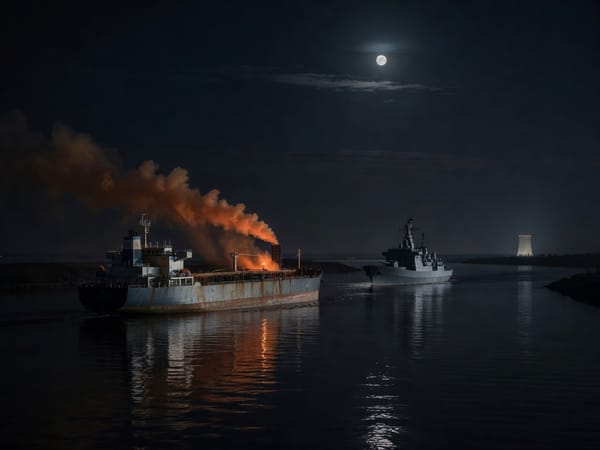
Hours earlier, Ukrainian drones attacked oil tankers near the Caspian Pipeline Consortium terminal at Novorossiysk. The vessels were foreign flagged with international crews, chartered by companies including a Chevron venture. Fires were extinguished and no spill was reported, but loading was suspended. That terminal is how most Kazakh crude reaches world markets. Rubio had spoken with the Kazakh foreign minister the previous day about the reliability of that exact route.
The Fed's Three Dissents and a Scrap Metal Emergency
The Gulf war showed up in two American economic decisions this week, one about interest rates and one about garbage.
The Federal Open Market Committee voted 9 to 3 on July 29 to hold its target range at 3.50 to 3.75 percent. Beth Hammack, Neel Kashkari and Lorie Logan each wanted a quarter point increase. The committee attributed stubborn inflation partly to energy supply shocks and the Middle East conflict. For anyone refinancing a mortgage or taking a car loan, that is the war arriving as a monthly payment.
The next day the President invoked Section 101 of the Defense Production Act to declare recoverable critical minerals scarce and essential to national defense. The category covers black mass, the shredded residue of used lithium-ion batteries, along with end-of-life rare earth magnets and swarf, the metal shavings left by machining. Commerce was directed to secure domestic supply, including through export restrictions.
The reasoning is that minerals sitting inside discarded products are a reserve the country has been shipping abroad. It builds on a Section 232 action in May and on the critical minerals framework signed the same month by the United States, Japan, Australia and India, which committed up to $20 billion and named recovery from electronic waste as a priority.
Brussels moved on a related front. The European Commission restricted European Investment Bank financing for solar, wind and battery storage projects using inverters made in China, Russia, Iran or North Korea. Inverters convert panel output into grid electricity and are network connected, which is the stated cybersecurity concern. Beijing raised what it called serious concern over recent US trade restrictions in a July 30 call with Treasury Secretary Scott Bessent.
What It Means
The clearest pattern is that commercial infrastructure has become the main arena. Marine insurance contracts, tanker registries, airline sales agents, solar inverters and battery scrap were all subjects of state security policy in a single week. None is a weapon in any conventional sense. All are now regulated as though they were.
The traffic runs the other way too. Nuclear plants and oil terminals, long treated as too dangerous to strike, were struck. Zaporizhzhia and Novorossiysk were hit on the same day, and a nuclear plant under construction in Iran was struck eleven days earlier. Whatever restraint once applied to these sites is eroding in two separate wars at once.
Sanctions policy is being sharpened rather than simply expanded. Clearing 84 stale designations in the same week as adding new ones points to a machine being tuned for enforcement instead of announcement. That matters, because the networks now being targeted run on digital asset payments and coercive insurance contracts, which are harder to reach than a list of tankers.
The three Federal Reserve dissents are where all of this lands on people who have no view on the Strait of Hormuz. Energy shocks are holding American inflation above target, which keeps borrowing expensive for everyone.
What to Watch Next Week
Strikes move to the nuclear sites: The administration has now named Pickaxe Mountain twice and says it has the intelligence to hit it. Watch for evacuation advisories around the site, IAEA statements on safeguarded facilities inside Iran, and movement of US naval assets into the northern Gulf.
A nuclear safety incident forces an international response: Zaporizhzhia is running on one backup power line with degraded monitoring and communications. Watch for an emergency IAEA board session, a request for a local ceasefire to repair off-site power, and any change in the plant's grid connection status.
Commerce writes the mineral export rules: The determination hands Commerce authority it has not yet used. Watch for a proposed rule covering black mass exports, Chinese countermeasures on rare earth processing, and whether Quad partners align their own recycling restrictions.
Generated from structured event data extracted from official government and institutional sources. Not financial or legal advice.