Global Brief: Nov 9 – Nov 15
The US says its Iran blockade now does the work of war, while Fed officials warn the oil costs behind it could push interest rates higher in December.


The week in brief. Russia, Ukraine and the United States opened a new round of peace talks in Abu Dhabi while Europe lined up fresh money for Ukraine and new sanctions on Russia. Washington said its blockade of Iran was working well enough to make more combat unnecessary. A failure of decades-old equipment forced a nationwide halt to US flights. Governments relied on economic pressure rather than force this week, and the costs reached ordinary people through fuel prices and grounded planes.
The Week in Detail
Abu Dhabi Talks Open as Europe Prepares a 22nd Sanctions Package
A new round of Russia-Ukraine-US negotiations began in Abu Dhabi on November 10, and Europe spent the rest of the week making sure Ukraine would arrive at any settlement with money and allies behind it.
The talks had been in the works for weeks. Russian Foreign Minister Sergey Lavrov said in late October that a Russian delegation was finalizing details for mid-November meetings, and Secretary of State Marco Rubio confirmed on November 8 that envoys Jared Kushner and Steve Witkoff were heading to the emirate.
The opening positions were far apart. Lavrov said Moscow would not accept an immediate ceasefire without clarity on what comes after it, and accused Brussels of buying time to rebuild Ukraine's military. Rubio called the talks "very productive," noted that five European Union countries had representatives present, and said the US goal is to eventually bring European partners directly to the table.
Europe moved to claim that seat. At an informal summit in Dublin on November 13, EU leaders named a "European Team" for the peace process made up of EU institutions and five leading members of the Coalition of the Willing, the group of states backing Ukraine's security. European Council President António Costa said only Ukraine has the legitimacy to decide on its territory.
The money followed. The European Commission proposed splitting next year's Ukraine Support Loan into €31.7 billion for defense and €13.3 billion for budget support, citing Ukraine's liquidity problems. Commission President Ursula von der Leyen said a 22nd sanctions package against Russia would be ready before the European Council meets on November 26–27. The Council of the EU also extended its military assistance mission for Ukraine to 2028 with nearly €300 million attached.
The war itself did not pause. The International Atomic Energy Agency (IAEA) reported that two workers at the Zaporizhzhya nuclear plant were killed on November 9 and 10, and that a transformer repaired under an IAEA-brokered local ceasefire was destroyed again. Its director warned that grid damage was already forcing Ukrainian reactors to cut power as winter begins.
By November 15, Lavrov said US negotiators were traveling to Moscow to brief President Vladimir Putin, and that Russia's war aims had not changed since June 2024.
The Iran Pressure Campaign Holds, and Its Oil Premium Reaches the Fed
The United States told its allies this week that economic pressure on Iran was doing the work of military force, while Federal Reserve officials warned that the oil costs tied to that standoff are feeding into American prices.
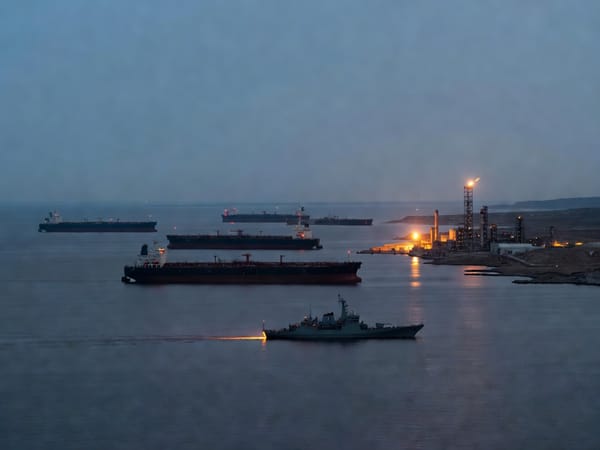
At a meeting of Group of Seven (G7) foreign ministers in Paris on November 10, Rubio said the combination of sanctions and a naval blockade was working so well that President Trump saw no need for major combat operations. He said almost all of Iran's oil revenue would dry up once the remaining oil at sea was sold. The G7 statement condemned Iran's attacks on shipping in the Strait of Hormuz, the narrow channel that carries much of the Persian Gulf's oil exports, and backed US-led mine clearing and escorts.
This builds on months of escalation recorded in October. Treasury designated 17 tankers it described as the bulk of Iran's remaining "shadow fleet," older ships that hide their movements to carry sanctioned oil. On October 19, Rubio said the US blockade was preventing Iran from exporting any oil through the strait.
Not everyone in Washington accepts the approach. Secretary of War Pete Hegseth publicly rejected an impeachment resolution from Representative Thomas Massie that cited operations against Iran, Yemen, drug cartels and Venezuela's Nicolás Maduro, calling it a policy dispute.
The economic side effects are visible in central bank speeches. Fed Governor Christopher Waller said on November 10 that the cost of moving tankers safely through Hormuz, including insurance and ship-to-ship transfers, was reportedly adding $20 to $30 to each barrel of oil. Fed staff research, he said, suggests energy shocks may now pass through to core inflation more stubbornly than in the past.
That matters because the Fed is already fighting high prices. The Federal Open Market Committee (FOMC) raised rates in September and held them at 3.75 to 4 percent in October. Waller said he was leaning toward another quarter-point increase in December, and a half-point if October consumer prices came in hot. Vice Chair Philip Jefferson reported inflation of 3.6 percent on the Fed's preferred measure and pointed to higher airfares as a sign that energy costs are spreading. For households, that points to borrowing costs, from credit cards to mortgages, staying high or rising into 2027.
A 1980s-Era Network Grounds US Air Traffic, and a $50 Billion Request Follows
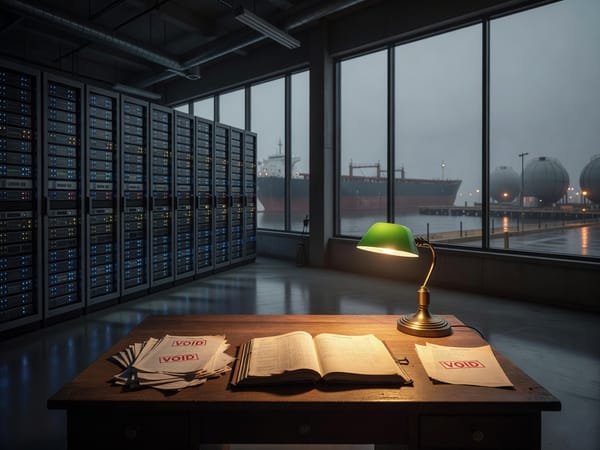
On the afternoon of November 13, the Federal Aviation Administration (FAA) halted all flights nationwide after radar and communications systems at control centers across the country became unstable.
More than 3,500 aircraft were airborne when the order came. According to Transportation Secretary Sean Duffy, controllers brought them in using established procedures, and fewer than 400 remained in the air by the time he briefed reporters.
Duffy and Homeland Security Secretary Markwayne Mullin said there was no evidence of a cyberattack. They blamed overloaded switches, routers and copper phone lines dating to the 1980s.
The administration turned the outage into a funding request. Duffy called it an emergency and asked Congress for $50 billion to rebuild the air traffic control system. He said the $12.5 billion already approved was earmarked for radar and radios rather than a new telecom network, and named AT&T, Verizon and Lumen as ready to build one. President Trump said Congress must approve the rest.
The outage landed in a week when the administration was already focused on airspace. On November 9, five federal departments signed an agreement to coordinate counter-drone operations, citing FBI arrests this summer of men accused of planning a drone attack near a White House event.
Washington Builds a Technology Bloc While Opening an AI Hotline With Beijing
The United States moved on two tracks in technology and trade this week: deepening a coalition of allies around advanced computing, while opening a new channel of cooperation with its main rival.
Treasury Secretary Scott Bessent announced on November 11 that the new US-China Board of Trade had agreed to seek better tariff treatment for $30 billion of non-sensitive goods in each direction. He also announced a US-China dialogue on superintelligence, meaning AI systems that exceed human ability across most tasks. The two sides plan to share testing practices and set up a direct channel to warn each other of serious incidents. China, for its part, extended its suspension of a 24 percent tariff on US goods for two more months while keeping a 10 percent tariff in place.
Four days later, the US and nine partners, including Japan, India, South Korea, Israel and the UK, signed the San Francisco Declaration under the "Pax Silica" initiative. The State Department said the pact treats economic security as national security and creates working groups on securing the supply chains behind advanced AI.
Europe pursued its own version. Von der Leyen said the Commission was mobilizing about €30 billion for seven AI "gigafactories," large computing centers for training models. The Commission also proposed a Digital Fairness Act that would ban manipulative website designs, let users switch off addictive features like endless scrolling, and make subscriptions easier to cancel.
Trade pressure elsewhere stayed blunt. President Trump threatened to double tariffs on Mexico immediately if it does not stop migrant caravans heading north.
What It Means
The common thread this week was leverage that is economic rather than military. Washington described a blockade and sanctions as a substitute for further strikes on Iran. Europe is pairing a loan package with a sanctions package so Ukraine can negotiate from strength. The US offered China tariff relief and a technology dialogue at the same time it organized allies into a technology bloc. In each case, the decision-makers framed money and market access as the main tools of pressure.
Those tools carry costs, and the costs are showing up in prices. The Fed's own officials linked the Hormuz standoff to oil prices, and oil prices to the broader inflation that could push interest rates higher in December. Pressure that works by squeezing supply, as with Iranian oil, tends to raise what everyone else pays. Jefferson added a second source of strain, with AI-driven demand pushing up the price of memory chips.
The air traffic failure exposes a quieter vulnerability. The US spent the week projecting control over shipping lanes and technology supply chains, yet its own skies were shut down by copper wiring from the 1980s. Officials ruled out a cyberattack, but the episode showed how much of the economy runs on infrastructure that has gone decades without replacement.
Europe is also changing how it shows up. By naming its own negotiating team for Ukraine and planning the money and sanctions to back it, the EU is asking for a direct role in talks that the US has so far led.
What to Watch Next Week
Moscow Weighs the Abu Dhabi Framework: US negotiators are expected in Moscow to brief Putin, and Lavrov has said Russia's course will follow aims that have not changed since 2024. A shift would show up first in Russian language on ceasefire sequencing. Watch for statements after the Moscow briefing, any confirmed Putin-Trump meeting date, and whether European officials join the next round directly.
The Case for a December Rate Hike Builds: Two Fed officials signaled concern this week that energy costs are spreading into everyday prices. More data before the December meeting will decide whether the next move is a quarter-point or a half-point. Watch for October inflation figures, further Fed speeches on energy pass-through, and movement in oil shipping costs through Hormuz.
Air Traffic Funding Moves to Congress: The administration has framed the ground stop as an emergency requiring $50 billion. Congress now has to decide whether to treat it that way. Watch for an emergency funding bill, FAA findings from the investigation, and any further outages at regional control centers.
Generated from structured event data extracted from official government and institutional sources. Not financial or legal advice.