Survival Skills
Practical survival skills you can start building today — from growing food and managing crises to everyday habits that make you genuinely self-reliant.


The average American experiences nearly two power outages per year, and weather-driven blackouts have gotten roughly 20% worse annually since 2019. Supply-chain disruptions, extreme weather events, and rising food costs are no longer abstract risks reserved for evening news segments — they show up as empty pharmacy shelves, cancelled flights, and grocery bills that keep climbing. Only about one in four Americans feels confident they would know what to do in a major disaster, according to recent preparedness research.
That gap between risk and readiness is exactly where survival skills come in. Not the Hollywood version involving machetes and face paint, but the practical, learnable abilities that let you feed yourself, keep your household running during a disruption, and make clear decisions under pressure. This guide breaks those skills into three layers — food production, crisis management, and everyday resilience — so you can start building genuine self-reliance today.
Why These Skills Matter More Than Ever
The United States recorded 27 billion-dollar natural disasters in 2024 alone, from hurricanes and wildfires to severe flooding. Meanwhile, the Department of Energy warned in mid-2025 that blackout hours could increase dramatically by the end of the decade if grid infrastructure isn't upgraded. On the food front, global supply-chain shocks and price volatility have pushed more households to consider local food production as a hedge against uncertainty.
Survival skills aren't about retreating from modern life. They're about removing single points of failure. When you can grow a portion of your own food, handle a 72-hour power outage without scrambling, and repair things instead of replacing them, you've quietly made yourself far more adaptable than most people around you. That adaptability compounds: each new skill reduces your dependence on systems you can't control.
Growing Your Own Food
Home food production is one of the highest-leverage resilience skills you can develop. Research published in Agriculture & Food Security found that households with home gardens showed measurably better dietary diversity and lower rates of food insecurity. Gardening interest has surged in recent years — spending on gardening supplies rose over 11% between 2024 and 2025, and roughly half of gardeners expect to spend even more time growing food in 2026.
You don't need a homestead to start. A sunny windowsill, a balcony, or a few square metres of yard is enough.
Start With What's Easy and Useful
Herbs like basil, rosemary, and parsley are nearly foolproof in containers and save surprising money over store-bought equivalents. Once you're comfortable, move to leafy greens (lettuce, spinach, kale) and compact fruiting plants like cherry tomatoes or peppers. These crops grow fast, tolerate containers well, and give you visible results within weeks — which keeps motivation high.
The key fundamentals to learn early are your local growing zone (the USDA Plant Hardiness Map is a free starting point), basic soil composition, watering frequency, and sunlight requirements. Composting kitchen scraps closes the nutrient loop and reduces waste at the same time.
Scale When You're Ready
Raised beds or a small in-ground plot open up calorie-dense staples: potatoes, dry beans, winter squash, and sweet potatoes. These crops store well, stretch meals, and deliver real food security. Learning to save seeds from open-pollinated varieties means you won't need to buy new seed every season — a skill that pays for itself quickly.
If you have space and local regulations allow it, a small flock of laying hens adds protein to your supply chain for relatively little daily effort. Even without livestock, a well-planned 4×8-foot raised bed can produce a meaningful share of a household's summer vegetables.
Expect Setbacks and Learn From Them
Aphids, slugs, unexpected frost, and blossom-end rot will all show up eventually. That's normal. Companion planting (like marigolds near tomatoes to deter certain pests), row covers for frost protection, and crop rotation to prevent soil-borne disease are time-tested countermeasures that don't require chemicals. Every failed crop teaches you something the next season benefits from. The gardeners who produce the most food aren't the ones who never had problems — they're the ones who kept planting.
Managing a Crisis Without Panic
Preparedness isn't paranoia. It's the unsexy work of making sure a foreseeable disruption doesn't become an emergency. FEMA's own messaging has shifted toward the theme that preparedness starts at home, and for good reason — first responders can't reach everyone immediately, and the first 72 hours of any disaster are largely self-managed.
Build Your Baseline Supplies
The standard recommendation is one gallon of water per person per day, stored for a minimum of three days. Two weeks is a more realistic target for events like extended power outages or regional flooding. A gravity-fed or pump water filter (look for NSF-certified options) lets you purify additional water from rain or local sources if the outage stretches longer.
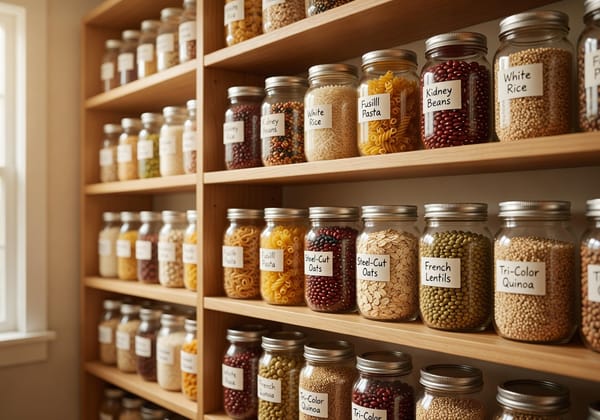
For food, stock shelf-stable staples you actually eat — canned goods, rice, dried beans, oats, peanut butter — and rotate them into your regular meals so nothing expires forgotten in a closet. A camp stove with fuel rounds out cooking capability when the power is out.
Prioritise Skills Over Gear
A well-stocked kit helps, but skills don't run out of batteries. A basic first-aid course (the Red Cross offers them widely) is one of the highest-value investments of a single weekend you'll ever make. Learning to start a fire reliably with a ferro rod, reading a paper map and compass, and knowing how to shut off your home's gas and water mains are all compact skills that punch well above their weight in an actual disruption.
Navigation deserves special mention. GPS dependence is almost universal now, but a paper road atlas of your region and a basic orienteering compass cost under $20 combined and work indefinitely without a cell signal.
Train Your Mental Resilience
Stress narrows your thinking precisely when you need it to be flexible. The simplest way to build mental resilience is controlled exposure: try a voluntary day without electricity, cook only from your stored supplies for a weekend, or walk a route using only a map. These low-stakes experiments reveal gaps in your planning and build the kind of calm confidence that serves you when the stakes are real.
Mindfulness practices — even five minutes of focused breathing daily — have a well-documented effect on stress regulation. The goal isn't to eliminate anxiety but to keep it from hijacking your decision-making.
Everyday Resilience: The Quiet Force Multiplier
Dramatic disasters get the attention, but most resilience is built in ordinary moments. The habits you practise daily are the ones that hold up under pressure.
Repair Before You Replace
Learning to sew a button, patch a seam, fix a leaking tap, or sharpen a kitchen knife saves money and builds a bias toward problem-solving over consumption. YouTube and community repair cafés have made these skills more accessible than at any point in history. Each repair you complete is a small deposit in your self-reliance account.
Reduce Energy Dependence
The average outage duration for US customers reached 12.8 hours by mid-2025, with southern states averaging over 18 hours. Even modest steps help: a solar USB charger keeps phones and radios powered, a battery-powered lantern replaces candle risk, and a manual can opener means your canned supplies are actually accessible when the electric one is dead. For households ready to invest further, portable power stations or rooftop solar with battery backup can keep critical loads running through multi-day outages.
Build Community Connections
Self-reliance and community aren't opposites — they reinforce each other. Knowing your neighbours, participating in local skill-shares, and maintaining a network of people with complementary abilities (someone who can weld, someone who grows medicinal herbs, someone with medical training) creates a resilience web that no individual can match alone. More than half of surveyed Americans cite cost as the primary barrier to preparedness; sharing tools, seeds, and knowledge within a community directly addresses that obstacle.
Where to Start This Week
The biggest barrier to building survival skills isn't knowledge — it's inertia. Here's a concrete starting sequence you can begin today:
- Audit your water supply. Do you have enough stored water for three days? If not, fill a few clean containers and set a reminder to rotate them quarterly.
- Plant one thing. A pot of basil on a windowsill counts. The point is to start the learning cycle.
- Locate your shutoffs. Find and label your home's water main, gas valve, and electrical panel. Know how to turn each off.
- Assemble a 72-hour kit. Water, food, first-aid supplies, flashlight, batteries, copies of important documents, cash in small bills.
- Learn one new skill this month. Take a first-aid class, practise fire-starting, or try navigating your neighbourhood with a paper map.
None of these steps requires a large budget or a free weekend. They require a decision to start, and the willingness to keep going one skill at a time.
The Compound Effect of Preparedness
Every survival skill you add works like compound interest on your independence. The garden feeds you and teaches patience. The crisis kit buys you time and lowers panic. The repair habit saves money and sharpens problem-solving. Stacked together, these abilities don't just prepare you for worst-case scenarios — they make everyday life more capable, more resourceful, and significantly less dependent on systems outside your control.
The tools are simple. The learning curve is gentler than most people expect. And the return — measured in confidence, savings, and genuine security — starts paying off almost immediately.