Freedom in a Money-Driven World
True freedom isn't measured by what you earn — it's measured by what you need. Learn how practical skills and smart investments in self-sufficiency can dramatically reduce your dependence on systems you don't control.


Every month, the average American household sends roughly $6,500 out the door — housing, transportation, food, utilities, subscriptions. According to the Bureau of Labor Statistics, that adds up to nearly $78,500 a year. Most of that money flows toward things we could, with the right knowledge and setup, partially or fully provide for ourselves.
This isn't an argument against earning money or participating in the economy. It's a reframe: what if you measured your freedom not by how much you earn, but by how little you need to spend? True autonomy comes from reducing your dependency on systems you don't control — and that starts with practical skills, smart infrastructure, and intentional choices.
The Hidden Cost of Convenience
Modern life is built on outsourcing. We pay someone to cook our meals, fix our plumbing, maintain our vehicles, grow our food, and generate our electricity. Each of those transactions is perfectly fine on its own. But stacked together, they create a fragile architecture of dependence.
The risk isn't theoretical. Job losses, inflation spikes, supply chain disruptions, and utility failures happen regularly. When they do, people with practical capabilities navigate them far more easily than people who've only ever swiped a card. The 2021 Texas grid failure left millions without power or water for days. Residents with off-grid capability — even basic preparations like stored water and backup heating — fared dramatically better than those fully dependent on municipal systems.
Convenience isn't the enemy. Unconscious reliance is. The goal isn't to reject modern services but to ensure you're choosing them rather than being trapped by them.
Skills Are the Real Currency
Financial literacy research consistently shows that practical knowledge compounds in ways that mirror financial investments. A 2025 TIAA Institute survey found significant gaps in basic financial literacy across the population — but the broader point extends beyond money management. People who invest in learning versatile, tangible skills build a kind of wealth that inflation can't erode.
Consider the difference between two people facing the same plumbing emergency. One calls a professional and pays $200–$400 for a repair that takes thirty minutes. The other, who spent a weekend learning basic pipe repair, handles it with $15 in parts. Over a lifetime of home maintenance, vehicle upkeep, clothing repair, and food preparation, those savings accumulate into tens of thousands of dollars.
More importantly, skills transfer and combine. Someone who learns basic carpentry can also understand structural repair. A person comfortable with electrical circuits can troubleshoot appliances, install fixtures, and eventually work with solar equipment. Each new capability opens adjacent ones, creating a expanding web of self-reliance.
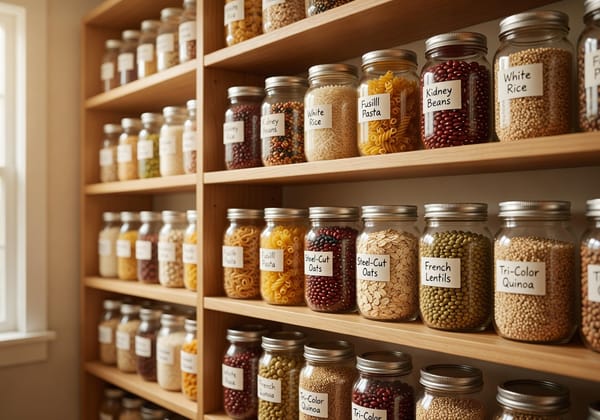
The most valuable skills to develop for practical autonomy tend to fall into a few categories: food production and preservation, basic construction and repair, energy systems, water management, first aid, and digital literacy. You don't need mastery in all of them — functional competence across several creates genuine resilience.
Making Your Home Work for You
Housing consumes about 33% of the average household budget, or roughly $2,189 per month. A significant chunk of that goes to utilities — electricity, water, heating, and cooling. These are exactly the expenses most amenable to self-sufficiency upgrades.
The economics of residential solar have shifted dramatically. In early 2025, a homeowner documented achieving complete grid independence with a modest 5.8kW system using just 14 panels. Federal tax credits and state incentives currently reduce installation costs by 30–50%, and the average system saves between $31,000 and $100,000 over its 25-year lifespan. That's not idealism — it's arithmetic.
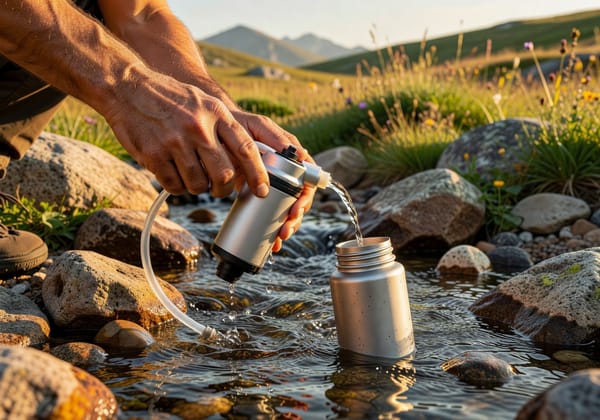
Rainwater harvesting follows a similar logic. A properly designed collection system on a standard roof can capture thousands of gallons annually, reducing or eliminating water bills for irrigation and, with appropriate filtration, supplementing household use. Combined with solar, these systems create a home that generates two of its most essential resources independently.
You don't need a rural homestead to make this work. Urban and suburban residents can start with smaller moves: efficient insulation to cut heating and cooling costs, a balcony or container garden for herbs and vegetables, a basic composting setup to reduce waste disposal needs, or a community solar share for renters without roof access. Each step chips away at your monthly dependence.
Tools That Create Rather Than Consume
There's a meaningful distinction between things you buy to consume and things you buy to create. A streaming subscription delivers entertainment but builds nothing. A quality sewing machine, a set of hand tools, or a 3D printer transforms you from a buyer into a maker.
This shift in purchasing philosophy pays compounding returns. A bicycle repair kit costs perhaps $40 and eliminates the need for shop visits that run $50–$100 each. Open-source software tools replace subscription services that cost hundreds per year. A pressure canner and basic preservation supplies turn seasonal produce into a year-round food supply, reducing grocery bills while improving food quality.
The deeper value is psychological. Every time you repair something instead of replacing it, build something instead of buying it, or maintain something instead of outsourcing it, you reinforce a sense of agency. You become someone who solves problems rather than someone who pays for solutions. That mental shift matters as much as the financial savings.
Measuring Your Autonomy
Here's a practical framework: your autonomy can be gauged by the minimum monthly income you'd need to maintain your current quality of life. The lower that number, the freer you are — regardless of how much you actually earn.
This inverts the conventional approach to financial security, which focuses almost entirely on increasing income. Instead, systematically reducing your baseline needs achieves the same result from the opposite direction, and it's often more within your control.
Map your essential recurring expenses: housing, food, energy, transportation, healthcare, and communications. For each category, ask what you could internalize — produce yourself, reduce through efficiency, or eliminate through a one-time investment. A household that drops its baseline from $6,500 to $3,500 per month through solar installation, a productive garden, vehicle maintenance skills, and reduced subscription overhead hasn't just saved $3,000 a month. It's purchased optionality — the freedom to work less, change careers, weather economic downturns, or redirect resources toward things that genuinely matter.
Track your progress quarterly. Every reduction in mandatory spending is a measurable gain in independence.
Where to Start
Autonomy isn't built overnight, and it doesn't require abandoning modern life. It's a gradual, intentional process of reclaiming capability.
Three practical starting points worth considering: first, audit your recurring expenses and identify the single largest category where a skill or infrastructure investment could reduce costs. Second, commit to learning one practical skill this quarter — whether that's basic electrical work, food preservation, bicycle maintenance, or vegetable gardening. Third, evaluate your home's energy profile and research whether solar, improved insulation, or water collection makes financial sense for your situation.
The common thread across all of these is shifting from passive consumption to active capability. Every skill learned, every system installed, every dependency reduced creates a buffer between you and the forces you can't control. That buffer is freedom — and unlike money in a bank account, no market crash or policy change can take it away.