Environmental Awareness
Environmental awareness is a practical skill, not an ideology. Learn to read your local ecosystem, focus on high-impact choices, and build real resilience.


Every system that keeps you alive — the water you drink, the air you breathe, the food on your plate — depends on ecological processes most people never think about. That's not a moral failing; it's a design problem. Modern life insulates us from the natural systems that sustain it, which means most of us lack the basic environmental literacy needed to make informed decisions about resources, health, and long-term resilience.
Environmental awareness isn't about guilt or ideology. It's a practical skill set — the ability to read your local landscape, understand resource flows, and make choices grounded in how the world actually works. This guide breaks down what that looks like in practice.
Why Environmental Literacy Is a Survival Skill
The global economy depends on nature far more than most people realize. Ecosystem services — pollination, water filtration, carbon storage, soil fertility — are collectively valued at an estimated $150–179 trillion annually, roughly 1.5 to 1.7 times global GDP. Over half of the world's economic output is moderately or highly dependent on functioning ecosystems, according to the World Economic Forum.
When those systems degrade, the costs are real. The World Bank estimates that the collapse of just a few key ecosystem services — wild pollination, marine fisheries, and native timber — could strip $2.7 trillion annually from the global economy by 2030. Meanwhile, roughly 3.2 billion people are already directly affected by land degradation.
These aren't abstract projections. They translate into higher food prices, water scarcity, supply chain disruptions, and reduced quality of life. Understanding the ecological systems behind these headlines is the first step toward protecting yourself from their downstream effects.
Understanding the Systems That Support You
Environmental awareness starts with knowing what's happening in your own backyard — literally. Every region operates within a web of interconnected systems: watersheds that supply drinking water, soil biomes that grow food, plant communities that filter air and regulate temperature, and weather patterns that determine what thrives and what doesn't.
Think of your local area as a bioregion — a geographic area defined not by political borders but by natural features like watersheds, mountain ranges, and ecosystems. The bioregional approach to environmental awareness encourages you to learn the specific characteristics of your place: Where does your water come from? What grows well in your soil and climate? What species indicate ecosystem health — or decline — in your area?
This kind of place-based knowledge was common sense for most of human history. Your grandparents probably knew when to plant based on local frost dates, which streams ran dry in summer, and which wild plants were edible. Recovering that literacy doesn't require a biology degree. It requires paying attention.
Start with three foundational questions about where you live: Where does your water originate and how does it reach you? What is your soil type and what does it support? What are the dominant weather patterns and how have they shifted in recent years? Answering these builds a mental model of your environment that informs everything from gardening to emergency preparedness.
Reading the Signals of Change
Ecosystems communicate through patterns, and disruptions in those patterns are early warning signs worth heeding. Shifts in seasonal timing — earlier springs, later frosts, altered migration schedules — signal changes in the underlying systems your community depends on.
Practical observation matters here more than headlines. Track what's actually happening around you: Are growing seasons lengthening or becoming more unpredictable? Are local water sources more variable than they used to be? Are certain species appearing — or disappearing — from your area? These ground-level observations are often more actionable than global averages because they tell you what your environment is doing.
Adaptation follows naturally from observation. If your region's rainfall patterns are shifting, that affects what you can grow, how you manage water, and how you prepare for drought or flooding. If local pollinator populations are declining, that's a signal with direct implications for food production — globally, up to $577 billion in annual crop production is at risk from pollinator loss, according to the UN Sustainable Development Goals Report.
The goal isn't to predict the future with precision. It's to build enough situational awareness that you're responding to real conditions rather than being blindsided by them.
Making Household Choices That Actually Matter
Sustainability advice often focuses on feel-good gestures — carry a reusable bag, skip the straw — while ignoring the categories where household decisions have the greatest impact. Data from the University of Michigan Center for Sustainable Systems shows that the average U.S. household generates about 48 metric tons of CO₂-equivalent emissions per year, with transportation (roughly 30%), housing, and food as the dominant contributors.
If you want your choices to move the needle, focus on the big three: how you get around, how you heat and power your home, and what you eat. Everything else is rounding error by comparison.
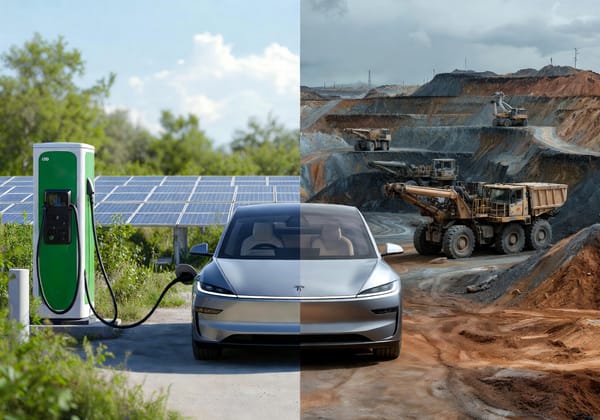
Transportation is the single largest emissions category for most households. Reducing car dependence — through trip consolidation, cycling, public transit, or remote work — delivers outsized returns. If replacing a vehicle, the shift from a conventional car to an electric one, powered by a decarbonizing grid, is one of the highest-impact individual choices available.
Home energy is the next major lever. Insulation, efficient heating and cooling systems, and smart energy management can cut household energy emissions significantly. For homeowners, a home energy audit is one of the best investments you can make — it identifies the specific inefficiencies in your building envelope and systems.
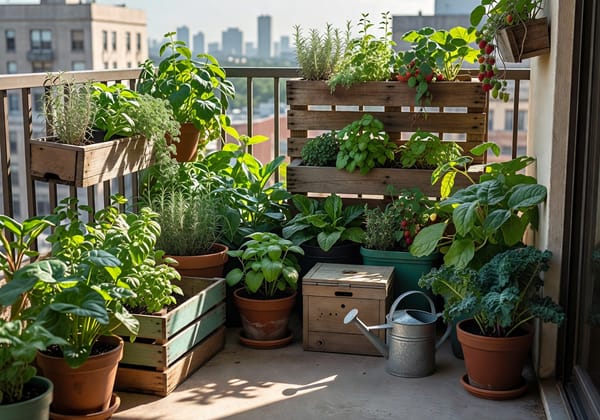
Food rounds out the top three. Eating more plant-based meals, reducing food waste (which accounts for roughly 8–10% of global greenhouse gas emissions), and sourcing food locally when possible all contribute. Supporting local growers also strengthens regional food resilience — a practical benefit that goes beyond emissions math.
Recent research published in ScienceDaily confirms that household-level action can play a meaningful role in addressing climate change, particularly when the highest-emitting households — whose per capita footprints can be 15 times higher than nearby lower-income neighborhoods — adjust their consumption patterns.
Building Environmental Awareness Into Daily Practice
Environmental literacy isn't a one-time achievement. It's an ongoing practice, much like physical fitness or financial literacy. Here are concrete ways to build it into your routine.
Learn your local ecology. Identify five native plants, five common birds, and the primary watershed in your area. This baseline knowledge transforms a generic landscape into a readable one. Local nature centers, extension services, and citizen science projects like iNaturalist or eBird are excellent starting points.
Track your resource flows. Spend a month consciously noting where your water, food, and energy come from. How much of it is local versus imported? How resilient are those supply chains? This exercise often reveals surprising dependencies.
Practice seasonal awareness. Reconnect with the natural calendar — not just temperature changes, but planting windows, wildlife activity patterns, and weather cycles. Seasonal awareness was a core competency for most of human history, and it remains practically useful for gardening, food preservation, energy planning, and emergency preparedness.
Engage with your community. Environmental resilience is a collective project. Participate in local watershed groups, community gardens, tree-planting initiatives, or restoration projects. The UN Decade on Ecosystem Restoration has catalyzed thousands of community-led restoration efforts worldwide, demonstrating that collaborative local action produces measurable results.
Teach what you learn. Environmental literacy compounds when shared. Discuss what you observe with neighbors, involve children in nature observation, and contribute to community knowledge. Research consistently shows that peer-to-peer learning is one of the most effective drivers of environmental behavior change.
Practical Takeaways
- Environmental awareness is a practical skill set, not a political identity — it helps you make better decisions about resources, health, and resilience.
- Your local bioregion is the most important environment to understand. Learn your water sources, soil types, weather patterns, and native species.
- Focus sustainability efforts on the high-impact categories: transportation, home energy, and food. Minor lifestyle tweaks are less effective than structural changes in these three areas.
- Build observation habits: track seasonal patterns, resource flows, and ecological signals in your area over time.
- Environmental resilience is community-scale work. Engage locally, share knowledge, and participate in restoration efforts.
The most self-sufficient people throughout history have been those who understood their environment intimately — not from textbooks, but from direct engagement. That knowledge is still available to anyone willing to step outside, pay attention, and start learning the systems that sustain daily life.