Crisis Preparedness Kit
Build a crisis preparedness kit that actually works — practical supplies, essential skills, and the mental readiness to stay capable when it counts.


Most people think about emergency preparedness the wrong way. They picture a doomsday bunker stacked with freeze-dried meals, or they dismiss the whole idea as paranoia. The reality sits somewhere far more practical: emergencies are ordinary events that happen to ordinary people. Power outages, severe storms, supply chain disruptions, house fires — these aren't hypothetical scenarios. They're Tuesday.
The difference between a stressful ordeal and a manageable inconvenience often comes down to one thing: whether you prepared before it mattered. Research published in Frontiers in Psychiatry found that individuals who reported higher levels of preparedness consistently demonstrated lower anxiety across crisis situations, reinforcing what common sense already tells us — readiness builds calm.
This guide walks through building a crisis preparedness kit that actually works. Not a shopping list you print and forget, but a system of supplies and skills you can rely on when infrastructure stumbles.
Water Comes First — Always
Every preparedness guide starts with water for good reason. The human body can manage weeks without food but only days without hydration. The CDC and Ready.gov recommend storing at least one gallon per person per day — and that covers both drinking and basic sanitation. A three-day supply is the minimum; a week's worth is better if you have the space.
For storage, use food-grade, BPA-free containers marked with recycling symbols #1, #2, or #4. Keep them in a cool, dark location away from chemicals or direct sunlight, which can degrade plastic and encourage bacterial growth. Rotate your supply every six months.
But stored water runs out or can become compromised. That's where purification skills matter. Boiling remains the most reliable method — bring water to a rolling boil for one minute, or three minutes at elevations above 6,500 feet. Portable filters like the Sawyer Mini or LifeStraw handle bacteria and protozoa effectively for on-the-go situations. Purification tablets (iodine or chlorine dioxide) are lightweight, cheap, and worth tossing into any kit as a backup.
There's also a low-tech option most people overlook: household bleach. For clear water, add eight drops of unscented liquid chlorine bleach per gallon, stir, and wait 30 minutes. For cloudy water, double the dose to 16 drops. It's not glamorous, but it works — and bleach is something most households already have on hand.
The key principle here is redundancy. Carry at least two methods of making water safe. If your filter breaks or your tablets expire, you still have options.
Food That Earns Its Space
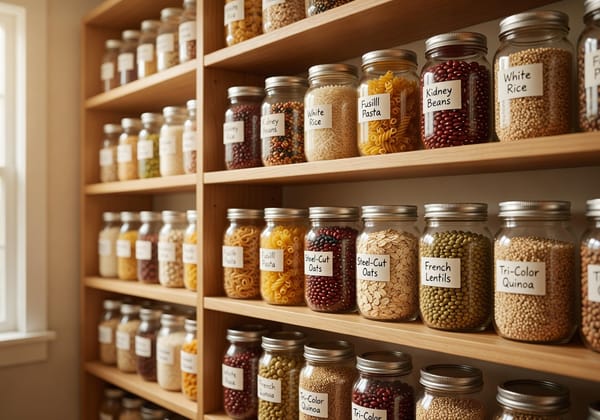
Emergency food isn't about gourmet meals. It's about calorie-dense, shelf-stable options that require minimal preparation and keep your body and mind functioning under stress.
Canned goods — soups, beans, tuna, vegetables — form a solid foundation. They're cheap, widely available, and last for years. Pack a manual can opener separately (the kind that attaches to your kit, not one that lives in a kitchen drawer you can't access). Dried foods like nuts, jerky, and dehydrated fruit offer high nutrition-to-weight ratios, making them ideal if you need to move. Energy bars and meal-replacement options round out the picture for quick calories without any preparation at all.
If you want the ability to heat food, a compact camping stove with fuel canisters takes up little space and makes a meaningful difference in morale during multi-day situations. A small pot and basic utensils complete a minimal cooking setup.
Beyond packing food, practice the skill of rationing. Most adults need roughly 2,000 calories per day under normal conditions, though stress and physical exertion can push that higher. Lay out your supplies and calculate how many days they'll actually cover. This exercise alone often reveals gaps people don't notice until it's too late.
Learn to identify food spoilage without relying on expiration dates alone. Bulging cans, off smells, unusual discolouration, or broken seals all signal danger — and foodborne illness during an emergency, when medical help may be unavailable, can turn a bad situation into a dangerous one.
The Tools That Actually Matter
It's tempting to go overboard on gear, but the best crisis kit prioritises versatility over volume. A few well-chosen tools cover an enormous range of situations.
A quality multi-tool — a Leatherman or Swiss Army knife with pliers, blades, and screwdrivers — handles repairs, food prep, and improvised solutions you can't predict in advance. A reliable LED flashlight with extra batteries (or a hand-crank model that never runs dry) is non-negotiable for any situation involving darkness, which is most of them.
Duct tape and paracord are the ultimate improvisation materials. Between them, you can patch gear, secure a tarp shelter, create a splint, bundle supplies for transport, or solve dozens of problems that haven't occurred to you yet. Fire-starting gear should include at least two methods — waterproof matches and a ferro rod, for example — because a single lighter can fail in wet or cold conditions.
For shelter, a compact tarp and an emergency Mylar blanket weigh almost nothing and can mean the difference between a cold, miserable night and a tolerable one. If your budget allows, a lightweight bivy sack or compact tent provides more protection.
The critical point with tools: owning them isn't enough. Practice starting a fire with your ferro rod on a windy afternoon. Tie a bowline knot and a taut-line hitch until your hands remember the motions. Sharpen your knife and test your flashlight batteries quarterly. Skills rust faster than steel.
First Aid: The Category People Underpack
A surprising number of preparedness kits skimp on medical supplies, which is exactly backward. Minor injuries — cuts, burns, sprains, blisters — are among the most common problems in any emergency, and they're the easiest to treat if you have the right supplies.
Ready.gov recommends a complete first aid kit as a core component, along with a seven-day supply of any prescription medications. If anyone in your household takes daily medication, this is arguably the single most important item in your entire kit.
Beyond the basics of bandages, antiseptic, and pain relievers, consider including a tourniquet, an Israeli bandage for wound compression, medical tape, tweezers, an instant cold pack, and a basic first aid manual. A CPR face shield weighs almost nothing and could save a life.
Equally important: take a basic first aid course. The Red Cross and many community organisations offer them regularly, often for free. Knowing how to control bleeding, stabilise a sprain, or recognise signs of shock transforms a box of supplies into genuine capability.
Staying Connected and Finding Your Way
Modern life runs on connectivity, and losing it during an emergency can feel as disorienting as the emergency itself. A battery-powered or hand-crank NOAA Weather Radio keeps you informed when cell towers are down and internet access disappears. This is your lifeline to official emergency broadcasts, evacuation orders, and weather updates.
A charged power bank extends your phone's usefulness — for communication, mapping, or accessing stored information — but don't depend on it as your only plan. Phones die, networks fail, and GPS requires satellites your situation may not accommodate.
Keep a physical map of your local area with key locations marked: hospitals, shelters, water sources, and at least two evacuation routes. A basic compass paired with the knowledge to use it gives you navigation capability that never needs charging. If it's been a while since you read a map, take it on a local hike and practice plotting a route. It's a satisfying skill to rebuild.
A whistle — loud, simple, requires no batteries — remains one of the most effective signalling tools available. Three blasts is the universal distress signal, and a whistle carries much farther than a human voice, especially when you're exhausted.
Documents and Financial Readiness
This is the category most preparedness guides gloss over, but FEMA specifically highlights it. In the aftermath of a disaster, proving your identity, accessing financial resources, and navigating insurance claims can be just as urgent as physical survival.
Store copies of essential documents in a waterproof bag within your kit: government-issued identification, insurance policies, bank account information, medical records, proof of address, and an emergency contact list. A USB drive with digital copies serves as a backup to the paper versions.
Keep cash in small denominations. ATMs and card readers require power and network access, both of which vanish in many emergencies. Even a modest amount of cash — enough to cover fuel, food, or a motel room for a few nights — provides options that plastic simply can't when systems are down.
Your Mind Is Part of the Kit
Psychological preparedness isn't a soft add-on — it's a force multiplier. Research from Frontiers in Psychiatry demonstrates that perceived readiness enhances feelings of control and resilience, directly reducing anxiety during crises. In other words, the act of preparing doesn't just give you supplies. It gives you confidence, and confidence keeps you thinking clearly when it matters most.
Pack a small notebook and pen for planning, journaling, or leaving notes for family members. A comfort item — a photo, a favourite small book, a familiar token — may seem trivial until morale becomes the thing that keeps you going on day three of a power outage.
More importantly, practice the mental skills before you need them. Controlled breathing techniques (four counts in, hold for four, four counts out) can interrupt a stress response in under a minute. Running "what-if" scenarios — what if the roads are blocked? what if we lose power for a week? — builds decision-making pathways your brain can access under pressure without freezing.
Talk through your plan with everyone in your household. Shared knowledge reduces panic. When everyone knows where the kit is, what's in it, and what to do first, the entire group becomes more resilient.
Bringing It All Together
Store your kit in a sturdy, portable container — a quality backpack for grab-and-go scenarios, or a plastic bin if you're sheltering in place. Some people maintain both: a full kit at home and a lighter version in the car.
Schedule a check every six months to rotate water, replace expired food and medications, update documents, test batteries, and adjust for seasonal needs (extra blankets and hand warmers in winter, sun protection and electrolyte packets in summer). Mark it on your calendar the same way you'd schedule an oil change — it's routine maintenance for a system you hope you'll never need but will be profoundly grateful for if you do.
Finally, use your kit. Cook a meal from your emergency food supply. Purify water with your filter. Set up your tarp in the backyard. Simulating a short-term disruption at home — even just a planned evening without electricity — reveals gaps in both your supplies and your skills while the stakes are low.
A crisis preparedness kit isn't about fear. It's about competence. It's the practical decision to invest a few hours and a modest budget now so that when the unexpected arrives — and at some point, it will — you respond with capability instead of chaos.
Key takeaways:
- Build redundancy into critical categories, especially water purification and fire-starting — carry at least two methods for each
- First aid supplies and prescription medications deserve priority space; a first aid course multiplies their value
- Documents and cash solve problems that gear cannot — include both in your kit
- Psychological readiness is backed by research and built through practice, not purchased
- Review and refresh your kit every six months; a neglected kit is a false sense of security