Building Resilient Communities
Discover how cities worldwide are using flood-proof architecture, green roofs, and nature-based design to build communities that thrive through disruption.


Every year, floods displace millions. Heatwaves buckle roads and overwhelm hospitals. Storms knock out power grids for weeks. Yet around the world, a growing number of cities are proving that these outcomes aren't inevitable. Through smarter urban planning and architecture that works with nature rather than against it, communities are learning not just to survive disruption but to thrive through it.
This isn't abstract theory. From floating neighborhoods in the Netherlands to green corridors that cooled an entire Colombian city by 2°C, resilient design is already reshaping how we build and live. Here's what's working, what the evidence shows, and how you can apply these ideas where you are.
What Resilient Urban Design Actually Means
Resilient design is the practice of building spaces that can absorb and adapt to environmental, social, and economic shocks — flooding, extreme heat, population pressure, earthquakes, supply chain disruptions. It's a fundamental shift from the twentieth-century approach that prioritized short-term efficiency and cheap construction over long-term adaptability.
The core idea is straightforward: instead of fighting natural systems with concrete and steel, work with them. Restore wetlands to absorb floodwater instead of building higher walls. Design buildings that stay cool through orientation and materials rather than energy-hungry air conditioning. Create neighborhoods where people share resources, energy, and knowledge.
These aren't utopian fantasies. They're engineering choices backed by data, and cities that have adopted them are measurably safer and more livable.
Flood-Proof Architecture: Building With Water, Not Against It
Flooding is the most common and costly natural disaster worldwide, and climate change is making it worse. Traditional construction treats water as the enemy. Resilient architecture treats it as a design parameter.
Floating and Elevated Homes
The Netherlands, where roughly a third of the country sits below sea level, has become a global laboratory for flood-adaptive housing. Amsterdam's IJburg neighborhood features homes built on pontoons that rise and fall with water levels. When storm surges hit, the houses simply float higher. This approach has since been adapted in Bangladesh, where monsoon flooding displaces millions annually, and along the U.S. Gulf Coast.
The principle scales beyond individual buildings. The Dutch "Room for the River" program, which deliberately widened floodplains and created overflow areas along major rivers, has become a template for river-adjacent cities worldwide.
Permeable Design and Amphibious Structures
In Bangkok, the Baan Nong Bua community pioneered amphibious homes with open ground floors that allow water to pass through, protecting living spaces on upper levels. Copenhagen has invested heavily in permeable pavements throughout its urban core, allowing rainfall to seep into the ground rather than overwhelming drainage systems.
These approaches share a common logic: rather than attempting to keep water out entirely — a strategy that eventually fails at scale — they accommodate it. The result is lower property damage, faster recovery times, and far less emotional and financial devastation after major flood events.
Green Roofs: More Than a Trend
Urban heat islands — areas where dense concrete and asphalt trap solar radiation — can push city temperatures 5–10°C above surrounding rural areas. Green roofs, which layer vegetation atop buildings, directly counteract this effect while delivering a cascade of secondary benefits.
Toronto's Pioneering Program
Toronto became one of the first cities in North America to mandate green roofs on large commercial buildings when it passed its Green Roof Bylaw in 2009. Over the following fifteen years, the program funded more than 1,200 green roof projects, diverting nearly 19 million litres of stormwater annually, cutting over 2,300 megawatt-hours of energy use, and avoiding more than 430 tonnes of greenhouse gas emissions each year. The program supported a $50-million green roof industry in the city.
However, the story also carries a cautionary lesson. In November 2025, the Ontario provincial government revoked the bylaw with no consultation, no advance notice, and no transition period — a reminder that resilience infrastructure remains vulnerable to political decisions, and that sustained advocacy matters as much as initial policy wins.
Broader Benefits Beyond Temperature
In Singapore, green roofs on high-rise buildings double as community gathering spaces, strengthening social connections in dense vertical neighborhoods. In Chicago, green roofs have demonstrably boosted property values and attracted tourism investment. The evidence is clear: well-designed green roofs pay for themselves through energy savings, stormwater management, and increased property values within 10–15 years.
Restoring Natural Systems in Cities
Some of the most effective resilience strategies involve undoing past mistakes — restoring the wetlands, shorelines, and green spaces that cities paved over during decades of unchecked expansion.
New York's Living Breakwaters
When Hurricane Sandy struck New York City in 2012, it exposed the vulnerability of conventional coastal defenses. In response, the state launched the $111 million Living Breakwaters project off Staten Island's south shore. Rather than building rigid seawalls, engineers constructed a system of artificial reef structures combined with native plantings designed to reduce wave energy, prevent erosion, and rebuild marine habitat.
Construction was completed in fall 2024, and the project has now entered its ecological restoration phase. In mid-2025, the Billion Oyster Project introduced approximately 70 million oyster larvae to one of the breakwater structures, with further installations planned through 2027. Unlike static seawalls, this living system is designed to strengthen over time as reef structures grow and marine ecosystems establish themselves.
China's Sponge City Experiment
In 2015, China launched its ambitious "sponge city" initiative, designating 30 pilot cities to integrate wetlands, rain gardens, and permeable roads into their urban fabric. The goal: absorb and filter rainwater naturally rather than channeling it through overtaxed drainage systems.
The results have been instructive, if mixed. In controlled conditions, sponge city infrastructure has reduced runoff volume by roughly 40% and significantly decreased the number of locations experiencing pipe overloading and overflow. Cities like Wuhan have shown meaningful improvements in groundwater recharge.
However, the program has also revealed important limitations. Nineteen of the 30 pilot cities still experienced flooding after implementation, primarily because nature-based solutions alone cannot handle extreme rainfall events with return periods beyond one year. The honest takeaway: sponge city design is a valuable layer of defense, not a complete solution. It works best as part of a broader system that includes conventional drainage, early warning systems, and land-use planning.
Energy and Resource Independence
Resilience isn't only about surviving natural disasters. It also means maintaining access to energy, water, and materials when supply chains break down — whether from storms, geopolitical disruption, or economic shocks.
Passive Design That Pays for Itself
Passive design uses a building's shape, orientation, insulation, and materials to maintain comfortable temperatures with minimal mechanical heating or cooling. Freiburg, Germany's Vauban district is perhaps the best-known example. Its 100 "plus-energy" homes, built between 2000 and 2005, produce more electricity than they consume through a combination of superior insulation, optimal solar orientation, and rooftop photovoltaics. Residents have collectively earned more than €5,000 per household annually from surplus energy sold back to the grid.
The district as a whole generates roughly 65% of its electricity on-site through combined heat and power systems and solar panels, with CO₂ savings of 60% compared to conventional construction.
Industrial Symbiosis: Closing the Loop
In Kalundborg, Denmark, 17 companies have spent over five decades building the world's first and most successful industrial symbiosis network. The concept is elegant: one company's waste becomes another's raw material. Excess heat from a power plant warms homes and fish farms. Fly ash from the same plant becomes raw material for cement. Pharmaceutical production sludge fertilizes farmland.
The network now manages more than 30 resource streams, saving participants $25.5 million annually while eliminating 635,000 tonnes of CO₂ emissions and conserving 4 million cubic metres of groundwater each year. Real-time digital monitoring systems track resource availability and quality, helping partners identify new exchange opportunities continuously. The model has inspired similar initiatives in Brazil, the U.S. Pacific Northwest, and across Europe.
Cities That Got It Right
Rotterdam: Engineering Below Sea Level
Rotterdam, much of which sits below sea level, has turned its vulnerability into innovation. The Benthemplein water square, opened in 2013, functions as a public plaza during dry weather and a stormwater reservoir during heavy rain, holding up to 1.7 million litres. Rooftop farms, floating pavilions, and an extensive network of water-adaptive infrastructure have made Rotterdam a global reference point for urban resilience design.
Medellín: Resilience as Social Healing
Medellín, Colombia demonstrates that resilience extends far beyond physical infrastructure. The city, once synonymous with violence, transformed itself through strategic investments in connectivity and green space. Cable cars and outdoor escalators linked isolated hillside communities to jobs and services downtown. Beginning in 2016, the Green Corridors program planted over 880,000 trees and 2.5 million smaller plants across 30 interconnected corridors.
The measurable results are striking: average temperatures in corridor areas dropped from 31.6°C to 27.1°C within three years. Respiratory infections fell by more than 30%. Cycling increased by 35%. The project employed 75 residents from disadvantaged neighborhoods as urban gardeners, demonstrating that resilience work can simultaneously address climate adaptation, public health, and economic opportunity.
What You Can Do Right Now
Resilient communities aren't built solely by governments and architects. Individual action — especially when it connects to collective effort — compounds quickly.
Push for better local policy. Attend city council or planning commission meetings. Advocate for green infrastructure standards, permeable surface requirements, and natural flood management. Bring specific examples: show your council what Toronto, Rotterdam, or Medellín accomplished and what it cost. Many cities have online portals for submitting planning proposals — use them.
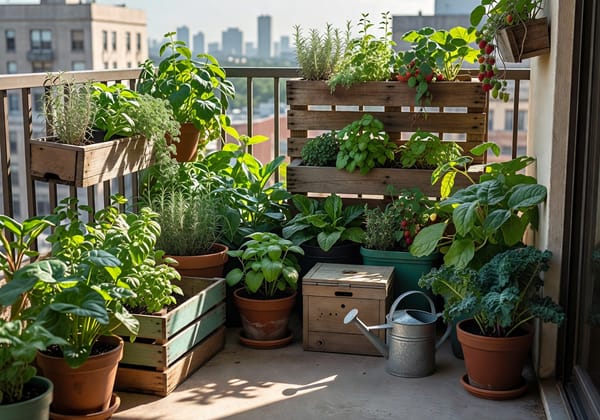
Adapt your own space. Install rain barrels to capture stormwater. Plant native species that support local ecosystems and require less irrigation. If you own your home, invest in insulation, reflective roofing, or solar panels — these typically pay for themselves within 7–12 years. Renters can advocate for efficiency upgrades through tenant associations or direct conversations with landlords.
Build neighborhood networks. Resilience is fundamentally social. Join or create neighborhood groups that share tools, seeds, skills, and emergency preparedness plans. Platforms like Nextdoor or local climate action networks can help organize, but face-to-face relationships matter most when a crisis actually hits.
Support ecosystem restoration. Volunteer with local conservation organizations working on stream cleanups, tree planting, or wetland restoration. These projects directly strengthen your community's natural defenses against flooding, heat, and pollution — and they connect you to the landscape you depend on.
The Bigger Picture
The cities profiled here share something important: they stopped treating resilience as an engineering problem with a single technical fix. Instead, they approached it as an ongoing relationship between people, infrastructure, and natural systems.
Some of their experiments worked brilliantly. Others, like China's sponge city program, revealed real limitations alongside real progress. That honesty matters. Resilient design isn't about finding a silver bullet. It's about layering multiple strategies — green roofs and better drainage, passive design and community networks, policy advocacy and personal action — so that when one layer fails, others hold.
The most encouraging part: none of this requires waiting for someone else to act first. Every rain garden, every insulated wall, every conversation with a neighbor about emergency preparedness makes your community a little harder to break.