Global Brief: May 4 – May 10
The US broke Iran's Hormuz blockade while Russia threatened to strike Kyiv. Europe outlined an 800 billion euro independence plan. One pattern connects them all.


The week in brief. The United States launched a major military operation to break Iran's blockade of the Strait of Hormuz while tightening the economic pressure campaign that has halted 90 percent of Iran's trade. Russia escalated its threats over Ukraine, issuing a formal diplomatic warning to evacuate Kyiv ahead of Victory Day. Europe held its largest political gathering of the year in Armenia, using the summit to outline an independence agenda spanning energy, defense, and trade. Across all three stories, governments reached for economic and military tools simultaneously, blurring the line between the two in ways that will shape the rest of the year.
The Week in Detail
Project Freedom Breaks the Hormuz Blockade as Washington Widens Iran's Isolation
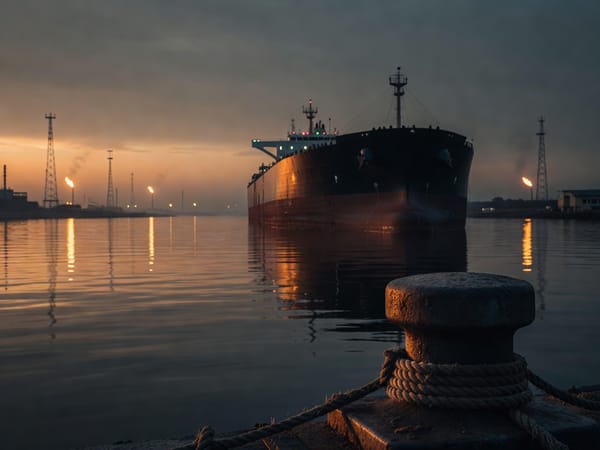
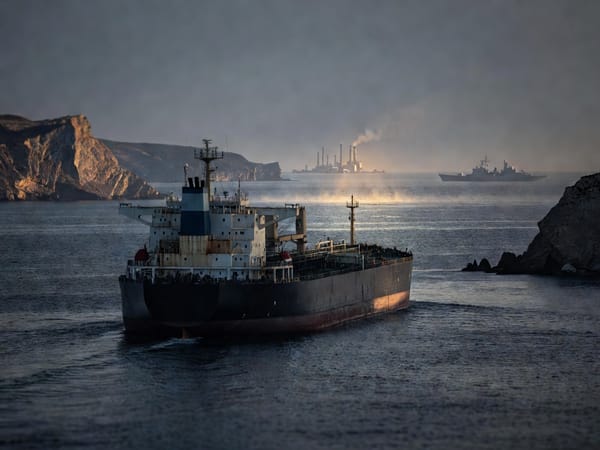
The US launched Project Freedom, a military operation to escort roughly 23,000 civilians from 87 countries stranded in the Persian Gulf by Iran's blockade of the Strait of Hormuz. According to Secretary of State Marco Rubio, the operation deployed 15,000 service members, guided missile destroyers, more than 100 aircraft, and unmanned platforms to create what the administration described as a defensive corridor through the strait. Seven Iranian fast boats that failed to heed warnings were destroyed, and two US-flagged merchant ships transited safely.
The military operation ran alongside an intensifying economic campaign. Rubio stated that Operation Epic Fury, the administration's sanctions enforcement initiative, had halted 90 percent of Iran's trade and was costing Tehran $500 million per day in lost revenue. The Treasury Department began identifying foreign financial institutions for secondary sanctions. On May 5, the US announced it had drafted a United Nations Security Council resolution alongside Bahrain, Saudi Arabia, the United Arab Emirates, Kuwait, and Qatar demanding that Iran cease attacks and mining in the strait, disclose its sea mine locations, and support a humanitarian corridor.
The sanctions net widened further during the week. The Office of Foreign Assets Control (OFAC) designated Iraq's Deputy Minister of Oil, Ali Maarij Al-Bahadly, for facilitating oil diversion to Iran and its proxy militias. OFAC also targeted senior leaders and companies linked to Asa'ib Ahl Al-Haq and Kata'ib Sayyid Al-Shuhada, Iraqi militia groups that have served as conduits for Iranian revenue.
On May 8, the State Department sanctioned three Chinese companies for providing satellite imagery of US facilities in the Middle East to enable Iranian military strikes against American forces. The companies, Meentropy Technology, The Earth Eye, and Chang Guang Satellite Technology, were designated alongside Iran's Ministry of Defence Export Center. The move marked a direct linkage between China's commercial satellite sector and Iran's war footing, adding a new dimension to the pressure campaign.
With the US strikes on Iran's nuclear weapons capability in February still reshaping the region's dynamics, and the EU having placed the Islamic Revolutionary Guard Corps (IRGC) on its terrorist list in February, Iran's strategic position has narrowed considerably since the start of the year. The blockade of Hormuz appears to be Tehran's attempt to create leverage with a diminishing hand.
Russia Threatens Kyiv Evacuation as Victory Day Standoff Intensifies
Russia issued increasingly severe warnings to Ukraine and the international community over threatened strikes on Moscow during Victory Day celebrations on May 9. The escalation began on May 4, when, according to the Russian Ministry of Foreign Affairs, Ukraine's leader made statements at the European Political Community (EPC) Summit in Yerevan threatening to disrupt Moscow's Victory Day events. The Russian Ministry of Defence responded the same day with an official warning highlighting potential retaliatory actions.
Two days later, Russia's foreign ministry took the unusual step of sending a Note Verbale, a formal diplomatic communication, to every accredited embassy and international organization in Kyiv. The note urged the evacuation of diplomatic personnel and civilians, citing what it described as an inevitable Russian retaliatory strike if Ukraine followed through on its threats. Russian embassies worldwide informed their host countries of the warning.
Separately, the Zaporizhzhya Nuclear Power Plant (ZNPP) continued to operate in a precarious state. The plant has been running on a single 330kV backup power line since its main 750kV line was disconnected on March 24. The International Atomic Energy Agency (IAEA) Director General Rafael Mariano Grossi spent the week engaging both Russia and Ukraine to secure a temporary ceasefire that would allow repairs to off-site power infrastructure. A complete power loss at Zaporizhzhya would require emergency diesel generators to keep spent fuel cool, a situation the IAEA has repeatedly flagged as unacceptable.
The backdrop to this week's escalation includes trilateral peace talks between Ukraine, Russia, and the US that took place in Abu Dhabi in early February, where Secretary Rubio reported progress on a peace agreement checklist. The EU approved a 90 billion euro loan to Ukraine in February, split between defense procurement and economic support. The gap between those diplomatic efforts and this week's threats illustrates how quickly the conflict's dynamics can shift.
Europe Maps Its Independence at the Yerevan Summits
More than 40 leaders gathered in Yerevan, Armenia, for the eighth meeting of the European Political Community, the first time the forum has convened in the South Caucasus. The summit, hosted by Armenian Prime Minister Nikol Pashinyan, included Azerbaijani President Ilham Aliyev participating by video and Canadian Prime Minister Mark Carney attending as the first non-European guest, a signal of the format's expanding ambition.
European Council President António Costa framed the event around an agreement between Armenia and Azerbaijan that made the summit possible, calling it a foundation for regional cooperation on transport corridors, digital networks, and energy interconnections. The EU signed a Connectivity Partnership with Armenia and launched high-level dialogues on transport and digital links, positioning the South Caucasus as a bridge to Central Asia.
European Commission President Ursula von der Leyen used the summit to lay out a three-part independence agenda. She outlined plans to shift from imported fossil fuels to domestic renewables and nuclear power, pledged to mobilize up to 800 billion euros by 2030 for defense and security, and announced expanded free trade negotiations with Latin America, India, Australia, and Mexico. The economic urgency was clear: Commissioner Dombrovskis told the Eurogroup that the Middle East war had pushed oil prices past $125 per barrel the previous week, dragging the EU economy toward weaker growth and higher inflation.
The European Central Bank's (ECB) Supervisory Board Chair Claudia Buch reinforced the message in a separate communication to the Eurogroup, noting that while euro area banks remained well capitalized with a Common Equity Tier 1 ratio around 16 percent, the geopolitical risks from the Middle East conflict were testing credit quality and market stability.
What It Means
The week's events revealed a pattern that has been building for months: the tools of economic policy and the tools of military policy are converging. The US deployed warships and sanctions designations in the same operation against Iran. Russia used formal diplomatic channels to deliver what amounted to a military ultimatum. Europe announced defense spending targets and trade deals in a single speech. The boundaries between these domains, once relatively distinct, have become difficult to locate.
This convergence carries costs. Iran's attempt to use the Strait of Hormuz as leverage is driving oil prices above $125 per barrel, which feeds directly into European inflation and slows growth across the continent. The EU's response, accelerating renewable energy and diversifying trade partners, is a multi-year project. The pain arrives now; the solutions take time.
China appeared on multiple fronts this week without being the central actor in any single story. Three Chinese satellite companies were sanctioned for aiding Iran's military. Beijing sentenced two former defense ministers to death for corruption, a purge that signals ongoing instability within China's military leadership. And Chinese Premier Li Qiang hosted Uzbekistan's prime minister to discuss the China-Kyrgyzstan-Uzbekistan railway and Belt and Road cooperation, quietly building the kind of economic connectivity that Europe is now racing to match through its own partnership agreements.
The deadliest event of the week received the least geopolitical attention. A fireworks plant explosion in Liuyang, Hunan Province, killed 37 people and injured 51, prompting a State Council investigation and a directive from Premier Li Qiang on workplace safety. Industrial accidents of this scale are a reminder that domestic governance failures carry human costs that no foreign policy framework captures.
What to Watch Next Week
UN Security Council Vote on Hormuz: The US-drafted resolution demanding Iran cease its blockade is expected to come to a vote. Watch for whether Russia or China exercise a veto, and whether the Gulf co-sponsors hold firm if the vote fails.
Victory Day and Its Aftermath: May 9 has passed, but the question is what follows. Watch for whether Russia carries out any retaliatory strikes on Ukrainian infrastructure, whether the IAEA ceasefire for Zaporizhzhya gains traction, and whether the Note Verbale leads to actual embassy drawdowns in Kyiv.
European Energy and Defense Commitments: Von der Leyen's 800 billion euro defense pledge and the energy independence agenda need legislative follow-through. Watch for whether EU member states begin converting summit rhetoric into procurement contracts and energy infrastructure timelines at the next European Council meeting.
Generated from structured event data extracted from official government and institutional sources. Not financial or legal advice.