Global Brief: Mar 9 – 15
Operation Epic Fury continues as Iran blockades the Strait of Hormuz, oil prices surge 50%, the UN condemns Iranian attacks, and the nuclear energy summit charts an expansion path.


What Happened This Week
The second week of March was dominated by the expanding military confrontation between the United States and Iran, a crisis that radiated outward into global energy markets, humanitarian corridors, and diplomatic chambers from New York to Paris. As U.S. forces continued Operation Epic Fury — targeting Iran's ballistic missile arsenal, naval assets, and proxy support networks — Iran responded by blockading the Strait of Hormuz and attacking commercial shipping, triggering what observers described as an oil shock with global consequences. Shipping traffic through the strait dropped by an estimated 90 percent, and world oil prices surged nearly 50 percent above their December levels.
The diplomatic response was swift and layered. The UN Security Council adopted Resolution 2817 by a vote of 13 to none, with only China and Russia abstaining, condemning Iran's attacks on Gulf states including Bahrain, Kuwait, Oman, Qatar, Saudi Arabia, the UAE, and Jordan. A competing Russian-drafted resolution that avoided naming Iran was rejected. European leaders convened emergency consultations with Middle Eastern counterparts while deploying military forces to protect Cyprus from Iranian and Hezbollah-linked strikes, and the EU mobilized humanitarian relief stocks for Lebanon, where over 816,000 people had been internally displaced.
Beyond the Middle East, the week carried significant developments in economic policy and energy strategy. According to a White House self-assessment, the administration claimed trillions of dollars in new private-sector investment commitments in U.S. manufacturing, AI infrastructure, and semiconductors from major corporations and allied nations. In Paris, over 60 countries gathered for the Nuclear Energy Summit, reaffirming commitments to expand nuclear power amid soaring energy prices. And in Washington, the SEC and CFTC signed a landmark Memorandum of Understanding creating the Joint Harmonization Initiative — a move designed to streamline regulation of crypto assets and emerging technologies.
The Details
Operation Epic Fury and Iran's Strait of Hormuz Blockade Reshape the Middle East
The U.S. military campaign against Iran, designated Operation Epic Fury, entered a critical phase during the week as American forces continued to dismantle Iran's ballistic missile production capacity, naval fleet, and proxy support infrastructure. Senior officials from the President to the Secretary of War and the CENTCOM commander reaffirmed that the operation's objectives remained unchanged: eliminate Iran's missile arsenal, destroy its navy, sever support for terrorist proxies, and ensure the country never acquires a nuclear weapon. Seven American service members were killed in the operation's initial hours and received a dignified return.
The context for this operation stretches back months. Beginning in late December 2025, nationwide protests erupted across Iran, initially sparked by bazaar merchants protesting economic collapse and eventually evolving into calls for regime change. By January 8, 2026, the IRGC had launched a systematic crackdown using lethal force, mass arrests, and a nationwide internet blackout. The regime's internal fragility and external aggression — including attacks on Gulf neighbors and threats to maritime trade — set the stage for the military confrontation now underway.
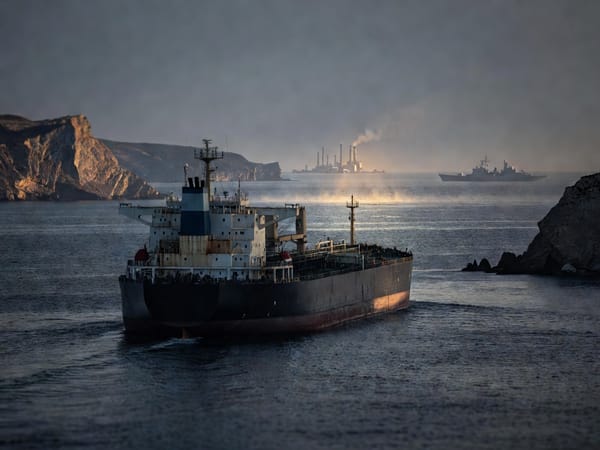
Iran's blockade of the Strait of Hormuz and bombardment of commercial vessels represented a dramatic escalation with immediate global economic consequences. The near-total shutdown of the world's most important oil chokepoint sent petroleum prices sharply higher and raised gas prices across Asia and Europe. The White House pushed back against reports that contingency planning for a Hormuz closure had been inadequate, insisting the operation was designed specifically to neutralize Iran's capacity to threaten global shipping lanes.
Global Diplomacy Scrambles to Contain the Fallout
The international response operated on multiple fronts simultaneously. On March 9, European Council President António Costa and European Commission President Ursula von der Leyen held an expanded video conference with leaders from across the Middle East — from Jordan and Egypt to the Gulf states and Türkiye — condemning Iran's indiscriminate attacks and pledging continued EU maritime operations under ASPIDES and ATALANTA. EU leaders also traveled to Baku to meet with Azerbaijan's President Ilham Aliyev, where Costa condemned Iran's attack on Nakhchivan airport and the two sides agreed to deepen energy and defense cooperation.
At the United Nations, the Security Council session on March 11 produced a revealing diplomatic fault line. Resolution 2817 passed with near-unanimity, explicitly condemning Iran's strikes on civilian areas and support for proxy groups. Russia's alternative draft, which sought de-escalation language without naming Iran, was defeated with only China, Pakistan, and Somalia voting in favor. The vote underscored the broad international consensus on Iran's responsibility for the escalation, even as Moscow and Beijing sought to maintain a more ambiguous posture.
Meanwhile, the humanitarian toll mounted. The WHO reported that health systems across the region were buckling under rising injuries and displacement, with 49 primary health centers and five hospitals in Lebanon shut down due to evacuation orders. The UN Secretary-General launched a $308.3 million flash humanitarian appeal for Lebanon, where hundreds of civilians had been killed and over 90,000 had fled into Syria. The U.S. State Department reported that over 43,000 American citizens had been evacuated from the Middle East since February 28, with operations beginning to scale down as commercial flights resumed.
Economic Signals: Investment Claims, Financial Regulation, and Sanctions Shifts
According to a White House self-assessment published on March 9 and updated the following day, the administration attributed trillions of dollars in new private-sector investment commitments to its economic policies — including reported pledges of $600 billion each from Apple and Meta, $500 billion from an AI infrastructure consortium, and $100 billion from TSMC for semiconductor manufacturing, alongside foreign government pledges from the UAE, Qatar, Japan, and others. State-level effects were also highlighted, with Louisiana reporting a $100 billion surge in AI data center, steel, LNG, and microchip investments.
In a significant development for financial markets, the SEC and CFTC signed a historic Memorandum of Understanding on March 11, launching the Joint Harmonization Initiative. The effort, co-led by officials from both agencies, aims to clarify how crypto assets and emerging technologies are classified, modernize clearing frameworks, reduce regulatory friction for dually registered entities, and coordinate enforcement. This followed a day of preparatory groundwork in which the SEC had directed staff to begin joint meetings with CFTC counterparts and launched a public harmonization webpage.
On the sanctions front, OFAC issued general licenses easing certain restrictions on Venezuelan oil and investment activities on March 13. With Maduro having been apprehended by U.S. forces in early January and new leadership under Delcy Rodríguez engaging with Washington, these licenses represent a calibrated relaxation of pressure — incentivizing the post-Maduro government to meet U.S. demands on drug trafficking, gang expulsion, and Iranian proxy removal. Separately, OFAC sanctioned DPRK-linked IT worker networks operating across Vietnam, Laos, and Spain that had generated nearly $800 million for Pyongyang's weapons programs, and designated four sham charities in Turkey and Indonesia funneling money to Hamas.
Nuclear Energy and Climate: Paris Summit Charts an Expansion Path
The Nuclear Energy Summit 2026, held in Paris on March 10 and hosted by France and the IAEA, brought together leaders from over 60 countries to reaffirm nuclear power's central role in the global energy mix. French President Emmanuel Macron and IAEA Director General Rafael Mariano Grossi opened the proceedings, which built on a 2024 Brussels summit where 38 nations endorsed a declaration to triple nuclear capacity by 2050. Discussions focused on small modular reactors, international financing mechanisms, safety standardization, and nuclear energy's contribution to climate goals and energy independence.
The summit's timing was not accidental. With the Strait of Hormuz effectively closed and oil prices surging, the case for diversified and resilient energy sources gained urgency that went beyond long-term climate planning. The Eurogroup, meeting the same week, explicitly discussed upward pressure on energy prices from the Middle East situation and called for accelerated energy transition, grid interconnection, and investment in energy infrastructure. The European Parliament also adopted a report urging deeper EU-Canada strategic partnership, with strengthened energy ties and Arctic cooperation among the key recommendations. Meanwhile, the World Bank approved a $600 million loan to Kazakhstan for economic and energy reforms, and a U.S.-France bilateral dialogue on nuclear deterrence and non-proliferation was convened in Paris on March 9 — the day before the summit — establishing an annual framework for cooperation.
What It Means
The most consequential structural shift of the week is the transformation of the Persian Gulf from the world's most reliable energy corridor into an active conflict zone. Iran's decision to blockade the Strait of Hormuz — through which roughly a fifth of global oil supply typically flows — has moved the energy crisis from a theoretical risk to a lived reality. The nearly 50 percent rise in oil prices since December is not a temporary spike; it reflects a fundamental reassessment of supply security that will reverberate through inflation expectations, central bank policy, and industrial planning for months.
The diplomatic alignment against Iran is broader than at any point in recent memory. Resolution 2817's near-unanimous passage, the rejection of Russia's alternative framing, and the rapid coordination between the EU and Gulf states all suggest that Iran's regional aggression has collapsed the space for diplomatic ambiguity. The question is whether this consensus translates into a pathway to de-escalation or merely hardens the lines of confrontation. The European Council meeting scheduled for March 19-20 in Brussels — with the Middle East, defense readiness, and energy security topping the agenda — will be an early indicator.
The Venezuela sanctions easing and the CFTC-SEC harmonization agreement, while less dramatic, represent meaningful policy shifts. The Venezuelan general licenses signal that Washington is prepared to use economic incentives as a complement to military action when regime change creates cooperative interlocutors. The SEC-CFTC initiative reflects a recognition that the U.S. regulatory architecture for digital assets and emerging financial technologies has been a source of friction and competitive disadvantage, and that harmonization may be overdue.
What to Watch Next Week
European Council Summit Tests Alliance Cohesion on Iran and Defense: EU leaders convene in Brussels on March 19-20 with Iran, energy security, defense readiness, and Ukraine on the agenda. The summit will test whether the diplomatic consensus visible at the UN translates into concrete commitments on energy diversification, military capability, and sanctions coordination. Watch for new defense spending pledges, energy emergency measures, and any divergence between member states on the pace of escalation.
Strait of Hormuz Shipping and Oil Price Trajectory: The near-total collapse of Hormuz shipping traffic is the single most important economic variable in play. Watch for any resumption of commercial transit, alternative routing through pipelines or overland corridors, and coordinated strategic petroleum reserve releases. Central bank commentary on inflation expectations — particularly from the ECB and Fed — will signal how monetary authorities are absorbing the price shock.
Venezuela Post-Maduro Compliance Signals: With OFAC issuing general licenses for Venezuelan oil and investment, the next test is whether the Rodríguez-led government delivers tangible action on Washington's demands — particularly the expulsion of Iranian and Hezbollah operatives and cooperation on drug trafficking. Watch for State Department readouts of further conversations with Caracas, any new OFAC actions (either tightening or further easing), and signals from the Venezuelan military about its posture under new leadership.
Methodology & Sources
This brief is generated from structured event data extracted from official government and institutional sources worldwide.
This report does not constitute predictions or financial or legal advice.