Global Brief: Mar 23 – Mar 29
Strikes near Iran's Bushehr reactor and nuclear production sites escalate the Middle East war as Strait of Hormuz shipping grinds to a halt.


What Happened This Week
The war against Iran crossed a dangerous new threshold this week as air strikes hit the immediate vicinity of the operating Bushehr Nuclear Power Plant on March 24 and then expanded to target Iran's heavy-water production plant at Khondab and the yellowcake facility at Ardakan on March 27. Secretary of State Marco Rubio briefed G7 allies in Paris that military operations aimed at destroying Iran's navy, air force, and missile infrastructure were running on or ahead of schedule and would conclude in weeks rather than months. The strikes came despite earlier assurances of a pause on attacks against Iran's energy infrastructure, and Russia's Foreign Ministry issued an outraged response within a day of the Bushehr incident.
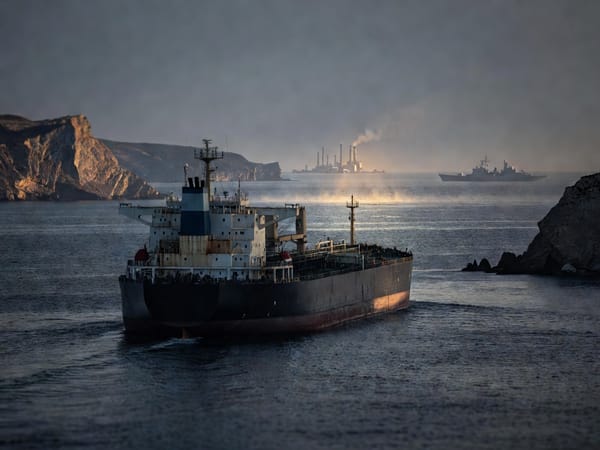
The economic fallout was immediate and severe. The European Central Bank warned that shipping through the Strait of Hormuz had come to a virtual standstill, disrupting roughly twenty percent of the world's oil and liquefied natural gas supply. ECB President Christine Lagarde devoted her keynote at the ECB Watchers Conference to outlining how the bank would calibrate its monetary policy response to energy price shocks of varying duration and severity. By week's end, Secretary Rubio was warning G7 partners to prepare for potential Iranian retaliation through Hormuz tolling once operations conclude, and proposing a multinational plan to confront it.
Meanwhile, Europe pushed through a burst of institutional reform. The European Parliament and Council reached agreement on a sweeping overhaul of the EU Customs Code, creating a new Customs Authority based in Lille and imposing obligations on e-commerce platforms shipping directly to EU consumers. Lawmakers also adopted the EU's first harmonized anti-corruption criminal law directive. And NATO Secretary General Mark Rutte presented the alliance's annual report showing that, for the first time ever, all allies now meet or exceed the long-standing target of spending two percent of GDP on defence — a twenty percent increase over the previous year.
On the other side of the Atlantic, the SEC published a landmark token taxonomy clarifying when digital assets fall under federal securities law, the Census Bureau reported net negative migration across every U.S. metropolitan area for the first time in fifty years, and President Trump signed an executive order targeting DEI practices among federal contractors.
The Details
Strikes on Iran's Nuclear Infrastructure Push the Conflict Into Uncharted Territory
The week's most consequential development was the expansion of military operations against Iran's nuclear-related facilities. On March 24, an air strike landed in the immediate vicinity of the operating Unit 1 of the Bushehr Nuclear Power Plant — a facility that, unlike enrichment sites, is an active civilian reactor. Russia condemned the strike within hours, noting it violated earlier assurances from the Trump administration about pausing attacks on energy infrastructure. Three days later, targeted strikes hit the heavy-water production plant at Khondab and the yellowcake production facility at Ardakan, with additional reports of renewed attacks near Bushehr itself.
With months of sanctions pressure and military escalation already behind it — including U.S. sanctions on Iranian security officials in January for their violent crackdown on domestic protests, and the European Parliament's January resolution condemning the regime's repression — the campaign against Iran had been building toward this moment. The backstory stretches further: OFAC designated individuals and entities involved in Iran-Venezuela weapons trade in late December 2025, and the U.S. had been disrupting Houthi supply networks funded by Iranian oil revenues throughout January.
Secretary Rubio's Paris briefing to G7 allies provided the clearest public accounting of objectives yet: the destruction of Iran's navy, air force, missile and drone factories, and a significant reduction in missile launcher capacity. He indicated the campaign would wrap up in weeks. But he also flagged a looming concern — Iran's potential to retaliate by disrupting passage through the Strait of Hormuz after operations end — and proposed a multinational response plan in which the United States would participate but not lead. The United Kingdom, according to the briefing, showed particular willingness to take a prominent role.
Europe's Energy Reckoning and Institutional Sprint
The war's economic shockwaves dominated European policymaking this week. ECB Vice-President Luis de Guindos had already laid the groundwork at the start of the week, outlining three scenarios for how the Middle East conflict could affect euro area growth and inflation, with his baseline assuming energy prices peak in the second quarter of 2026 before declining sharply. President Lagarde built on that framework in Frankfurt, describing a graduated response strategy ranging from absorbing minor shocks to forceful action if inflation persistently deviated from the two percent target. By Thursday, the Eurogroup was receiving a dedicated briefing from IEA Executive Director Fatih Birol on the crisis's economic impacts on energy, trade, prices, and growth.
With the ECB having kept interest rates unchanged since its February meeting — and with inflation running at 1.7 percent in January before the latest energy disruption — the question facing policymakers was whether the Hormuz standstill represented a temporary supply shock or the beginning of a structural shift in energy costs. The European Council's agreement earlier in the week on the "One Europe, One Market" competitiveness agenda, which explicitly prioritized affordable energy prices and reducing dependencies, took on added urgency.
Against this backdrop, European lawmakers completed two major pieces of legislation. The anti-corruption directive — adopted by 581 votes in favor — establishes the EU's first harmonized framework of criminal offenses covering bribery, misappropriation, illicit enrichment, and private-sector corruption, with standardized penalties and mandatory national anti-corruption strategies. The customs code reform agreement creates a new EU Customs Authority in Lille, requires e-commerce platforms sending parcels from outside the EU to bear importer obligations and pay a handling fee, and establishes a centralized customs data hub. Both measures had been years in the making, but the geopolitical environment appeared to accelerate their conclusion.
Washington Reshapes Regulatory and Demographic Landscapes
The SEC's publication of a token taxonomy and reinterpretation of the Howey test on March 24 provided the most comprehensive federal guidance yet on when digital assets trigger securities law. The framework distinguishes five categories of digital assets, with four falling outside the SEC's jurisdiction, and outlines a compliance path for crypto entrepreneurs. Coming under Chairman Paul Atkins, the taxonomy marks a sharp departure from the enforcement-first approach of recent years and is expected to reshape how both startups and institutional players structure token offerings.
Two days later, Census Bureau estimates revealed that every U.S. metropolitan area experienced net negative migration in the year leading up to July 2025 — a pattern the bureau described as unprecedented in at least half a century. The White House attributed the reversal to border security policies, citing specific examples from Laredo, El Centro, Denver, and Chicago. On the same day, President Trump signed an executive order prohibiting federal contractors from engaging in what the order defines as racially discriminatory DEI activities, with agencies required to include compliance clauses in contracts within thirty days and penalties ranging up to contract termination and debarment.
Separately, the U.S.-Ukraine Reconstruction Investment Fund approved its first equity investment, backing Sine Engineering's work on radio communication control systems for unmanned aerial vehicles. The State Department also announced $250 million for the new Pax Silica Fund aimed at securing semiconductor supply chains through critical minerals partnerships.
NATO's Spending Milestone Arrives Amid Dual Conflicts
Secretary General Mark Rutte's presentation of the 2025 Annual Report confirmed a transformation in allied defence investment that had been building throughout the year. All NATO allies now meet or exceed the two percent of GDP defence spending target set at the 2014 Wales summit — a milestone that had seemed politically unreachable just a few years ago. European allies and Canada collectively increased spending by twenty percent compared to 2024.
The backdrop to this achievement includes a series of institutional changes agreed in recent months: in February, NATO allies reorganized the command structure to give European nations leadership of all three Joint Force Commands, with the U.S. retaining theater component commands. At the same Defence Ministers meeting, Rutte had praised progress toward an even more ambitious five percent GDP target agreed in June, and allies launched multinational projects in ballistic missile defence, drone-based precision strike, and Baltic Sea naval capabilities. Russia's massive drone attack on Ukrainian cities on March 24 — deliberately targeting schools and hospitals and resulting in hundreds of civilian deaths — underscored why that investment acceleration continued to command political support.
What It Means
The strikes on Iran's nuclear infrastructure represent a qualitative escalation that will reshape the strategic calculus well beyond the Middle East. Hitting an operating civilian nuclear reactor's immediate surroundings moves the conflict into territory where the risks extend from conventional military outcomes to potential radiological consequences. The pace of escalation — from earlier pledges of restraint on energy infrastructure to strikes near Bushehr and then on production facilities at Khondab and Ardakan within the same week — suggests that campaign objectives have expanded or that operational timelines are being compressed.
The economic transmission mechanism is already engaged and tightening. With the Strait of Hormuz effectively shut down to commercial shipping, the world is experiencing a disruption to roughly a fifth of its oil and LNG supply simultaneously. The ECB's scenario planning — which only weeks ago was framed as contingency analysis — is now the active policy framework. The divergence between a European economy that entered the crisis with inflation near target and resilient growth, and the structural energy vulnerability that the war has exposed, will force difficult choices about whether to tolerate higher prices or risk tightening into a supply-driven slowdown. The Eurogroup's dedicated crisis session with the IEA signals that European policymakers are treating this as a systemic event, not a temporary disruption.
Europe's legislative sprint this week was not coincidental. The customs code reform, with its new authority and data infrastructure, directly addresses vulnerabilities in supply chain oversight that geopolitical competition has made urgent. The anti-corruption directive strengthens the institutional fabric needed to maintain cohesion under economic stress. And the NATO spending milestone, combined with the command structure reorganization agreed in February, reflects a structural shift toward a more self-reliant European security posture — one that Rubio's proposal for multinational Hormuz enforcement, with the U.S. participating but not leading, appears designed to test.
The SEC's crypto taxonomy and the DEI executive order represent parallel efforts to redraw regulatory boundaries domestically. The token taxonomy provides legal clarity that could unlock significant capital flows into digital asset markets, while the contractor order extends the administration's reshaping of federal workforce requirements into the private sector through procurement policy. Both will face legal challenges, but both also create immediate compliance incentives that will shape behavior well before courts weigh in.
What to Watch Next Week
Iran's Response to the Nuclear Facility Strikes: Tehran faces a decision about whether and how to retaliate after attacks on its nuclear production infrastructure. Watch for statements from the Supreme National Security Council, any disruption to remaining Hormuz traffic, activation of proxy networks in Iraq or Lebanon, and whether Russia moves beyond verbal condemnation to provide military or diplomatic support.
ECB Emergency Measures on Energy Pricing: With the Strait of Hormuz near-standstill now factored into ECB scenario planning, the Governing Council may need to act before its next scheduled meeting. Watch for emergency communications from Frankfurt, any coordinated G7 statement on strategic petroleum reserves, and whether energy futures markets stabilize or continue to price in extended disruption.
WTO Ministerial Conference Outcomes in Yaoundé: The 14th Ministerial Conference advanced an e-commerce agreement pathway this week, but the broader agenda — including the plastics pollution dialogue and the European Parliament delegation's imminent trip to Beijing to discuss China's tech sector compliance — could produce trade framework developments with lasting consequences. Watch for whether China makes concessions on digital regulation compliance, and whether Hormuz-driven energy pressures inject urgency into trade facilitation talks.
Methodology & Sources
This brief is generated from structured event data extracted from official government and institutional sources worldwide.
This report does not constitute predictions or financial or legal advice.