Global Brief: Mar 2 – Mar 8
The US and Israel struck Iran across 20 cities, launching Operation Epic Fury. Iran retaliated across the region, closing the Strait of Hormuz as 20,000 Americans were evacuated.


What Happened This Week
The world crossed a threshold it cannot easily walk back from. On March 3, 2026, the United States and Israel launched coordinated airstrikes on roughly twenty cities across Iran — including Tehran, Isfahan, Qom, and Tabriz — in a campaign that targeted ballistic missile sites, the headquarters of the Islamic Revolutionary Guard Corps, and facilities near Iran's presidential palace and Supreme Leader's compound. Within hours, the United States formally announced Operation Epic Fury, a large-scale offensive under US CENTCOM that employed B-2 and B-1 stealth bombers, Navy guided-missile destroyers, and, in a historic naval first since World War II, a submarine torpedo that sank an Iranian warship in the Indian Ocean. Iran's senior leadership was reported dead or in hiding. The Supreme Leader Ali Khamenei was among the casualties.
Iran did not stand down. It launched retaliatory strikes that violated the sovereignty of at least seven countries — Bahrain, Iraq, Jordan, Kuwait, Qatar, Saudi Arabia, and the UAE — targeted US military assets across the region, injured dozens in Israel, and closed the Strait of Hormuz. Drone strikes hit Azerbaijan, including a children's school in Nakhchivan. A ballistic missile aimed at Türkiye was intercepted by NATO forces under the Supreme Allied Commander Europe. The UN Security Council convened urgently as Secretary-General António Guterres called for an immediate ceasefire, describing the military escalation as a threat to the entire international order.
By mid-week, over 20,000 American civilians had been evacuated from the Middle East. The US Embassy in Kuwait City suspended operations. The State Department operated a 24/7 crisis task force, and Secretary of State Rubio personally coordinated charter and military evacuation flights from Israel, the UAE, Jordan, and Saudi Arabia. The conflict was no longer a bilateral confrontation — it had become a regional emergency with consequences stretching from the Indian Ocean to the Caucasus and the Strait of Hormuz.
Amid the war, other significant events unfolded. The US imposed sanctions on Rwanda's military for supporting armed groups in the Democratic Republic of Congo. Venezuela's interim government and Washington agreed to restore diplomatic relations. Europe locked in a binding 2040 climate law. And Russia's military intelligence service was formally linked to an arson-sabotage campaign that had been targeting European infrastructure since 2024.
The Details
Operation Epic Fury and Iran's Crumbling Defense Architecture
The origins of Operation Epic Fury stretch back months. In December 2025, US B-2 bombers destroyed an Iranian nuclear facility. Through early 2026, the US Treasury Department systematically dismantled Iran's petroleum shadow fleet with sanctions, cutting off the regime's primary revenue source. Inside Iran, nationwide protests against the government had been building since late December, with bazaar merchants and ordinary citizens calling for regime change. By the time US and Israeli strikes began on March 3, Iran's military, economic, and political position had been significantly degraded.
The week's strikes were described by Pentagon officials — in what should be noted as a self-assessment by the administration — as delivering twice the air power of the 2003 Shock and Awe campaign against Iraq. According to the White House, US forces achieved an 86% reduction in Iranian ballistic missile launches and a 73% reduction in one-way attack drones within the first 100 hours. CENTCOM reported the first-ever combat use of long-range Precision Strike Missiles (PrSMs), the destruction of over 20 Iranian ships including a Soleimani-class warship, and near-total elimination of Iran's naval presence in the Persian Gulf and Gulf of Oman. The leader of the Iranian unit that had previously attempted to assassinate President Trump was reported killed. Iranian senior military and government officials were described as dead, captured, or in hiding.
NATO's interception of an Iranian ballistic missile aimed at Türkiye on March 4 demonstrated that Iran's retaliatory capability, while still active, was degrading under sustained pressure. The North Atlantic Council convened to condemn the attack and expressed solidarity with Ankara. Meanwhile, Iran's drone strikes on Azerbaijan — targeting civilian infrastructure including a children's school — drew formal US condemnation and signaled the Iranian regime's increasingly indiscriminate targeting as its conventional capabilities were stripped away.
The Humanitarian and Diplomatic Fallout
The speed of the civilian evacuation operation reflected both the scale of the conflict and the State Department's preparation. By March 5, nearly 20,000 American citizens had been safely returned to the United States from the Middle East since operations began on February 28. Charter flights, military transport, and ground convoys operated simultaneously from the UAE, Saudi Arabia, Israel, and Jordan. The US Embassy in Kuwait City suspended operations after Iranian attacks reached Gulf state infrastructure. A dedicated crisis intake form was established for Americans in six Gulf countries, and a 24/7 task force handled over 10,000 individual assistance requests.
Diplomatically, the week produced a notable parallel development. On March 5, the United States and Venezuela's interim authorities agreed to re-establish full diplomatic and consular relations — a direct consequence of the January 2026 US operation that removed Nicolás Maduro from power. With Maduro in US custody since early January, Venezuela's new government had already been moving toward compliance with US demands to expel Iranian proxies and Hezbollah presence from Venezuelan territory. The diplomatic restoration, accompanied by a new OFAC general license authorizing activities involving Venezuelan-origin gold, marked a concrete geopolitical dividend from earlier pressure. Simultaneously, OFAC issued a Russia-related general license authorizing Russian crude oil deliveries to India — a quiet accommodation to energy realities as the Strait of Hormuz closure disrupted regional oil flows.
Rwanda, the DRC, and the Limits of the Washington Accords
On March 2, the US Treasury Department's Office of Foreign Assets Control sanctioned the Rwanda Defence Force and four senior officers for providing troops, equipment, training, and access to mining areas to the M23 armed group in eastern Democratic Republic of Congo. The sanctions cited violations of the Washington Accords, a peace framework signed in December 2025 that Rwanda had agreed to uphold. The M23 had used Rwandan military support to capture the town of Uvira, a significant escalation in a conflict that has displaced millions and destabilized one of Africa's most resource-rich regions. Treasury Secretary Scott Bessent called for Rwanda's immediate military withdrawal. The action represents the first direct US sanctioning of Rwanda's national defense force, signaling that Washington's engagement in the DRC crisis has moved beyond diplomacy.
Russia's Sabotage Networks Exposed, and Europe's Climate Commitment Locked In
A joint investigation team coordinated by Eurojust and involving Germany, Lithuania, the Netherlands, Poland, and the United Kingdom formally identified and disrupted a Russian military intelligence operation that had been using self-igniting parcels to attack European infrastructure. Incidents in July 2024 — including fires at Leipzig Airport, a UK warehouse, and a Polish truck — were traced to 22 suspects in Lithuania and Poland operating under direction from Russia's military-intelligence service. Test packages had also been sent to the United States and Canada. Two cases were referred to courts for trials later in 2026. The exposure came the same week European defense spending was reported to have risen nearly 80% since before Russia's full-scale invasion of Ukraine, with the EU planning to mobilize up to €800 billion for defense by 2028.
Also on March 5, the EU Council formally adopted an amended European climate law establishing a binding 2040 target of 90% net greenhouse gas emissions reduction compared to 1990 levels. The law, which includes provisions allowing up to 5% high-quality international carbon credits from 2036 and delays the launch of the ETS2 emissions trading system to 2028, was adopted while European energy markets were already absorbing the shock of the Middle East conflict and Strait of Hormuz disruption. ECB President Christine Lagarde, speaking at a global risk forum in Bologna the same week, warned that the global economy was entering an era of genuine uncertainty — not merely measurable risk — driven by geopolitical fragmentation and AI-driven transformation, drawing explicit comparisons to the economic instability of the 1920s.
America's Domestic Cyber and Energy Agenda
Even as the military campaign in Iran dominated the week, the Trump administration moved on two significant domestic policy fronts. On March 4–5, the White House convened the chief executives of Amazon, Google, Meta, Microsoft, OpenAI, Oracle, and xAI to sign the Ratepayer Protection Pledge — a commitment by the nation's largest AI and technology companies to fully fund the energy infrastructure required by their data centers without passing costs to American households. Trump issued a formal presidential proclamation declaring the pledge national policy. The commitment includes constructing or procuring new electricity generation, paying for grid upgrades, and establishing separate rate structures with utilities.
On March 6, the administration released a National Cyber Strategy and signed an executive order targeting transnational criminal organizations engaged in cybercrime, ransomware, fraud, and sextortion. The order created a dedicated operational cell within the National Coordination Center, directed prioritized prosecutions, and mandated international engagement — including sanctions on nations that harbor or enable cybercriminal networks. A Eurojust-coordinated operation the same week, dismantling a multinational drug trafficking and money laundering network spanning Sweden, Spain, Thailand, Germany, and Australia, illustrated the type of cross-border criminal cooperation that the new US framework aims to strengthen.
What It Means
The US-Iran conflict has fundamentally altered the security architecture of the Middle East in ways that will take months to fully understand. Iran entered this week already weakened — its nuclear facility destroyed in December, its oil revenues targeted by Treasury sanctions, its domestic population in open protest. The military operations of March 3–7 appear to have devastated Iran's conventional military capacity: its navy, air force, ballistic missile infrastructure, and command structure have all been degraded or destroyed, according to US self-assessments. What remains unclear is whether any coherent governing authority survives in Tehran, and if so, what negotiating posture it could or would adopt.
The regional spillover is already significant. Seven sovereign states had their airspace or territory violated by Iranian retaliatory strikes. The Strait of Hormuz — through which roughly 20% of the world's traded oil passes — was briefly closed. NATO demonstrated it is actively engaged in regional missile defense. Azerbaijan was struck. The conflict is not contained.
The Venezuela development deserves careful attention alongside the Iran story. With Maduro removed from power in January and Iranian proxies losing their primary state sponsor's capacity, a reorganization of US relationships across Latin America appears underway. The restoration of US-Venezuela diplomatic relations and new economic licenses suggests Washington is moving quickly to consolidate the gains from the January operation, building a post-Maduro political and economic framework before rival powers can fill the vacuum.
In Europe, the EU's adoption of a binding 2040 climate target, combined with the exposure of Russian sabotage networks and the ongoing surge in European defense spending, suggests that the continent is simultaneously pressing ahead on long-term strategic bets — clean energy and strategic autonomy — while confronting immediate security threats. Christine Lagarde's warning about a global economy shifting from risk to uncertainty deserves to be taken seriously as a frame for everything that happened this week.
What to Watch Next Week
Iran's Governing Continuity: Whether a functional Iranian government or military command structure re-emerges will determine the next phase of the conflict. Watch for any confirmed communication from Iranian leadership, signals from neutral intermediaries such as Oman or Qatar about back-channel contact, and any statements from the UN Security Council about negotiation frameworks.
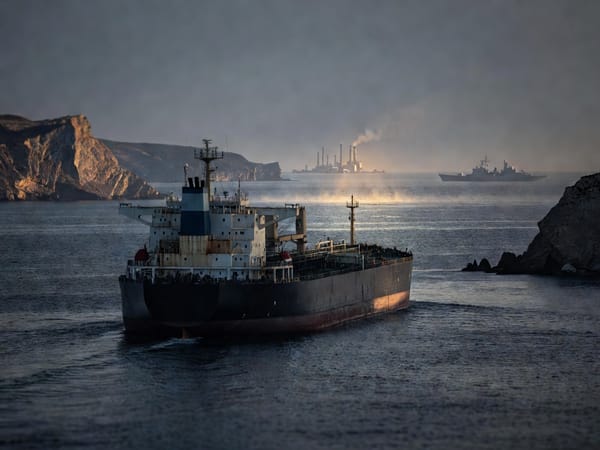
Strait of Hormuz and Global Energy Markets: The reported closure of the Strait during Iran's retaliatory strikes has immediate implications for oil prices, shipping insurance rates, and energy security across Asia and Europe. Watch for shipping data, tanker routing changes, and whether Gulf Cooperation Council states seek formal guarantees of passage or accelerate pipeline bypass arrangements.
Venezuela Transition Consolidation: The restoration of US-Venezuela diplomatic relations opens a 90–120 day window for either a stable political transition or renewed instability. Watch for announcements of US economic support packages, the status of elections planning in Caracas, and whether Cuban and Iranian-linked networks inside Venezuela continue to operate or are actively dismantled.
Methodology & Sources
This brief is generated from structured event data extracted from official government and institutional sources worldwide.
This report does not constitute predictions or financial or legal advice.