Global Brief: Mar 16 – Mar 22
Operation Epic Fury strikes Iran's nuclear sites as Hormuz shipping freezes, the EU fast-tracks Ukraine, and the SEC rewrites crypto rules.


What Happened This Week
The week of March 16–22, 2026, was dominated by a dramatic escalation of the United States and Israel's military campaign against Iran — an operation the White House branded "Operation Epic Fury." What began with broad strikes on March 16 escalated through the week to include attacks on two nuclear facilities, a Caspian Sea port vital to Russian-Iranian trade, and the near-total paralysis of shipping through the Strait of Hormuz. Iran launched retaliatory strikes that affected neighboring Persian Gulf countries, while the UN Secretary-General and the European Council both issued urgent calls for a ceasefire.
Away from the Middle East, two significant regulatory shifts took place. The SEC and CFTC jointly issued a landmark interpretation of how federal securities laws apply to crypto assets, establishing a formal token taxonomy that classifies most cryptocurrencies as non-securities. And the European Council, meeting on March 19, moved to open all accession clusters for Ukraine's EU membership without delay, approved a €90 billion support loan, called for the 20th sanctions package against Russia, and launched a "One Europe, One Market" competitiveness agenda.
The Trump Administration also unveiled a National AI Legislative Framework on March 20, urging Congress to pass uniform federal legislation governing artificial intelligence, and signed an executive order establishing a Task Force to Eliminate Fraud in federal benefits programs. Beneath the headlines, the U.S. and Japan announced tens of billions of dollars in new energy and defense investments, and OFAC issued a wave of general licenses adjusting oil sanctions on Iran, Russia, and Venezuela.
The Details
Operation Epic Fury Strikes Nuclear Sites, Port, and Chokes Global Shipping
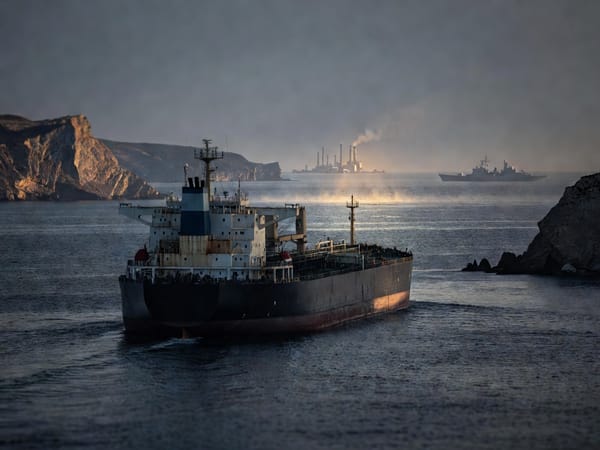
The US-Israeli military campaign against Iran entered its most dangerous phase this week. According to Russia's Foreign Ministry, the initial strikes on March 16 resulted in significant casualties and damage to civilian infrastructure, while Iran responded with retaliatory strikes that affected neighboring Persian Gulf states. Shipping through the Strait of Hormuz — one of the world's most critical energy chokepoints — was paralyzed, sending ripple effects through global oil and logistics markets.
On March 18, a missile struck within the inner perimeter of the Bushehr Nuclear Power Plant, landing just meters from an operational power unit. Russia's Foreign Ministry spokeswoman Maria Zakharova strongly condemned the strike, warning of radiological disaster and noting the presence of Russian personnel at the facility. The same day, US-Israeli forces bombed the port of Bandar Anzali on the Caspian Sea, a major hub for Russian-Iranian trade including food deliveries, drawing sharp protests from Moscow over the threat to Caspian stability.
According to a White House statement on March 19, Operation Epic Fury had by that point destroyed more than 7,000 targets, eliminated Iran's air and naval capabilities, and dismantled its ballistic missile arsenal and production facilities. The administration cited polling data from multiple outlets showing broad domestic support for the operation. It should be noted that this assessment came from the White House itself and reflects the administration's characterization of the campaign's progress.
The week's strikes culminated on March 21 with an air attack on the Natanz Nuclear Facility, a uranium enrichment site under International Atomic Energy Agency safeguards. Russia's Foreign Ministry issued escalating statements throughout the week, culminating in an offer to facilitate a diplomatic settlement alongside China and Türkiye, and expressing support for Omani proposals for a regional security architecture in the Persian Gulf. Meanwhile, OFAC issued General License U on March 20, authorizing the delivery and sale of Iranian crude oil already loaded on vessels — a practical measure to manage the disruption to global oil markets even as military operations continued.
The backstory is critical context here. In the months preceding this week's events, the U.S. had maintained a maximum-pressure sanctions campaign against Iran, including sanctioning 29 shadow fleet vessels in December 2025 and targeting Iran-Venezuela weapons trade networks. Domestically, Iran had been convulsed by nationwide anti-government protests beginning in late December 2025, which the IRGC met with a violent crackdown including lethal force and a country-wide communications blackout imposed in January 2026.
Europe Pivots on Ukraine, the Middle East, and Economic Competitiveness
The European Council met on March 19 for what proved to be one of its most consequential sessions in years, issuing conclusions across multiple fronts simultaneously. On Ukraine, the Council invited the opening of all EU accession clusters without delay, starting with the fundamentals cluster, and welcomed the adoption of a €90 billion support loan for 2026–2027, with the first disbursement expected by early April. The Council also called for swift adoption of the 20th sanctions package against Russia, further reduction of Russia's energy revenues, and coordinated action against Moscow's shadow fleet.
On the Middle East, the European Council addressed three interlocking crises. It called for de-escalation and maximum restraint regarding Iran, condemned Iran's retaliatory strikes against regional countries, urged implementation of UN Security Council Resolution 2817, and called for a moratorium on strikes against energy and water facilities. It reaffirmed support for reinforcing EU maritime operations EUNAVFOR ASPIDES and ATALANTA to safeguard freedom of navigation in the Strait of Hormuz. Separately, it expressed grave concern over deteriorating conditions in Gaza and the West Bank, calling for full implementation of UNSCR 2803 ceasefire provisions, and voiced deep concern over escalating hostilities in Lebanon.
On competitiveness, European Council President António Costa announced the adoption of the "One Europe, One Market" agenda with timelines for 2026–2027, declaring 2026 the year of European competitiveness. The agenda targets strengthening the single market, reducing administrative burdens, lowering energy prices, and mobilizing investments. Costa also emphasized the need to increase homegrown energy production for autonomy and security, a priority sharpened by the ongoing conflict in Iran and its effects on global energy supplies.
SEC and CFTC Deliver Landmark Crypto Regulation
On March 17, the SEC and CFTC jointly issued an interpretation that fundamentally reshapes the regulatory landscape for digital assets in the United States. The guidance established a formal token taxonomy with four categories of crypto assets deemed not to be securities: digital commodities, digital collectibles, digital tools, and payment stablecoins under the GENIUS Act. Only tokenized versions of traditional securities remain subject to federal securities laws.
SEC Chairman Paul S. Atkins and CFTC Chairman Michael S. Selig characterized the interpretation as providing clarity that the industry had sought for over a decade. The SEC also published Interpretive Release No. 33-11412, providing detailed guidance on how the Howey test applies to crypto assets, specifying the conditions under which non-security crypto assets become subject to investment contracts and, crucially, the conditions under which such contracts terminate. The CFTC confirmed it would administer the Commodity Exchange Act consistently with the SEC's interpretation, recognizing qualifying non-security crypto assets as commodities.
This regulatory clarity arrives alongside the Trump Administration's National AI Legislative Framework, unveiled on March 20, which urges Congress to pass uniform federal legislation covering child safety, intellectual property, free speech, and workforce readiness in the AI space. Together, these two developments signal Washington's intent to define clear federal rules of the road for the two technologies most reshaping financial markets and the broader economy.
What It Means
The most important structural shift of the week is the expansion of the US-Israeli military campaign to target Iran's nuclear infrastructure directly. The strikes on Bushehr and Natanz cross a threshold that previous phases of Operation Epic Fury had not — attacking facilities under international safeguards, meters from operational reactors. Russia's increasingly urgent diplomatic responses, culminating in an offer to broker peace alongside China and Türkiye, reflect Moscow's growing alarm at both the nuclear risks and the direct economic damage from strikes on trade infrastructure like Bandar Anzali.
The paralysis of Strait of Hormuz shipping is not a secondary effect but a primary geopolitical event. Roughly a fifth of global oil passes through the strait, and its closure — even temporary — has cascading consequences for energy prices, insurance markets, and supply chains worldwide. OFAC's decision to issue General License U authorizing the sale of Iranian oil already on vessels suggests the U.S. government is attempting to manage the energy market fallout of its own military operations, while the European Council's emphasis on homegrown energy production and the EU's bioeconomy strategy reflect a continent bracing for prolonged disruption.
The European Council summit revealed an institution trying to hold together a coherent response to simultaneous crises. The decision to fast-track Ukraine's accession — opening all clusters without delay — is a political signal as much as an institutional one, arriving alongside €90 billion in financial support and calls for a 20th sanctions package against Russia. Taken together with Europe's Middle East conclusions, the summit underscores how the war in Ukraine, the conflict in Iran, and the EU's competitiveness deficit are now treated by European leaders as facets of a single strategic challenge.
The SEC-CFTC crypto interpretation, while overshadowed by geopolitics, may prove to be the week's most durable legacy. By drawing a clear line between securities and non-securities in the digital asset space, Washington has ended more than a decade of regulatory ambiguity. Markets and entrepreneurs now have a framework to build on — or push back against.
What to Watch Next Week
Strait of Hormuz and Energy Markets: The paralysis of Hormuz shipping could deepen if fighting escalates further or if Iran's retaliatory capacity proves greater than the White House assessment suggests. Watch for emergency OPEC+ coordination, sharp moves in oil futures and shipping insurance rates, and whether additional OFAC general licenses are issued to manage supply disruptions.
Nuclear Fallout Diplomacy: Russia's offer to mediate alongside China and Türkiye, combined with the European Council's call for a moratorium on strikes against energy and water facilities, creates a narrow diplomatic opening. Watch for any IAEA emergency session or board statement on the Bushehr and Natanz strikes, signals from Tehran on willingness to engage, and whether the UN Security Council convenes beyond Resolution 2817.
Ukraine Accession Mechanics: With the European Council having called for opening all accession clusters without delay, the next step is the formal Council decision and the beginning of screening negotiations. Watch for the first disbursement of the €90 billion loan expected by early April, any conditionality debates within the Council, and Russia's diplomatic or military response to the accelerated timeline.
Methodology & Sources
This brief is generated from structured event data extracted from official government and institutional sources worldwide.
This report does not constitute predictions or financial or legal advice.