Global Brief: Jun 15 – Jun 21
The US and Iran signed a peace deal ending three months of war. Europe locked Ukraine into accession talks and a 90-billion-euro loan in the same week.


The week in brief. The United States and Iran signed a peace deal ending three months of open warfare, reopening the Strait of Hormuz and committing Tehran to abandon its nuclear weapons program. The European Union opened formal accession negotiations with Ukraine and pledged 90 billion euros in new loans. Britain, France, and Germany delivered a joint ultimatum to Moscow while the EU adopted its latest sanctions package targeting Russia's shadow oil fleet and military suppliers. Each move consolidated a pattern that has defined 2026: Western governments locking in structural commitments that will be difficult for any future administration to reverse.
The Week in Detail
The US-Iran MOU Ends Three Months of Conflict and Reopens the Strait of Hormuz
The United States and Iran signed a Memorandum of Understanding on June 19, ending hostilities that began in mid-March with Operation Epic Fury, a US-Israeli campaign that struck more than 7,000 targets across Iran including the Bushehr and Natanz nuclear facilities.
The deal has three core provisions: an immediate and permanent ceasefire, the reopening of the Strait of Hormuz to free navigation, and a framework for further negotiations on Iran's nuclear and ballistic missile programs. President Trump and Vice President Vance signed the agreement, which the White House described as a peace-through-strength achievement. Pakistan and Qatar served as principal mediators.
The agreement arrived after months of escalation. In March, US-Israeli forces struck the port of Bandar Anzali on the Caspian Sea, a hub for Russian-Iranian trade. A missile hit within meters of an operational reactor at Bushehr. The International Maritime Organization condemned Iran's interference with shipping through the Strait of Hormuz, and the European Central Bank (ECB) held interest rates steady in March citing energy price surges from the conflict.
UN Secretary-General Antonio Guterres welcomed the deal on June 15, days before the formal signing, and credited regional mediators including Egypt, Saudi Arabia, and Turkiye. European Commission President Ursula von der Leyen called it a breakthrough but noted a lesson from the crisis: the need to diversify energy supply routes away from the Strait of Hormuz, a point she raised for the G7 summit agenda in Evian.
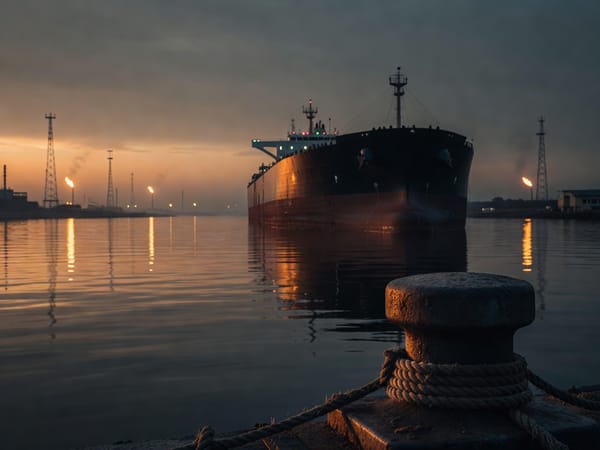
For consumers, the immediate effect is lower energy prices. Roughly 20 percent of the world's traded oil passes through the Strait of Hormuz. Its closure had pushed oil and gas prices high enough to shift central bank policy in Europe. The reopening removes that pressure, though the broader negotiations on Iran's nuclear program remain unfinished.
Europe Binds Itself to Ukraine With Accession Talks, a 90-Billion-Euro Loan, and a Russian Ultimatum
The European Union formally opened accession negotiations with Ukraine at the G7 summit in Evian on June 15, a step that EU Council President Antonio Costa called historic. Three days later, the EU announced a 90-billion-euro loan to Ukraine spread over two years, the largest single financial commitment to Kyiv since Russia's invasion began.
These moves built on months of institutional groundwork. In March, the European Council had invited the opening of all negotiating clusters with Ukraine and welcomed the adoption of the 90-billion-euro loan package, though disbursement was delayed by a holdout among member states. The loan's approval this week, announced by von der Leyen as a message to Russia that the EU will support Ukraine "for as long as it takes," resolved that impasse.
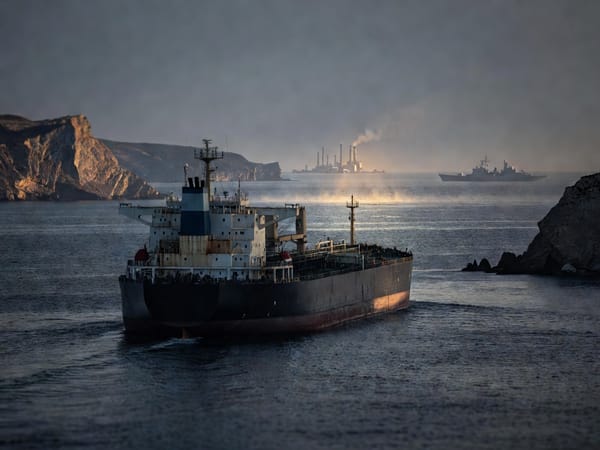
On the same day accession talks opened, the EU Council adopted a new sanctions package listing 34 individuals and 47 entities. The measures targeted manufacturers of Russian military drones, including Chinese suppliers, and went after the shadow fleet ecosystem, the network of older tankers that disable tracking systems to move Russian crude oil past existing sanctions. The package also sanctioned propagandists and individuals connected to the poisoning and death of Alexei Navalny, and renewed Crimea-related sanctions through June 2027.
Separately, ambassadors of the United Kingdom, France, and Germany presented a five-point ultimatum to Russia on June 15. The specific demands were not disclosed, but the timing, coinciding with the G7 and the new EU sanctions, signaled a coordinated Western escalation of diplomatic pressure.
Russia's response came through Foreign Minister Sergey Lavrov, who criticized G7 statements for focusing on arming Ukraine rather than peace. Lavrov published an article titled "Ukraine, Europe and Global Security" on June 18, rejecting the European peace plan and warning that European provision of long-range weapons falls under Russia's revised nuclear doctrine.
Meanwhile, International Atomic Energy Agency (IAEA) Director General Rafael Grossi brokered a localized ceasefire near the Zaporizhzhya Nuclear Power Plant on June 19 to allow repairs to the main 750 kV Dniprovska power line. The line had been disconnected since late March. This was the sixth such IAEA-facilitated ceasefire since late 2025, a measure of how routinely nuclear safety has become entangled with the war's front lines.
From Rare Earths to Oceans, Governments Race to Lock Down Supply Chains
The US Department of War's Office of Strategic Capital announced two conditional loan commitments totaling $1.225 billion to scale domestic rare earth processing. A $725 million commitment with Energy Fuels, Inc. and a $500 million commitment with Phoenix Tailings, announced on June 18 and June 16 respectively, will fund new separation and metallization facilities in the United States. The Office of Strategic Capital has now committed over $5 billion in debt financing in fiscal year 2026, all aimed at reducing dependence on Chinese-controlled mineral supply chains critical for defense and clean energy applications.
At the Our Ocean Conference in Mombasa, Kenya, the United States pledged $96 million across 24 commitments to combat illegal, unreported, and unregulated (IUU) fishing and advance maritime security. The US also introduced visa restrictions targeting individuals involved in IUU fishing, a new enforcement tool. The European Union committed 338 million euros at the same conference for ocean conservation, sustainable fisheries, and maritime security in the Horn of Africa.
The European Parliament also passed automotive circularity rules requiring 15 percent recycled plastic content in new vehicles within six years, rising to 25 percent within ten years. The regulation bans the export of non-roadworthy vehicles after five years and mandates design for easy part removal. The rules reflect a broader EU push toward resource security through circular economy requirements.
China moved in the same direction from a different angle, with the National Development and Reform Commission issuing a three-year action plan for energy-saving and carbon-reduction upgrades across nine high-emission industries, part of its trajectory toward peak carbon emissions before 2030.
What It Means
Three distinct arcs converged this week. The US-Iran deal resolved the most acute military crisis of 2026. The EU's Ukraine commitments hardened what had been incremental support into structural obligations. And the supply chain investments showed governments on multiple continents racing to insulate their economies from the same vulnerability the Hormuz crisis had just exposed.
The common thread is irreversibility. A Memorandum of Understanding with Iran, formal EU accession negotiations, billion-dollar loan commitments for rare earth facilities: none of these can be easily undone by a change in political mood. Governments are building facts on the ground that constrain future choices, their own and their successors'.
The EU's week was particularly dense. Opening accession talks, disbursing the largest-ever loan to a non-member state, adopting new sanctions, and backing a joint ultimatum to Moscow all within days suggests Brussels is operating on the assumption that the window for these moves may not stay open indefinitely. The combination of financial, legal, and diplomatic steps amounts to a bet that binding Ukraine to the EU now is worth the cost of absorbing the consequences later.
The Iran deal, for its part, removes a major source of global economic stress but leaves the harder questions unanswered. The framework for nuclear negotiations exists on paper. Whether it produces results depends on implementation, and on whether the military pressure that produced the deal can translate into sustained diplomatic leverage.
What to Watch Next Week
Implementation Tests for the Iran MOU: The ceasefire and Hormuz reopening are the immediate deliverables, but the next phase involves verification mechanisms and timelines for Iran's nuclear and ballistic programs. Watch for IAEA statements on inspection access, oil tanker traffic data through the Strait, and any early signals from Tehran about the pace of further negotiations.
EU Accession Mechanics for Ukraine: Opening negotiations is a political decision; the technical screening process determines how fast it moves. Watch for announcements on which negotiating clusters will be addressed first, any conditions attached to the fundamentals cluster, and signals from skeptical member states about the timeline.
NATO Ankara Summit Preparations: NATO defense ministers met this week ahead of the Ankara summit. Watch for draft communique language on defense spending targets, any new pledges under the Ukraine Defence Contact Group, and whether the US-Iran deal shifts alliance attention back toward Russia-related deterrence planning.
Generated from structured event data extracted from official government and institutional sources. Not financial or legal advice.