Global Brief: Jan 19 – Jan 25
Trump ratifies the Board of Peace in Davos, Europe commits €90B to Ukraine, and the US exits the WHO in a week that rewired the global order.


What Happened This Week
The week of January 19–25 will be remembered as one of the most consequential in recent diplomatic history. On January 20, the Trump administration published a sweeping self-assessment crediting its first year in office with ending the Israel-Hamas war, dismantling Iran's nuclear weapons capability, brokering a ceasefire framework between Ukraine and Russia, and concluding multiple other regional peace agreements — from Armenia-Azerbaijan to India-Pakistan. The White House described these as achieved outcomes; independent verification of several claims, particularly regarding Iran's nuclear program and the Ukraine-Russia framework, remains ongoing. Two days later, that diplomatic momentum crystallized in Davos, where President Trump formally ratified the Charter of the Board of Peace at the World Economic Forum, establishing it as an official international organization with himself as Chairman. Secretary of State Marco Rubio spoke at the ceremony, framing the Board as a replicable model for conflict resolution worldwide.
While Washington declared a new era of peace, Europe moved in parallel — and at pace. The European Parliament voted to fast-track a €90 billion support loan for Ukraine, financed through common EU borrowing, passing the measure 499 to 135 with Czechia, Hungary, and Slovakia opting out. The loan is designed to cover military assistance, general budget support for Kyiv, and integration of Ukraine's defense industry into the European Defence Industrial Base. The vote was not symbolic: it represents the largest coordinated European commitment to Ukraine's war effort since the invasion began.
Beyond the peace diplomacy and the Ukraine funding, a third major rupture unfolded quietly but with lasting consequence. On January 22, the United States formally withdrew from the World Health Organization, ceasing all funding and staffing for WHO programs. Secretaries Rubio and Kennedy announced the action jointly, citing the organization's conduct during the COVID-19 pandemic and what they described as a politically-biased agenda incompatible with American interests.
These three developments — the Davos peace architecture, Europe's Ukraine commitment, and the WHO withdrawal — were not isolated events. They emerged from the same week, interconnected by a single structural shift: the United States is actively rebuilding international institutions on its own terms while simultaneously exiting others it deems misaligned.
The Details
The Board of Peace: A New Institution Takes Shape in Davos
The ratification of the Board of Peace Charter on January 22 at the World Economic Forum marked the formal institutionalization of what the Trump administration calls its peace architecture. Trump served as Chairman at the ceremony, flanked by founding member nations committed to Gaza's demilitarization, governance reform, large-scale reconstruction, and long-term stability. Former UN Special Coordinator Nickolay Mladenov and Palestinian representative Dr. Ali Sha'ath were among those present, suggesting the body has secured at least nominal participation from parties with direct stakes in the conflict.
Secretary Rubio, speaking after the ratification, framed the Board's significance in sweeping terms — crediting Jared Kushner and Steve Witkoff with the diplomatic groundwork and positioning Gaza's transition as a template for future conflict resolution globally. The White House's self-assessment, published on January 20 to mark what it called the one-year anniversary of Trump's return to office, attributed to the administration a remarkable string of peace achievements: ending the Israel-Hamas war via ceasefire and the Gaza Peace Plan, concluding the Israel-Iran "12-Day War," establishing a framework to end the Ukraine-Russia conflict, and destroying Iran's nuclear weapons capability. These are the administration's own characterizations, and several — particularly the Iran nuclear claim and the Ukraine-Russia framework — remain subject to independent scrutiny. Regardless, the institutional act of ratifying the Board of Peace Charter creates a new international body whose mandate and enforcement mechanisms will shape Middle East diplomacy in the months ahead.
That same week in Davos, Trump addressed the World Economic Forum directly, claiming a 77% reduction in the US trade deficit, record oil and natural gas production, gasoline prices below $2.50 in many states, removal of 270,000 federal employees, a 27% deficit reduction, and passage of the largest middle-class tax cuts in history. These are the administration's own figures. He also called on European partners to align with the United States on energy, trade, immigration, and economic growth — a call that landed against a backdrop of rising transatlantic friction.
Europe Arms Ukraine and Pushes Back on Washington
The European Parliament's week in Strasbourg told a different story about the transatlantic relationship. On January 20, MEPs invoked urgency procedures to fast-track the €90 billion Ukraine loan, and by January 21 the vote was complete: 499 in favour, 135 against, 24 abstentions. Czechia, Hungary, and Slovakia opted out through a formal enhanced cooperation mechanism, allowing the other 24 member states to proceed without unanimity. The loan is to be financed through common EU borrowing — a significant institutional step in its own right — and is intended to sustain Ukraine's military capacity, government operations, and defense industrial integration into the European Defence Industrial Base.
The Parliament also adopted companion resolutions the same week on the EU's Common Foreign and Security Policy and Common Security and Defence Policy annual reports for 2025. Both resolutions named Russia as the principal threat to European security, called for closer EU-NATO cooperation, and explicitly flagged US unpredictability — including American threats regarding Greenland — as a factor requiring Europe to strengthen its own strategic autonomy. A separate CSDP resolution raised the prospect of invoking Article 42(7), the EU's mutual assistance clause, and the Parliament's Conference of Presidents formally condemned a US visa ban imposed on former Commissioner Thierry Breton, calling it an attack on EU regulatory sovereignty. The European Parliament also adopted a resolution on drone warfare, citing Russian incursions into EU airspace and supply chain vulnerabilities to China as drivers for accelerating autonomous drone production within the European Defence Industrial Base.
Taken together, this cluster of resolutions represents the clearest statement yet that European institutions regard American unpredictability as a structural risk requiring institutional countermeasures — even as they continue to rely on US military capacity through NATO.
The US Exits the WHO and Tightens the Vise on Iran
On January 22, the United States formally terminated its membership in the World Health Organization. The joint statement by Secretary Rubio and Secretary Kennedy cited WHO's failures during the COVID-19 pandemic, a perceived political agenda incompatible with US interests, and the organization's refusal to approve the withdrawal or return the US flag as reasons for the action. All US funding and staffing for WHO programs ceased immediately. Future engagement will be limited to the mechanics of the withdrawal process itself and to bilateral health partnerships outside the WHO framework.
The withdrawal removes the organization's largest single financial contributor. The impact on WHO's operational capacity — particularly in lower-income countries reliant on US-funded programs — will become clearer in the weeks ahead as the funding gap takes effect.
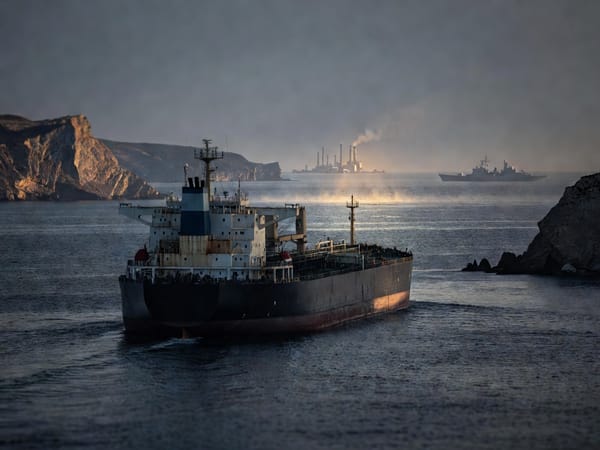
Separately, on January 23, the US Treasury's Office of Foreign Assets Control designated eight companies and nine shadow fleet vessels for transporting Iranian petroleum in violation of sanctions under Executive Order 13902. Secretary Scott Bessent described the action as targeting revenue that funds the regime's repression of its own people and its network of terrorist proxies. The sanctions form part of the administration's stated maximum pressure campaign against Iran, running in parallel to the peace diplomacy occurring simultaneously through the Board of Peace. The coexistence of sanctions escalation and diplomatic institution-building reflects the administration's dual-track approach to the region.
What It Means
The week of January 19–25 was not a collection of independent events — it was the emergence of a coherent, if contested, new architecture for global governance. The United States is building institutions (the Board of Peace), dismantling others (WHO membership), and deploying economic pressure (Iran sanctions) as instruments of a strategy that prioritizes bilateral and bespoke arrangements over multilateral frameworks it views as hostile or ineffective. Whether the claimed outcomes — Gaza ceasefire, Iran's nuclear capability neutralized, Ukraine-Russia framework — reflect reality or aspirational branding will be tested in the coming weeks. But the institutional act of creating the Board of Peace is real, and its consequences will be durable.
For Europe, the week crystallized a dilemma that has been building since Trump's return to power. The continent is simultaneously arming Ukraine with €90 billion in new commitments, pushing for strategic autonomy in defense, and watching the United States reshape the Middle East peace order from which Europe is largely absent. The European Parliament's resolutions condemning US economic coercion over Greenland and US visa actions against a former Commissioner signal that European institutions are no longer treating American unpredictability as an aberration to be managed quietly — they are treating it as a structural condition requiring formal institutional responses.
The tension between these two trajectories — Washington's unilateral peace architecture and Europe's defensive institutionalism — is building toward a confrontation. The Board of Peace is a US-chaired organization; the €90 billion Ukraine loan is an EU-financed mechanism that bypasses the three member states most aligned with Russian or skeptical Western positions. These are parallel structures, not complementary ones. Both are filling governance vacuums, but from different premises and toward different ends.
The WHO withdrawal adds a third dimension. Global health governance loses its largest funder at a moment when the next pandemic threat — whether natural or engineered — requires exactly the kind of coordinated international early-warning infrastructure the US has just defunded. Other nations will face a choice: expand their own contributions to WHO to fill the gap, accept a structurally weakened global health system, or build alternative arrangements. None of these options is costless.
Finally, the simultaneous escalation of Iran sanctions and the construction of a Gaza peace institution is not a contradiction — it is a pressure strategy. The administration is offering Iran a path (engagement with regional peace architecture) while tightening the economic vise (shadow fleet sanctions, maximum pressure campaign). How Tehran responds to that combination will be among the most consequential variables shaping the Middle East in 2026.
What to Watch Next Week
The Board of Peace Gains or Loses Credibility: The new organization's first weeks will determine whether it functions as a genuine multilateral institution or as a US-managed diplomatic instrument with limited independent standing. Watch for which countries formally join as founding members, whether any major regional powers — Turkey, Saudi Arabia, Egypt — signal participation or skepticism, and whether any concrete Gaza reconstruction funding is announced through the Board's mechanisms.
Europe's Strategic Autonomy Debate Intensifies: With the CSDP and CFSP resolutions now adopted, European institutions will move toward implementation. Watch for Commission proposals on defense spending coordination, any formal EU response to the Thierry Breton visa situation, and whether Rubio's Davos call for transatlantic alignment on energy and trade generates a coordinated European response or continued institutional pushback.
The WHO Funding Gap Begins to Bite: With US contributions halted, WHO will begin signaling which programs face suspension. Watch for statements from major alternative donors — Germany, Japan, the Gates Foundation — on whether they intend to fill the gap, and for any early signs of program interruptions in vulnerable regions that could signal the real-world consequences of the US departure.
Methodology & Sources
This brief is generated from structured event data extracted from official government and institutional sources worldwide.
This report does not constitute predictions or financial or legal advice.