Global Brief: Apr 6 – Apr 12
A 38-day US military campaign ends with an Iran ceasefire and Hormuz reopening, while Israeli strikes devastate Beirut and China pivots to services.


What Happened This Week
The 38-day US military campaign against Iran reached its conclusion this week with a ceasefire and the reopening of the Strait of Hormuz, marking the most consequential shift in Middle Eastern security architecture in decades. According to a White House statement, the operation destroyed over 85 percent of Iran's defense industrial base — including ballistic missiles, drones, 150 warships, all submarines, space facilities, and command structures — through more than 10,200 air sorties striking 13,000 targets. Iran agreed to ceasefire terms and committed to reopening the strait, with the Trump Administration announcing the start of broader peace negotiations.
The ceasefire triggered an immediate wave of international diplomacy. Ten European heads of state and government issued a joint statement welcoming the two-week truce, while the EU High Representative followed with an official call for all parties to respect the ceasefire, ensure freedom of navigation through the Strait of Hormuz under UNCLOS, and end hostilities in Lebanon. Pakistan was publicly credited for its role in facilitating the agreement. Yet the same week that brought a ceasefire with Iran saw continued violence on another front: according to Lebanese authorities, Israeli airstrikes on residential areas of Beirut killed more than 250 people and injured over 1,100, and Russia's Foreign Ministry condemned the strikes while Lebanon declared a day of national mourning.
Beyond the Middle East, the week's other defining development came from Beijing, where China held its first-ever national conference on the service sector. President Xi Jinping used the occasion to issue instructions calling for demand-driven growth, technological upgrading, and expanded market opening under the 15th Five-Year Plan — a signal that China is accelerating its structural economic transition even as the Middle East conflict roils global energy markets and trade flows.
The Details
Operation Epic Fury Ends and a Fragile Ceasefire Begins
The week opened on April 6 with reports that the White House had directed a military search-and-rescue mission deep behind enemy lines in Iran. Two days later, the administration announced the conclusion of Operation Epic Fury, declaring that the US Joint Force had dismantled the vast majority of Iran's conventional military capability over the preceding 38 days. The operation's stated scope was extraordinary: the White House claimed it neutralized Iran's air force, navy, ballistic missile arsenal, drone fleet, space infrastructure, and command architecture.
Iran's agreement to a ceasefire and the reopening of the Strait of Hormuz followed directly. The Trump Administration stated that negotiations for a broader peace agreement would begin immediately. The context for these negotiations extends back months. With a maximum pressure sanctions campaign already in place since January — when the US Treasury designated dozens of Iranian officials, shadow banking networks, and oil-transport vessels — and with the European Parliament having called in January for IRGC terrorist designation and expanded EU restrictive measures, the ceasefire arrived against a backdrop of Iran's profound economic and military isolation.
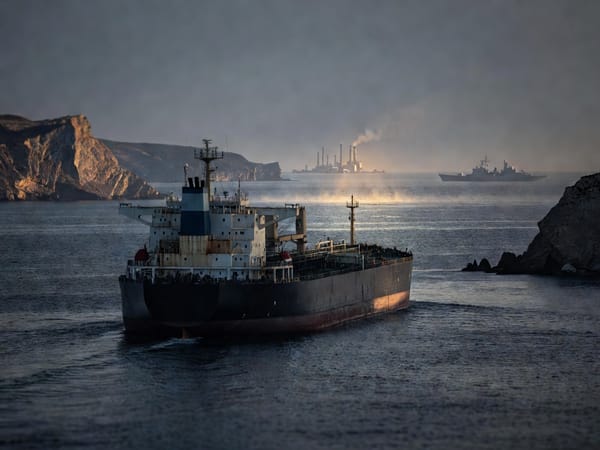
The ceasefire also carried immediate energy implications. The Strait of Hormuz had been closed during the conflict, triggering what the World Bank described as a region-wide energy shock. The World Bank's MENA economic update, released on April 8, projected that regional growth excluding Iran would collapse from 4.0 percent in 2025 to just 1.8 percent in 2026, with Gulf Cooperation Council growth forecast to fall from 4.4 percent to 1.3 percent — 3.1 percentage points below the January projection.
Europe and the World Respond to the Ceasefire
The diplomatic response to the ceasefire was swift and coordinated. On April 8, President Macron, Prime Minister Meloni, Chancellor Merz, Prime Minister Starmer, Prime Minister Carney, and five other European leaders issued a joint statement welcoming the truce, thanking Pakistan and its partners for facilitating it, and urging swift negotiations for a permanent end to the war. They called specifically for ceasefire implementation to extend to Lebanon and committed to ensuring freedom of navigation through the Strait of Hormuz.
The following day, the EU High Representative issued a formal statement on behalf of the entire bloc, commending Pakistan and regional partners for their mediation and invoking UNCLOS as the legal framework for Hormuz navigation rights. The statement urged compliance with international humanitarian law and called for a comprehensive Middle East peace strategy.
This European consensus built on weeks of escalating engagement. In early March, EU leaders had held a video conference with leaders from thirteen Middle Eastern and North African countries to coordinate their response, condemning what they described as indiscriminate Iranian attacks, expressing solidarity with affected populations, and mobilizing humanitarian assistance — including ReliefEu stocks to support 130,000 displaced persons in Lebanon.
Secretary of State Marco Rubio, meanwhile, conducted a round of phone calls with allied leaders. He thanked Bulgaria's Prime Minister for evacuating American citizens and supporting the Vertical Gas Corridor for US LNG exports to Europe. He spoke with Romania's Foreign Minister about expanding cooperation in defense, energy, and critical minerals. And on April 8, NATO Secretary General Mark Rutte met with President Trump, Secretary Rubio, and Defense Secretary Hegseth to discuss ongoing security coordination tied to the operation.
Israel Strikes Lebanon as Regional Violence Persists
Even as the US-Iran ceasefire took hold, the broader region remained volatile. According to the Russian Foreign Ministry, Israeli forces carried out large-scale airstrikes on Lebanon during the week, including strikes on residential areas of Beirut. Lebanese authorities reported over 250 killed and more than 1,100 injured, and Lebanon declared a day of national mourning on April 9.
The violence in Lebanon had been building for months. As early as January, the EU had welcomed the first phase of Hezbollah's disarmament south of the Litani River, and by March, three UNIFIL peacekeepers had been injured in southwestern Lebanon amid heavy firing. A WHO report from March documented 25 verified attacks on healthcare in Lebanon since February, with 16 health workers killed and 29 injured. The shutdown of 49 primary health centers and five hospitals under Israeli evacuation orders was already straining the country's health system before this week's strikes.
The European ceasefire statements explicitly called for the truce to extend to Lebanon, but the Israeli strikes suggested the conflict there was operating on a separate timeline from the US-Iran negotiations.
Economic Shockwaves and China's Domestic Pivot
The Middle East conflict's economic toll came into sharper focus this week through a series of institutional assessments. The World Bank's East Asia and Pacific update projected regional growth slowing from 5.0 percent in 2025 to 4.2 percent in 2026, driven by the energy shock, elevated trade barriers, and global uncertainty. China's growth was forecast to decelerate to 4.2 percent. India fared somewhat better, with the World Bank projecting 6.6 percent growth for fiscal year 2027, though higher energy prices from the conflict were cited as the primary drag.
Against this backdrop, China made a significant domestic move. The first-ever national conference on the service sector, held April 11-12 in Beijing, saw President Xi Jinping issue instructions emphasizing demand-driven growth, technology-led upgrading of producer and consumer services, and continued market opening. Premier Li Qiang convened a follow-up symposium with experts and entrepreneurs on April 10 to discuss the service sector's role in high-quality development. The timing was notable: with global energy prices elevated and manufacturing-export demand under pressure, Beijing appeared to be accelerating its pivot toward domestic services as a growth engine.
Elsewhere, the IEA released a report on April 8 highlighting the growing mismatch between surging demand for rare earth elements — needed for electric vehicles, AI data centers, and defense systems — and the slow pace of supply diversification away from China, which controls over 90 percent of refining capacity. The report estimated that $60 billion in investment would be needed by 2035 to build alternative supply chains outside China, and was timed to inform France's G7 Presidency. The EU Council also approved defense loans of over EUR 17 billion to Czechia and France under the SAFE instrument to boost defense industrial production, while the US Treasury issued new proposed rules under the GENIUS Act to regulate stablecoin issuers under anti-money-laundering frameworks.
What It Means
The conclusion of Operation Epic Fury and the ceasefire mark a structural turning point in the Middle East. With Iran's conventional military capabilities described by the White House as largely destroyed, the regional balance of power has fundamentally shifted. Iran enters negotiations from a position of profound weakness — militarily degraded, economically isolated by months of escalating sanctions, and diplomatically pressured by both Western and regional actors. The question is no longer whether Iran can project conventional force across the region, but whether a durable political settlement can be reached before the ceasefire's two-week window expires.
The speed and breadth of the European diplomatic response revealed something important about the transatlantic relationship. European leaders coordinated their ceasefire welcome within hours, credited Pakistan rather than claiming a mediating role for themselves, and focused their demands on specific, actionable outcomes: Hormuz navigation, Lebanon ceasefire extension, and humanitarian law compliance. This suggests a pragmatic acceptance that Washington is driving the security architecture in the Middle East, with Europe positioning itself as the voice for international law and civilian protection within that framework.
The continued Israeli strikes on Lebanon expose the limits of the ceasefire's reach. The European statements calling for the truce to extend to Lebanon were carefully worded but carried no enforcement mechanism. With health systems already overwhelmed and UNIFIL peacekeepers previously injured, Lebanon remains the most fragile link in any broader peace settlement. The disconnect between the US-Iran track and the Israel-Lebanon track could undermine the ceasefire's credibility if not addressed.
The economic data released this week confirmed what energy markets had already priced in: the Strait of Hormuz closure caused a genuine global shock. Growth forecasts were cut across the Middle East, East Asia, and South Asia. China's response — pivoting toward domestic services at its first-ever national conference on the sector — suggests that Beijing views the disruption as an accelerant for structural reform rather than a temporary crisis. The IEA's rare earth report and the EU's defense-industrial loans point in the same direction: major powers are using the current instability to fast-track supply chain diversification and defense self-sufficiency.
What to Watch Next Week
Ceasefire Holding or Fraying: The two-week US-Iran ceasefire will face its first real test as both sides assess whether to extend or escalate. Watch for reports on Strait of Hormuz shipping traffic volumes, any Iranian military repositioning, and whether the White House announces a venue or timeline for formal peace negotiations.
Lebanon's Trajectory: With European leaders and the EU High Representative calling for the ceasefire to extend to Lebanon, watch for any Israeli response to these demands, statements from Lebanese authorities on casualty tolls and displacement figures, and whether UNIFIL issues new force-protection assessments.
China's Service Sector Follow-Through: Beijing's first-ever national service sector conference set a policy direction, but the real signal will come in concrete measures. Watch for new State Council guidance, sector-specific regulations, or fiscal incentives targeting healthcare, financial services, and technology services in the coming days.
Methodology & Sources
This brief is generated from structured event data extracted from official government and institutional sources worldwide.
This report does not constitute predictions or financial or legal advice.