Global Brief: Apr 27 – May 3
Washington unleashed its biggest Iran sanctions week yet as Middle East energy prices reversed the ECB's progress on inflation. Three stories, one pattern.


The week in brief. The United States launched its most concentrated week of Iran sanctions since the maximum pressure campaign began, targeting banks, oil networks, and currency exchanges spanning five countries. The European Central Bank held interest rates steady as Middle East energy disruptions pushed eurozone inflation back to 3%. Brussels finalized free trade agreements with Mercosur, India, and Australia, closing negotiations that had lasted up to 25 years. Across all three stories, governments reached for economic instruments to manage security crises they cannot resolve militarily or diplomatically.
The Week in Detail
Washington Unleashes Coordinated Sanctions Blitz on Iran's Financial Architecture
The United States escalated its "Economic Fury" campaign against Iran with a concentrated burst of sanctions actions spanning April 28 to May 1. The Treasury Department's Office of Foreign Assets Control (OFAC) designated 35 entities and individuals overseeing what the administration described as Iran's shadow banking architecture, including networks that facilitate illicit oil sales by the National Iranian Oil Company (NIOC), procurement of missile components, and funding for the Islamic Revolutionary Guard Corps (IRGC) and its proxy organizations.
The scope widened over the following days. On May 1, OFAC targeted three Iranian foreign currency exchange houses that convert oil sale revenues from Chinese yuan into usable currencies for Iran's military. The same day, the State Department sanctioned China-based Qingdao Haiye Oil Terminal Co. and associated entities for importing millions of barrels of sanctioned Iranian crude, marking what the department said was the 12th round of sanctions on Iranian oil sales since National Security Presidential Memorandum-2 (NSPM-2) was issued in February 2025.
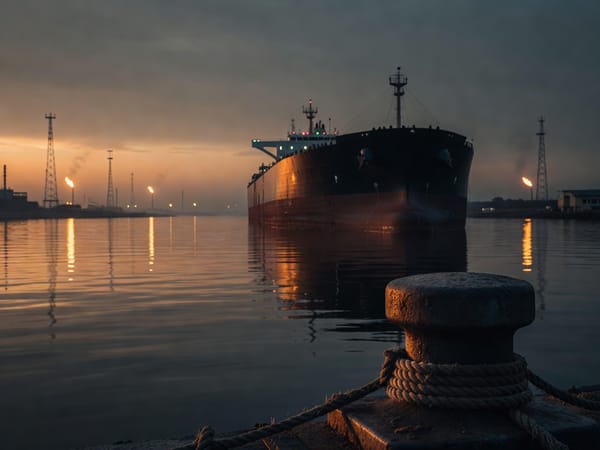
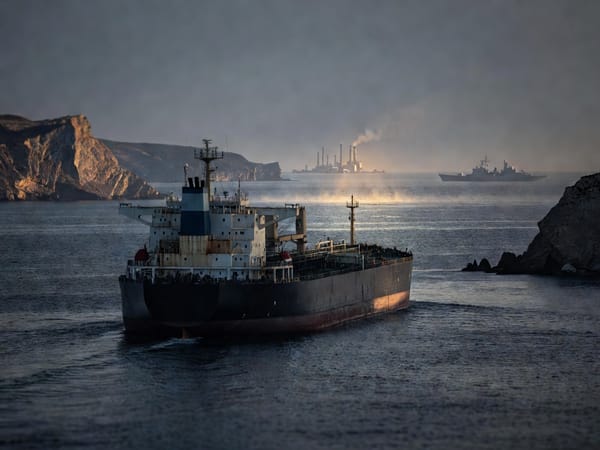
OFAC also issued a pointed advisory. Financial institutions received a formal alert about independent "teapot" refineries in China's Shandong Province, small-scale operations that import and refine most of Iran's oil exports. The alert detailed evasion tactics including front companies across Asia and the UAE, and the use of shadow fleets, older tankers that disable tracking systems to move oil outside normal shipping channels. The language was unusually direct: OFAC stated its readiness to impose secondary sanctions on institutions that fail to conduct enhanced due diligence.
The week's actions fit a pattern visible since January, when the administration issued executive orders authorizing tariffs on any country that purchases Iranian goods. The Financial Action Task Force (FATF) imposed additional countermeasures on Iran in February. What changed this week was the operational focus: rather than adding names to a list, the administration targeted the financial plumbing that converts Iranian oil into spendable money. For ordinary consumers, the stakes are indirect but real. The World Bank's April Commodity Markets Outlook, released on April 28, projected Brent crude averaging $86 per barrel, with energy prices up 24% overall, driven partly by Strait of Hormuz shipping disruptions that have reduced global oil supply by an estimated 10 million barrels per day.
ECB Holds Rates as Middle East Energy Shock Reverses Months of Progress on Inflation
The European Central Bank (ECB) kept its three key interest rates unchanged on April 30, a decision that three months ago would have looked like business as usual but now reflects a significantly worse outlook. In January, eurozone headline inflation stood at 1.7%. By April, surging energy prices driven by the Middle East conflict had pushed it back to 3.0%. First-quarter real GDP growth came in at just 0.1%.
ECB President Christine Lagarde and Vice-President Luis de Guindos framed the decision as prudent caution. In a subsequent interview, de Guindos said the Governing Council chose to "wait before deciding on an interest rate hike," a notable shift in language from earlier this year when the discussion centered on whether to cut rates further. The backstory underscores the reversal: in February, the ECB held rates amid what Lagarde described as resilient growth, moderating wages, and inflation tracking toward its 2% target. The Middle East war changed the calculus.
The EU moved to cushion the blow. On April 29, the European Commission adopted the Middle East Crisis Temporary State Aid Framework (METSAF), enabling member states to provide targeted subsidies to agriculture, fisheries, transport, and energy-intensive industries affected by spiking fuel, fertilizer, and electricity prices. Businesses can receive up to 70% compensation for extra costs, with a simplified flat-rate option of up to €50,000 for smaller firms. The framework expires at the end of 2026.
For households, the connection is direct. Higher energy prices feed into food costs, transport costs, and heating bills. The ECB's reluctance to raise rates reflects a painful trade-off: tightening monetary policy could push the eurozone's already near-stagnant economy into contraction, but leaving rates unchanged risks letting inflation become entrenched. The World Bank's forecast of 5.1% inflation in developing economies suggests the pressure extends well beyond Europe.
EU Finalizes Trade Deals with Mercosur, India, and Australia After Decades of Negotiation
The European Commission announced the completion of free trade agreements with three major partners in a single week: Mercosur after 25 years of negotiations, India after 10, and Australia following a recent visit by Commission President Ursula von der Leyen. Together, these deals expand the EU's preferential trade network and secure new supply chain routes at a moment when both are under pressure.
The India agreement built on momentum from the 16th EU-India Summit held in New Delhi in January, where von der Leyen and Prime Minister Modi concluded what both sides described as a historic deal. That agreement created a preferential trading zone covering nearly 2 billion people and a quarter of global GDP, cutting up to €4 billion in annual tariffs. The week's announcement confirmed the Mercosur and Australia components, completing a trio that the Commission positioned as a response to rising global protectionism.
The timing matters. With commodity supply chains disrupted by the Middle East conflict and US-China trade tensions reshaping global commerce, the EU is locking in diversified access to agricultural products from Mercosur, critical minerals and resources from Australia, and manufactured goods and services from India. The deals also serve a strategic purpose: they reduce European dependence on any single trading partner at a time when that dependence has become a recognized vulnerability.
What It Means
Three distinct policy areas dominated the week, but they shared a common logic. The United States used financial sanctions to prosecute a conflict with Iran that remains below the threshold of direct military engagement. The ECB and European Commission used monetary policy holds and state aid frameworks to absorb the economic damage from a war they have no role in fighting. And the EU closed trade agreements that, while decades in the making, serve an immediate strategic need to diversify supply chains away from contested regions.
The convergence is worth noting. The War Department also announced agreements with seven leading AI companies, including SpaceX, OpenAI, Google, and NVIDIA, to deploy frontier AI capabilities on classified military networks, reflecting a parallel push to integrate technological tools into defense planning. President Trump signed new sanctions targeting Cuba's security apparatus. The US led a coalition at the International Maritime Organization's Marine Environment Protection Committee (MEPC) to block a proposed global carbon tax on shipping. Each action used an economic or technological mechanism to pursue a security or strategic objective.
The ECB's situation illustrates the limits of this approach. Central banks can absorb a temporary energy shock by holding rates and waiting for prices to normalize. But the Middle East conflict shows no signs of ending, and the World Bank's projection of a sustained 24% rise in energy prices suggests the shock may not be temporary. If the ECB is eventually forced to raise rates into a stagnant economy, the cost of absorbing the crisis through patience will become visible in unemployment figures and business closures across the eurozone.
What to Watch Next Week
Iran's Response to the Sanctions Acceleration: The 12th round of oil sanctions since NSPM-2 represents an operational escalation, not just a symbolic one. Tehran may respond with disruptions to Strait of Hormuz shipping, retaliatory cyber operations, or accelerated nuclear enrichment. Watch for IAEA inspection reports, unusual tanker traffic patterns in the Persian Gulf, and any Iranian government statements on the sanctions.
ECB Governing Council Communications: Vice-President de Guindos's reference to "waiting before deciding on a hike" signals that rate increases are now on the table. Watch for speeches by Governing Council members in the coming days, May inflation data from eurozone member states, and any revision to ECB staff projections on growth and inflation.
EU Trade Agreement Ratification Timelines: Finalizing negotiations is not the same as ratifying agreements. Watch for European Parliament scheduling of ratification votes, any member state objections particularly on agricultural provisions in the Mercosur deal, and reactions from domestic farming lobbies in France, Ireland, and Poland.
Generated from structured event data extracted from official government and institutional sources. Not financial or legal advice.