Global Brief: Apr 13 – Apr 19
A 44-day Middle East war reshapes global energy markets as the US launches a naval blockade, historic Israel-Lebanon talks, and Iran sanctions blitz.


What Happened This Week
The aftermath of a 44-day Middle East war dominated the week's events, as a ceasefire gave way to intense diplomatic maneuvering, economic damage control, and a sustained campaign to squeeze Iran's finances and force compliance on its nuclear and missile programs. The Strait of Hormuz — the world's most critical oil chokepoint — remained at the center of a confrontation that pushed oil prices above $100 per barrel and forced institutions from the EU Commission to the IMF to reckon with the fallout.
The United States moved on multiple fronts simultaneously. A naval blockade was ordered to restore safe passage through the Strait of Hormuz. The first high-level trilateral meeting between the governments of the United States, Lebanon, and Israel since 1993 convened in Washington, producing an agreement to launch direct peace negotiations. By the end of the week, a 10-day cessation of hostilities between Israel and Lebanon had been announced. Alongside the diplomacy, the Treasury Department unleashed a wave of sanctions targeting Iran's shadow oil fleet, Hizballah financing networks, and an oil-for-gold scheme stretching from Iran to Venezuela.
Beyond the Middle East, the week brought a cluster of developments reshaping the global economic order. The UN Secretary-General launched a Borrowers Platform in Washington to give developing countries a collective voice in debt negotiations. The Philippines joined the US-led Pax Silica initiative and announced a 4,000-acre Economic Security Zone for semiconductors and critical minerals. And in Ukraine, the Zaporizhzhya Nuclear Power Plant lost all off-site power for the fourteenth time since Russia's invasion began, underscoring the fragility of nuclear safety four years into the conflict.
The Details
From Ceasefire to Blockade: Washington's Multi-Track Pressure on Iran
The week opened with a ceasefire ending 44 days of war in the Middle East, but the diplomatic and economic dimensions of the crisis were only beginning to unfold. On April 13, the EU Commission held an orientation debate on the economic impact, finding that the conflict had increased the bloc's fossil fuel import costs by more than EUR 22 billion. The same day, the heads of the International Energy Agency, the IMF, and the World Bank Group met in Washington to coordinate their response to higher oil, gas, and fertilizer prices, supply disruptions through the Strait of Hormuz, infrastructure damage, and food security risks rippling through low-income energy importers.
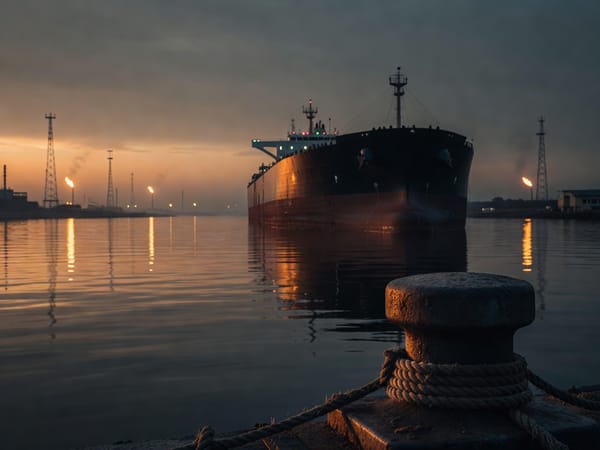
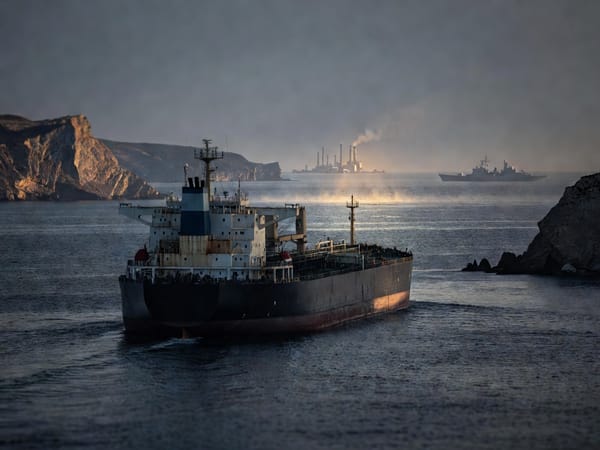
President Trump directed a US naval blockade to counter Iranian aggression and restore safe passage through the Strait of Hormuz on April 14. That same day, Secretary of State Marco Rubio convened the first trilateral meeting between the US, Lebanon, and Israel since 1993. Rubio, Israeli Ambassador Yechiel Leiter, and Lebanese Ambassador Nada Hamadeh Moawad discussed steps toward direct negotiations, with the United States pushing to move beyond the 2024 cessation of hostilities agreement toward comprehensive peace, Lebanon's restoration of its state monopoly on force, and an end to Iranian influence. All sides agreed to launch direct negotiations at a mutually agreed time and venue — a step that could unlock reconstruction aid for Lebanon. With earlier rounds of US-backed sanctions already having targeted Hizballah's financial networks in Lebanon since February, and UNIFIL peacekeepers injured in southern Lebanon in March, the diplomatic opening arrived against a backdrop of sustained pressure and humanitarian need. By April 16, the United States announced a 10-day ceasefire between Israel and Lebanon, welcomed by Lebanon's delegation during a UN General Assembly debate as proof that diplomacy can deliver.
The financial pressure campaign against Iran intensified in parallel. On April 15, OFAC sanctioned over two dozen individuals, companies, and vessels in the network of Mohammad Hossein Shamkhani, a multi-billion-dollar Iranian oil smuggling empire known as the shadow fleet. A separate designation targeted an oil-for-gold network in which Iranian oil was traded for Venezuelan gold to fund Hizballah and the IRGC-QF. Treasury Secretary Scott Bessent described the action as intensifying "Economic Fury" under the maximum pressure campaign. Throughout the week, Bessent held bilateral meetings with France's finance minister, the UK Chancellor of the Exchequer, and Italy's economy minister, in each case pressing for cooperation on critical minerals supply chains and coordinated pressure on Iran. The European Commission, for its part, activated a crisis mechanism within its Maritime, Fisheries and Aquaculture Fund to compensate producers affected by conflict-driven energy price surges, applicable retroactively from late February.
Sudan's Health System Collapses Under Three Years of War
The World Health Organization issued a stark assessment on April 14: after three years of conflict, Sudan faces a deepening health crisis with nearly 34 million people needing humanitarian assistance, including 21 million requiring health aid. More than four million people are acutely malnourished. Disease outbreaks — malaria, dengue, measles, polio, hepatitis E, meningitis, and diphtheria — have spread across multiple states. Thirty-seven percent of the country's health facilities are non-functional. Since April 2023, the WHO has verified 217 attacks on healthcare infrastructure, causing 2,052 deaths and 810 injuries. The crisis was compounded during the week by an attack on El Daein Teaching Hospital in East Darfur that killed at least 64 people, including children and health workers, rendering the critical referral hospital non-functional. On a more constructive note, the WHO reported that Sudan's second cholera outbreak was declared over in March following a vaccination campaign reaching 24.5 million people, and the country became the first in the region to include malaria vaccines in its routine immunization program.
Pax Silica Expands as Supply Chain Alliances Deepen
On April 16, the Philippines became the thirteenth signatory to the US-led Pax Silica initiative, bringing its capabilities in semiconductor and electronics manufacturing into the alliance. Under Secretary of State for Economic Affairs Jacob Helberg simultaneously announced plans to establish a 4,000-acre Economic Security Zone in the Luzon Economic Corridor — the first AI-native industrial acceleration hub under the initiative, designed to strengthen supply chains in critical minerals, semiconductors, and electronics while attracting private investment. Finland also joined Pax Silica the same day, becoming the second EU member state in the alliance and bringing Nokia's capabilities to the table.
The expansion of Pax Silica unfolded alongside a broader push to secure critical mineral supply chains. In every bilateral meeting during the week's IMF/World Bank Spring Meetings, Treasury Secretary Bessent raised critical minerals cooperation with allied finance ministers. At the IMFC, the administration called on the World Bank to prioritize energy abundance — including fossil fuels, nuclear, and critical minerals — and to abandon its 45 percent climate finance target. The EU, meanwhile, reached a political agreement on new steel protection measures that will impose 50 percent duties on excess imports and reduce tariff-free quotas by 47 percent beginning July 2026, with a joint declaration committing to phase out Russian steel imports.
Nuclear Safety on a Knife's Edge at Zaporizhzhya
The Zaporizhzhya Nuclear Power Plant in Ukraine temporarily lost all off-site power twice during the week — once on April 14 for 90 minutes and again on Thursday evening when the backup power line was disconnected. Each time, the plant relied on emergency diesel generators to maintain nuclear safety functions. IAEA Director General Rafael Mariano Grossi highlighted the vulnerability and precarious situation at Europe's largest nuclear power plant, now having experienced its fourteenth complete loss of off-site power since Russia's invasion began in February 2022. The plant's main 750 kV Dniprovska power line has been disconnected since March 24, and Grossi reported that Ukraine and Russia are engaging constructively in negotiations for a temporary ceasefire to enable repairs, though the damage location across the Dnipro River on the frontline presents significant challenges. With the EU having approved a €90 billion support loan for Ukraine in January — €60 billion for military assistance and €30 billion for budget support — the broader conflict continues to cast a shadow over the continent's energy security.
What It Means
The week revealed a United States operating on an ambitious multi-front strategy: applying military pressure through a naval blockade, economic pressure through sanctions on Iran's oil revenues, and diplomatic pressure through historic peace talks — all simultaneously. The trilateral meeting with Lebanon and Israel, the first at this level in over three decades, and the subsequent 10-day ceasefire suggest Washington is attempting to lock in diplomatic gains while the broader Middle East confrontation with Iran remains unresolved. The question is whether these openings can be sustained once the ceasefire clock runs out.
The economic reverberations of the 44-day war are now being felt structurally across the global economy. Oil prices above $100 per barrel, EU fossil fuel import costs rising by EUR 22 billion, and the activation of emergency compensation mechanisms for European fisheries all point to a conflict whose costs are being distributed far beyond the battlefield. The coordinated IEA-IMF-World Bank response and Treasury Secretary Bessent's systematic engagement with allied finance ministers suggest a recognition that energy price shocks of this magnitude require institutional coordination, not ad hoc responses.
The expansion of Pax Silica to thirteen signatories, combined with the announcement of a physical economic security zone in the Philippines, marks a shift from declaratory supply chain alliances to concrete industrial infrastructure. This is happening against the backdrop of US pressure to reorient multilateral institutions — the IMF away from climate and social mandates, the World Bank toward fossil fuels and critical minerals — representing a structural challenge to the development finance consensus of the past decade.
Meanwhile, the crises that receive less attention continue to deepen. Sudan's health system collapse, with 34 million people needing aid and hospitals under direct attack, represents one of the world's worst humanitarian emergencies with no political resolution in sight. The repeated power losses at Zaporizhzhya underscore that nuclear safety in a war zone remains a matter of diesel generators and diplomatic improvisation. And the DRC peace process, where government and M23 representatives made progress on ceasefire verification and prisoner releases in Switzerland, offers a rare example of incremental diplomatic progress in a conflict that has raged for years.
What to Watch Next Week
The Lebanon Ceasefire Clock: The 10-day cessation of hostilities between Israel and Lebanon began on the evening of April 16 and will expire around April 26. European Council leaders are meeting in Cyprus on April 23–24 with the Iran-Middle East conflict on the agenda. Watch for whether the ceasefire is extended or collapses, whether direct Israel-Lebanon negotiations are formally launched, and whether EU leaders invoke Article 42(7) TEU on mutual defense.
Iran's Response to the Economic Squeeze: With a naval blockade in the Strait of Hormuz, a new round of shadow fleet sanctions, and oil prices at $100 per barrel, Tehran faces mounting pressure. Watch for any Iranian military provocations in the Strait, signals on nuclear negotiations, and whether China or Russia provide economic lifelines that undermine the sanctions campaign.
Spring Meetings Fallout on Development Finance: Treasury Secretary Bessent's call to strip the IMF of climate and social mandates and redirect the World Bank toward fossil fuels represents a direct challenge to the multilateral consensus. Watch for whether the Borrowers Platform — the new developing-country coordination mechanism — takes a position on these proposals, and whether the G7 under France's leadership pushes back or accommodates the US agenda.
Methodology & Sources
This brief is generated from structured event data extracted from official government and institutional sources worldwide.
This report does not constitute predictions or financial or legal advice.