Geopolitics & History
Learn how geopolitics and historical patterns shape your daily life — and how to build the awareness and adaptability to navigate an uncertain world.


Every time oil prices spike, a trade war escalates, or a currency wobbles, the same invisible forces are at work — geography, power, and the long memory of history. Most people treat geopolitics as background noise, something for diplomats and think-tank analysts. But the reality is simpler and more urgent: the global chessboard shapes your grocery bill, your job security, and the stability of the world your children will inherit.
Understanding these forces won't make you a fortune teller. What it will do is replace anxiety with clarity, and passivity with preparedness. Here's how to start reading the map.
What Geopolitics Actually Means (and Why the Textbook Definition Falls Short)
At its core, geopolitics is the study of how physical geography, natural resources, and human ambition interact to shape world events. Mountains create natural borders. Coastlines determine naval power. Rivers feed agriculture and trade. These aren't abstractions — they're the reason certain regions have been contested for centuries while others have remained relatively peaceful.
The Middle East illustrates this perfectly. Sitting at the crossroads of three continents and holding enormous energy reserves, it has attracted colonial powers, Cold War superpowers, and modern regional rivals for over a century. The borders drawn by European diplomats in the early 1900s still generate conflict today. Geography set the stage; politics wrote the script.
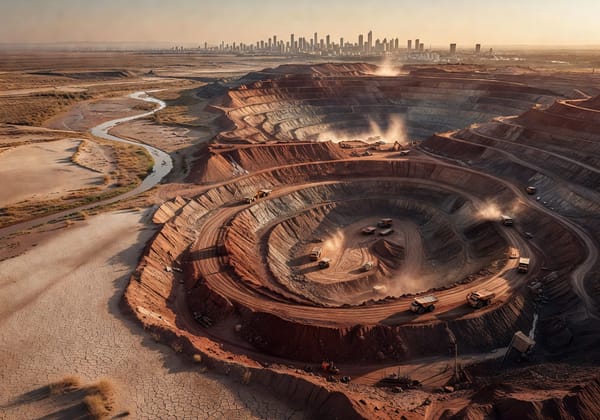
But modern geopolitics extends well beyond terrain. Today's strategic contests play out in semiconductor supply chains, undersea data cables, and critical mineral deposits. China's near-total control over rare earth elements — essential for everything from smartphones to electric vehicles — has become a geopolitical lever as significant as any military base. In 2025, Beijing demonstrated its willingness to restrict exports of key minerals, prompting Western governments to scramble for alternative supply chains.
Ideology adds another layer. The tension between democratic governance and authoritarian models isn't just a philosophical debate — it drives alliance structures, trade agreements, and intelligence-sharing networks. Understanding geopolitics means seeing how these tangible and intangible forces braid together to produce the headlines you read each morning.
Historical Patterns: The Rhymes That Keep Repeating
History doesn't repeat exactly, but certain patterns recur with uncomfortable regularity. Empires overextend. Economic booms breed complacency, then collapse. Revolutions ignite when inequality grows too stark and reform comes too late. Recognising these cycles isn't fatalism — it's pattern recognition, and it's one of the most practical thinking tools available.
Consider the arc of imperial decline. Rome didn't fall in a day; it eroded through overexpansion, unsustainable military spending, political polarisation among elites, and a hollowed-out middle class. The British Empire followed a structurally similar path — global commitments that outstripped economic capacity, compounded by the devastation of two world wars. Historians studying collapses from China's Ming Dynasty to Renaissance Venice have identified a consistent pattern: internal fractures matter more than external threats.
These parallels are more than academic. Modern analysts note that the contemporary United States exhibits several of the stress indicators associated with imperial strain — rising national debt, deep political polarisation, ageing infrastructure, and strategic commitments spanning every continent. That doesn't mean collapse is inevitable; empires that pursued internal reform and fiscal discipline often extended their vitality by centuries. But ignoring the warning signs hasn't worked well for anyone in the historical record.
Historical context also explains why some conflicts seem intractable. The Israeli-Palestinian conflict, for instance, layers millennia of competing claims over sacred territory with twentieth-century colonial border-drawing and decades of Cold War proxy dynamics. Without that depth, today's headlines are disconnected fragments. With it, they become chapters in a longer, more comprehensible story.
Why This Matters to You Personally
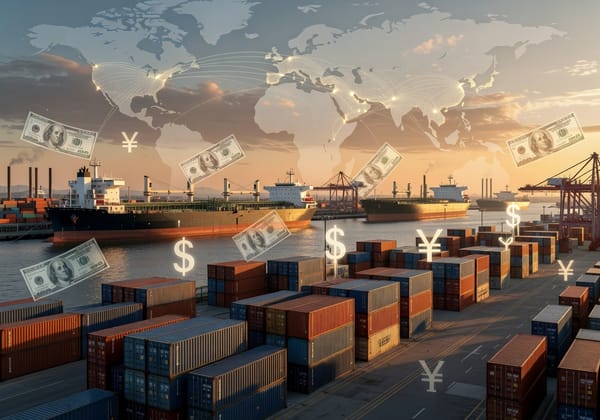
It's tempting to file geopolitics under "things I can't control." But global forces have a habit of showing up in deeply personal ways. When the U.S. imposed sweeping tariffs in 2025 — with rates of up to 60 percent on Chinese goods and broad levies on other trading partners — the effects rippled through consumer prices, small-business supply chains, and retirement portfolios worldwide.
Energy markets offer another vivid example. Tensions in the Persian Gulf, the Houthi disruptions to Red Sea shipping, and the ongoing reconfiguration of European energy away from Russian gas all feed directly into what you pay to heat your home or fill your tank. These aren't distant abstractions — they're line items on your monthly budget.
Even the job market reflects geopolitical shifts. As nations compete to onshore semiconductor manufacturing and secure critical supply chains, entire industries are relocating. Defence spending is surging globally, with several NATO members now pushing budgets well above the traditional two-percent-of-GDP threshold. These shifts create new industries and render others obsolete, often within a few years.
Seeing the big picture doesn't mean you can redirect these currents. But it means you can anticipate where they're flowing, which is the difference between being caught off-guard and being prepared.
Adaptation: The Practical Payoff of Awareness
The most useful lesson from both geopolitics and history is that change is constant, and the people who thrive are the ones who adapt rather than resist. This applies at every scale, from nation-states to individual households.
Nations that adapt well offer instructive examples. Post-war Germany rebuilt itself into an economic powerhouse by anchoring to European integration and investing in industrial exports. Singapore, a city-state with virtually no natural resources, leveraged its geographic position and legal infrastructure to become a global financial hub. Japan, facing a shrinking population, has invested heavily in robotics and automation to maintain economic output. In each case, the key was an honest assessment of constraints followed by strategic action.
For individuals, adaptation looks different but follows the same logic. It might mean diversifying income sources if your industry is vulnerable to automation or trade disruptions. It could mean acquiring skills in fields that align with where global investment is flowing — renewable energy, cybersecurity, supply-chain logistics. Or it might be as straightforward as understanding currency risks before making major financial decisions.
Adaptation also requires letting go of comfortable assumptions. No nation stays dominant forever. No industry remains stable indefinitely. No economic model is immune to disruption. History is filled with societies that clung to the status quo until the status quo crumbled beneath them. The sooner you internalise that change is the default state of the world, the sooner you can plan accordingly.
From Awareness to Confident Action
Understanding geopolitics and history isn't an end in itself — it's a foundation for better decisions. Confidence in an uncertain world doesn't come from pretending everything will be fine. It comes from doing the work to understand the forces in play and trusting yourself to respond thoughtfully.
In practical terms, this might mean evaluating political candidates based on their long-term strategic thinking rather than short-term promises. It could mean recognising when rhetoric in your community echoes historical patterns of scapegoating or authoritarian overreach — and pushing back early, when it matters most. On a financial level, it means stress-testing your plans against plausible global scenarios rather than assuming tomorrow will look like today.
Small nations offer inspiration here. Countries like Singapore, Estonia, and the UAE consistently punch above their weight by combining geopolitical awareness with decisive policy. You don't need to run a country to borrow that mindset. Start with the decisions within your control — your career, your finances, your community engagement — and make them with the widest lens you can manage.
Building Your Geopolitical Literacy
If this feels like a lot to take in, that's because it is. But you don't need a degree in international relations to develop a working understanding of global dynamics. Here are some practical starting points.
Diversify your news sources. Read coverage from multiple countries and perspectives. A story about trade policy looks very different from Washington, Beijing, and Brussels. Cross-referencing perspectives reveals assumptions that any single source takes for granted.
Learn the geography. Understanding why the Strait of Malacca matters, or why the South China Sea is contested, or why the Suez Canal is a chokepoint for global trade gives you a physical framework for making sense of political decisions.
Study one historical parallel deeply. Pick a period that interests you — the fall of Rome, the decline of the Ottoman Empire, the collapse of the Soviet Union — and read enough to understand the mechanisms, not just the timeline. You'll start recognising those mechanisms in current events.
Follow the resources. Energy, food, water, minerals — track where they come from, who controls them, and what happens when access is disrupted. Resource flows are often the clearest explanation for otherwise puzzling political alliances and conflicts.
Think in systems, not headlines. Individual events make more sense when you see them as part of larger systems — economic cycles, alliance structures, demographic trends. The headline is the symptom; the system is the cause.
Key Takeaways
Geopolitics and history aren't subjects reserved for academics and diplomats. They're the operating system of the world you live in, and understanding them is one of the most practical investments you can make in your own resilience.
The global order is shifting — critical mineral competition is reshaping alliances, trade policies are being rewritten, and defence spending is climbing in ways not seen since the Cold War. These aren't temporary disruptions. They're structural changes that will define the next decade.
Your task isn't to predict exactly what happens next. It's to build the awareness and adaptability to respond well when it does. Study the map. Learn the patterns. Then act — not from fear, but from the steady confidence of someone who understands the terrain.