Resource Wars: Past and Future
From Rome's grain to today's lithium, resource control has always shaped global power. Learn the patterns behind resource wars and what the critical minerals scramble means for you.


Every major shift in global power has been underwritten by a struggle over physical resources. Not ideology, not personality, not even military genius — but access to the materials that keep economies running and populations fed. Understanding which resources matter, who controls them, and what happens when access is threatened is one of the most practical lenses for reading the world today.
This isn't a story confined to history textbooks. The resource wars of the past are being echoed — and in some cases amplified — by the contests unfolding right now over critical minerals, energy, and water. Here's how the pattern works, where it's heading, and what it means for you.
Oil: The Resource That Rewrote the 20th Century
Oil didn't just fuel cars and factories. It rewrote the global balance of power. When Persia struck oil in 1908 and Saudi Arabia followed in the 1930s, the Middle East transformed from a strategic backwater into the most contested real estate on earth.
Western governments — particularly the United States and Britain — built alliances with oil-producing monarchies, frequently trading silence on governance for reliable supply. OPEC's formation in 1960 gave producing states collective leverage, deployed most dramatically during the 1973 oil embargo, which sent global fuel prices spiralling and demonstrated that Middle Eastern politics could directly affect the cost of everyday life in New York or London.
That dynamic hasn't faded. Roughly one-fifth of global petroleum consumption still transits the Strait of Hormuz, a waterway barely 30 miles wide. The 2022 Russian invasion of Ukraine triggered energy price shocks across Europe, a sharp reminder that dependence on a hostile supplier can destabilise entire economies overnight.
The lesson has been consistent across a century of oil politics: any nation that ties its economic survival to an energy source it doesn't control is building on unstable ground.
Before Oil: Grain, Silver, and the Fall of Empires
Resource wars didn't begin with petroleum. The pattern stretches back millennia.
Rome's survival depended on grain shipments from North Africa and Egypt. When soil exhaustion, climate shifts, and political instability disrupted those supply lines, the empire couldn't feed its own cities. The decline wasn't sudden — it was a slow erosion of the material foundations beneath a global power.
Spain's 16th-century dominance was built almost entirely on New World silver. When the mines ran dry and inflation hollowed out the domestic economy, the most powerful empire in Europe collapsed within a generation. The Dutch and British empires that followed learned similar lessons about the fragility of resource-dependent wealth, though often too late to avoid painful corrections.
The recurring theme is straightforward: empires that depend on resources they can't fully secure are empires with an expiration date. The ones that last longest are those that diversify before they're forced to.
The New Battleground: Critical Minerals
Today, the resource war has shifted terrain. The global economy now runs on materials most people have never heard of — rare earth elements, lithium, cobalt, gallium, germanium, tungsten. These minerals are essential for everything from smartphones and electric vehicles to missile guidance systems and semiconductor manufacturing.
The concentration of these supply chains is staggering. China controls roughly 60 percent of global rare earth processing and dominates refining for many other critical minerals. In 2025, Beijing imposed export restrictions on germanium, gallium, and heavy rare earths — demonstrating its willingness to use mineral control as a geopolitical lever, much as oil producers used the embargo in 1973.
The scramble to respond has reshaped foreign policy. The U.S. Critical Minerals Ministerial convened in Washington in February 2025, bringing together 55 countries to address supply chain concentration. The resulting FORGE initiative — Forum on Resource Geostrategic Engagement — launched new bilateral frameworks spanning Latin America, Central Asia, Africa, and the Pacific. The U.S.-Ukraine Reconstruction Investment Fund, signed in April 2025, was explicitly structured around access to Ukraine's lithium, graphite, and rare earth deposits.
Meanwhile, armed groups in eastern Congo continue to exploit and trade conflict minerals, fuelling violence while feeding the supply chains that produce our consumer electronics. Nearly 70 percent of the world's cobalt comes from the DRC, where mining conditions are often dangerous and environmentally destructive.
The critical minerals contest is not a future scenario — it's the defining resource war of the present moment.
Water: The Resource War Nobody's Ready For
While minerals dominate headlines, a quieter and potentially more consequential resource crisis is building around water.
The Middle East and North Africa is the world's most water-stressed region. Sixteen of the 25 most water-stressed countries are located there. A January 2026 UN report warned that the world has entered an era of "water bankruptcy," where human demand and depletion of natural water systems exceed replenishment rates.
The consequences are already visible. Transboundary tensions over the Nile intensified after Ethiopia inaugurated the Grand Ethiopian Renaissance Dam, which downstream neighbours Egypt and Sudan fear will threaten their own water security. In Iraq, the Water Stress Index classifies the country as "high risk," with projections that the Tigris and Euphrates rivers could effectively dry up by 2040. Across the Sahel, researchers have identified a near-direct correlation between desertification and the recruitment activities of armed groups like al-Shabab and Boko Haram.
The African Union made water its central summit theme for 2026 — an acknowledgement that water scarcity is no longer just an environmental issue but a security one. By 2050, every single country in the MENA region is projected to live under extremely high water stress. A 4°C temperature rise would mean a 75 percent drop in freshwater availability across the region.
Water doesn't have the geopolitical glamour of oil or rare earths. But it's the only contested resource that is literally essential for human survival, and the gap between supply and demand is widening every year.
How Resource Wars Actually Work
Resource conflicts rarely look like armies marching over a mine or an oilfield. More often, they operate through economic leverage, diplomatic pressure, proxy forces, and supply chain manipulation. Recognising the pattern requires looking beyond the headline.
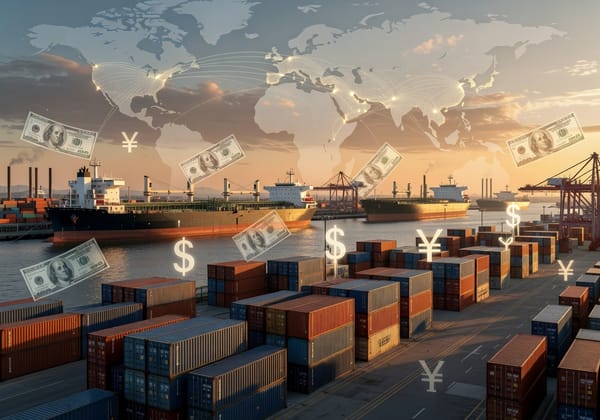
Control points matter more than total supply. The Strait of Hormuz, the Suez Canal, China's rare earth processing dominance — these are choke points where a single disruption ripples through the entire global economy. Whoever controls the bottleneck controls the flow.
Resource wealth attracts intervention. From the CIA-backed coup in Iran in 1953 (prompted by oil nationalisation) to the modern scramble for Congo's cobalt, resource-rich regions consistently attract foreign powers willing to trade stability for access.
Dependency creates vulnerability. Europe's reliance on Russian gas, the U.S. dependence on Chinese rare earth processing, the Middle East's water dependency on rivers that originate outside its borders — each represents a structural weakness that adversaries can exploit.
The scramble accelerates before alternatives mature. New mines take a decade or more to develop. Desalination plants are expensive and energy-intensive. Recycling infrastructure for critical minerals is still in its infancy. The gap between recognising a vulnerability and actually fixing it is where crises occur.
What This Means for You
Resource wars might sound like problems for governments and corporations, but their effects reach into daily life faster than most people expect. Energy prices, food costs, technology availability, and even employment patterns are all downstream of resource competition.
Track the resources, not just the politics. When you see a new trade deal, sanctions package, or military deployment, ask: what resource is at stake? The answer often explains more than the official justification.
Reduce your own dependency chains. The personal version of resource diversification is straightforward — reduce reliance on single sources of income, energy, or supply. A household with solar panels, a stocked pantry, and diversified savings is less exposed to resource shocks than one dependent entirely on the grid, the supermarket, and a single employer.
Pay attention to water. It's the least glamorous and most consequential resource trend of the next two decades. If you live in a water-stressed area, understanding your local water system — where it comes from, how it's managed, and what its vulnerabilities are — is basic preparedness.
Don't assume stability is permanent. Every empire that fell to resource constraints assumed the supply lines would hold. They didn't. Building resilience isn't pessimism — it's the most rational response to a world where the materials that underpin modern life are concentrated in a handful of places and contested by competing powers.
Key Takeaways
Resource wars are not relics of history — they are the constant through-line connecting ancient empires to modern geopolitics. The specific materials change (grain to oil to lithium), but the pattern remains: concentrated control over essential resources creates leverage, dependency creates vulnerability, and the transition between one resource era and the next is when conflicts intensify.
The current moment is a transition point. The fossil fuel order that defined the 20th century is giving way to a critical minerals economy that will define the 21st. Water scarcity is compounding both. The nations, communities, and individuals who recognise this shift early — and diversify before they're forced to — will be the ones best positioned to navigate what comes next.
What resource does your life most depend on that you don't control? That's worth thinking about this week.